
The Elbow Busbar Manual inspection machine is mainly used for inspecting short straight busbar, elbow busbar, terminal busbar and etc.. In today's demanding electrical manufacturing landscape, ensuring the integrity of complex conductive shapes is critical. It’s composed of two parts: fixture positioning and main inspection instruments. Operators manually secure the busbar into the precision-machined fixture, which accommodates varying irregular profiles with a firm, tactile lock that prevents any micro-movements during the testing cycle. The fixture’s ergonomic design ensures that operators can load and unload heavy copper or aluminum components with minimal physical strain. The Fixture positioning part is operated manually while inspection instruments will test the busbar and generate the report automatically. This hybrid approach—combining manual physical flexibility with automated electrical precision—significantly lowers the operational threshold while maintaining strict testing protocols. It allows your production line to quickly switch between different busbar configurations without requiring extensive machine recalibration, thereby maximizing daily throughput and overall operational efficiency.
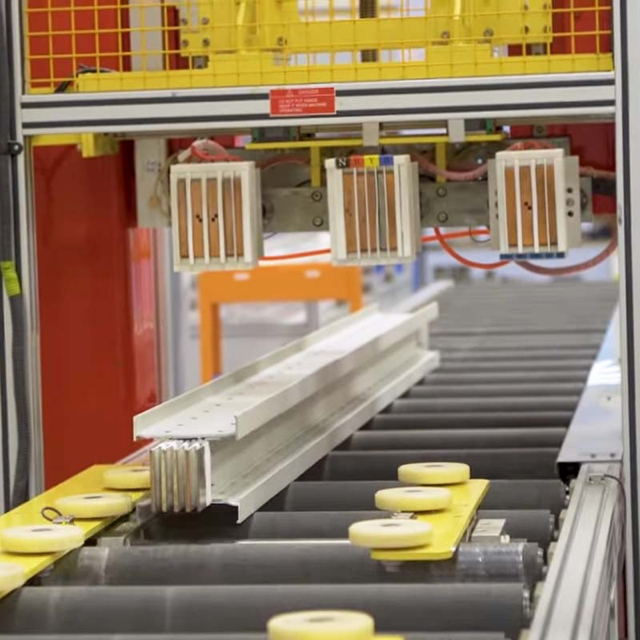
Integrating High Voltage (HV) withstand testing, insulation resistance evaluation, and grounding integrity checks into a single streamlined cycle, this machine eliminates the need for multiple independent testing stations. The system provides exceptionally precise voltage outputs and features a highly sensitive breakdown current alarm. When a micro-fracture or insulation weakness is detected, the machine instantly halts the test and emits a clear, unmistakable auditory and visual alert. This rigorous testing protocol ensures that even the most microscopic insulation flaws or grounding inconsistencies are identified, guaranteeing absolute zero missed detections before the product leaves your facility.
Modern production management demands strict accountability and transparent data handling. This inspection equipment automatically generates detailed, timestamped test reports upon the completion of each cycle and supports direct barcode printing for immediate labeling. By interfacing directly with your existing enterprise ERP systems, every tested elbow or terminal busbar is assigned a unique, traceable serial number. This enables complete lifecycle traceability, allowing facility managers and quality control teams to pull historical test data for any specific batch or individual unit years down the line, ensuring absolute confidence and accountability in your supply chain.
Standard testing equipment often struggles to secure non-standard shapes, leading to inaccurate readings or physical damage to the product. Our machine utilizes a scientifically designed split structure that perfectly accommodates irregular profiles, including complex elbow bends, twisted configurations, and short straight segments. The heavy-duty clamping mechanism provides a secure, non-marring grip, adapting swiftly to diverse production requirements on the factory floor. The tactile feedback of the locking mechanism gives operators confidence that the piece is perfectly aligned for testing.
Built to withstand continuous, multi-shift operation in demanding industrial environments, the machine boasts export-grade stability. It is pre-loaded with multiple voltage grade testing recipes, allowing operators to select the appropriate testing parameters with a single keystroke. This "manual flexible positioning + one-key automatic test" mode drastically reduces the learning curve for new operators. By assisting manufacturers in achieving strict "zero defect" outbound standards, its consistent performance and durable internal components have earned it a strong reputation globally, maintaining exceptional satisfaction rates among international procurement teams.
This manual inspection system is purpose-built for the final factory validation of specialized busways. It is extensively utilized across several critical sectors where electrical safety, thermal stability, and structural integrity are non-negotiable.
The following table outlines the exact operating parameters, testing capacities, and physical dimensions of the KD-JCX/M-6 model. These specifications highlight the machine's capability to handle significant voltage loads, ranging up to 5000V for high voltage withstanding tests, and its capacity to accommodate busbar lengths from 500mm to 3000mm. Every parameter listed below reflects the equipment's industrial-grade engineering, designed to deliver precise, repeatable results for irregular busbar types.
No. | Parameters |
Model | KD-JCX/M-6 |
Busbar Height | 100~650mm |
Busbar Length | 500mm~3000mm |
Suitable Busbar Type | Irregular busbar |
Position Type | Unilateral |
High Voltage Withstanding test | 0~5000V |
Insulation test | 1~1000V |
Grounding test | 0~25A |
Power | 380~415VAC 50~60Hz 3kW |
Equipment Dimension | L62000mm*W800mm*H800mm |


