


| Quantity: | |
|---|---|


The fundamental distinction between a manual packing machine and its fully automated counterparts lies in the wrapping methodology and human-machine collaboration. For this manual packing equipment, the operator initiates the process by securely holding the film at the starting point. Subsequently, the system takes over, ensuring the film is wrapped on the busbar automatically with consistent tension. When the wrapping is finished, the operator shall stop the machine and cut the film manually.
Beyond this basic operational sequence, this semi-automatic approach delivers exceptional moisture-proof and dust-proof wrapping performance. By applying uniform mechanical pressure during the automated wrapping phase, the machine creates a tight, impermeable barrier around the compact busduct. You can visibly see the film stretching and conforming to the metallic contours of the casing. This reliable seal maintains the critical insulation integrity of the busbars, protecting internal copper or aluminum conductors from environmental contaminants, moisture ingress, and oxidation during long-distance maritime transit and extended warehouse storage.
For small to medium-sized manufacturing facilities, balancing operational efficiency with capital expenditure is paramount. This semi-automatic wrapping solution offers a highly economical alternative to fully automated, sensor-heavy lines. It significantly lowers the initial investment threshold while still dramatically reducing the physical strain on workers. Instead of manually circling heavy equipment with heavy rolls of plastic, operators stand comfortably at the control station. The collaborative workflow ensures packaging consistency that manual wrapping alone cannot achieve, delivering an immediate return on investment through accelerated throughput, minimized material waste, and fewer damaged goods claims from end-users.
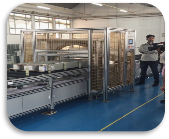
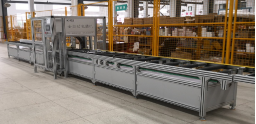
Understanding the precise technical parameters is essential for integrating this wrapping equipment into your existing fabrication facility. The machine features a robust, industrial-grade structural design with a highly efficient footprint, measuring exactly 6000mm in length and 1500mm in width. This practical layout allows plant managers to seamlessly incorporate the unit into current low-voltage compact busduct assembly and dispatch lines without requiring massive floor plan modifications or structural changes to the building.
Furthermore, the system is engineered for exceptional consumable compatibility, which is a critical factor in maintaining low operational overhead. It effortlessly accommodates standard packaging films ranging from 100mm to 230mm in width. This specific flexibility empowers procurement teams to source universally available wrapping materials from local suppliers, effectively controlling daily operational costs, preventing supply chain bottlenecks, and allowing for quick changeovers when different film thicknesses are required for specific client orders.
No. | Parameters |
Model | KD-BZJ/M-6 |
Busbar Height | 100mm~650mm |
Busbar Length | 1500mm~6000mm |
Busbar Type | Straight length busbar |
Film Cutting Mode | Manual cutting |
Film Width | 100mm~230mm |
Power | 380~415VAC 50~60Hz 4kW |
Equipment Dimension | L6000mm*W1500mm*H800mm |
Beyond standard straight lengths, the true value of this equipment shines in its daily application on the factory floor, adapting to the dynamic needs of electrical component manufacturing.
This semi-automatic wrapping equipment is specifically engineered to handle substantial electrical distribution components. It perfectly accommodates straight length busbars ranging from 1.5 meters up to an impressive 6 meters. As the heavy busduct glides across the 800mm high working platform, the automated wrapping mechanism applies the protective film with precise, overlapping layers. The steady, rhythmic hum of the 4kW motor ensures a continuous, fluid rotation, eliminating the uneven tension and loose corners typically associated with purely manual wrapping methods. The resulting package features a tightly bound, smooth exterior that feels secure to the touch and provides a formidable defense against industrial dust and warehouse humidity.
While fully automated lines often struggle with non-standard shapes, this manual packing machine excels in versatility. Production runs frequently include complex routing components.
Integrating this wrapping station at the end of a low-voltage compact busduct fabrication line creates a smooth, logical transition from final assembly to dispatch. The machine's straightforward control panel requires minimal training, allowing operators to quickly develop a rhythmic, highly efficient workflow. The tactile feedback of initiating the wrap and the crisp sound of the manual film cut become a predictable, satisfying part of the cycle, significantly reducing operator fatigue over a long shift. By standardizing the packaging process, facilities can accurately forecast packing times, streamline their shipping schedules, and guarantee that every busbar arrives at the construction site in pristine, installation-ready condition.


