
Views: 0 Author: Site Editor Publish Time: 2026-09-19 Origin: Site


Factory floors are feeling the heat. Global demand for efficient power distribution is escalating rapidly, putting manufacturers under immense pressure to deliver custom busducts faster without compromising safety. Relying solely on a manual busbar assembly machine creates severe operational bottlenecks. Human fatigue inevitably slows down throughput and introduces the dangerous risk of inconsistent mechanical joints. On the other end of the spectrum, fully autonomous setups lack the agility required for today’s highly varied project scopes. In this guide, we explore how semi-automatic lines bridge this critical gap, offering the perfect blend of machine precision and human adaptability.
Optimal Flexibility: A semi-automatic approach allows operators to transition smoothly between custom configurations and standard high-volume runs. This adaptability remains a critical requirement in modern busduct manufacturing.
Cost-Effective Scaling: This equipment delivers a significantly faster Return on Investment compared to fully automatic alternatives. It drastically reduces labor costs and cycle times while keeping capital expenditure manageable.
Quality Assurance: Integrating precision machinery with human oversight ensures flawless electrical and mechanical joints. Automated fastening eliminates human inconsistency, leaving operators free to manage visual inspections.
Strategic Upgrade: For facilities relying on outdated hand tools, this serves as a highly practical transitional step. It modernizes the manufacturing floor without requiring the massive footprint of fully autonomous systems.
In the contemporary electrical manufacturing landscape, a complete busduct production line operates as a highly coordinated sequence. It encompasses everything from the initial processing of raw copper or aluminum conductors—cutting, punching, and bending—to the final stages of insulation wrapping, profile assembly, riveting, and rigorous dielectric testing. The ultimate goal is clear. Manufacturers must produce compact, reliable, and high-capacity power distribution conduits for commercial buildings, industrial plants, and hyperscale data centers.
Historically, production managers faced a stark choice. They either adopted highly labor-intensive methods or invested in rigid, high-speed automated systems. The rapidly evolving demands of the power distribution market have forced a complete paradigm shift in how these critical components are manufactured.
Recent industry analyses highlight a massive pivot in the power distribution sector. The surge in modular data centers, electric vehicle infrastructure, and renewable energy grids demands highly customized power conduits. Market data indicates that traditional mass-production models are failing to cope with bespoke architectural layouts and fluctuating supply chains. Rigid manufacturing lines designed for uniform straight lengths face crippling downtime for retooling when tasked with custom elbows, tees, or flanged ends. Flexible production is no longer a buzzword; it is a critical survival strategy.
Modern construction projects demand agility. A single infrastructure layout might require varying amperage ratings and unique spatial configurations to navigate tight architectural constraints. Flexible manufacturing directly addresses this friction. It utilizes equipment that can be adjusted in minutes, executing small-batch custom orders just as efficiently as large-scale standard runs.
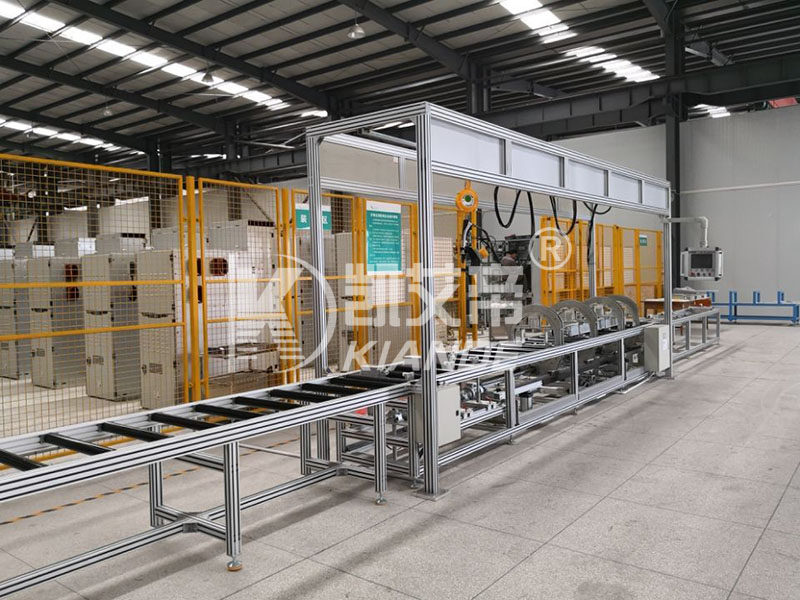
A semi-automatic system represents a strategic hybrid between manual labor and full automation. Specifically, a semi automatic busbar assembly line automates the most physically punishing and precision-critical mechanical tasks, such as profile pressing and riveting. It retains manual input for material handling, component loading, and nuanced visual inspection. This setup leverages the relentless consistency of machine power where it matters most, without sacrificing the cognitive adaptability of a human operator.
Navigating the shift from manual to semi-automatic fundamentally transforms the ergonomics and throughput of the factory floor. Relying on hand tools subjects workers to severe repetitive strain. Operators must manually align heavy copper bars, apply mylar insulation, and use hand-operated hydraulic presses to secure the housing. This workflow is sluggish and highly susceptible to fatigue-induced errors.
A semi-automatic line completely removes the heavy lifting. Heavy-duty hydraulic cylinders take over the high-pressure compression of the busduct layers. Automated tools handle the precise insertion of fasteners. The operator's role elevates from physical laborer to process controller, slashing workplace injuries and standardizing output quality across every shift.
The architecture of a semi-automatic line is engineered for logical progression. While exact configurations vary based on facility size, a typical high-efficiency workflow follows these sequential steps:
Manual Loading: Operators load pre-cut, insulated busbars and housing profiles onto the assembly table. This manual step allows for the rapid accommodation of different sizes or custom shapes.
Automated Alignment and Pressing: The machine engages pneumatic or hydraulic clamps to tightly compress the layers. This critical step ensures zero air gaps between the conductors and the housing, maximizing thermal dissipation.
Automated Fastening: The system drives rivets into the housing at precise, pre-programmed intervals. This guarantees uniform mechanical strength along the entire length of the conduit.
Manual Offloading and Inspection: The operator unloads the finished segment. They perform a final visual quality check to spot micro-tears in insulation before advancing the piece to the testing station.
For production engineers evaluating equipment upgrades, the decision rests on measurable business outcomes. Integrating semi-automatic equipment into your facility offers quantifiable advantages that directly impact profitability and product reliability.
The hallmark advantage of semi-automatic equipment is its inherent scalability. Imagine a scenario on the factory floor where an operator needs to transition from a standard 1000A straight copper run to a specialized 2500A aluminum elbow joint. Instead of calling in a software engineer to reprogram robotics, the operator simply swaps out the quick-release jigs. They select a pre-saved recipe on the touchscreen interface and resume pressing within minutes. This rapid changeover capability ensures the facility accepts diverse orders without bottlenecking the entire production schedule.
From a financial standpoint, semi-automatic systems offer a highly attractive cost-to-benefit ratio. They require a significantly lower initial capital investment than fully automated systems, which involve complex robotics, motorized conveyors, and advanced sensory arrays.
Despite the lower upfront expenditure, a semi-automatic line provides robust output. By automating the most time-consuming pressing and riveting steps, facilities typically witness throughput increases of 200% to 300% compared to purely manual operations. It drastically reduces the per-unit labor cost and minimizes material waste caused by human error, paving the way for a rapid financial payback.
In the realm of high-voltage power distribution, mechanical inconsistency inevitably leads to electrical failure. If a busduct is compressed unevenly, or if fasteners are applied with varying torque, dangerous air pockets form. These voids impede thermal conductivity, leading to localized overheating, partial discharge, or catastrophic short circuits.
Semi-automatic assembly mitigates these severe risks by removing human variability. Automated pressing ensures consistent pressure across the entire length of the busduct. Simultaneously, human operators remain in the loop to catch nuanced visual defects that a machine sensor might overlook. This dual-layered approach to quality control ensures flawless joints every time.
To make a highly informed procurement decision, production managers must understand how semi-automatic lines stack up against the alternatives. The breakdown below provides an objective comparison of the three primary manufacturing systems.
| Feature | Manual Assembly Machine | Semi-Automatic Line | Fully Automatic Line |
|---|---|---|---|
| Initial Capital Cost | Low | Moderate | High |
| Production Speed | Slow | Moderate to Fast | Very Fast |
| Labor Requirement | High (Physically demanding) | Medium (Supervisory/Handling) | Low (Primarily monitoring) |
| Flexibility | Extremely High | High | Low (Rigid setup) |
| Quality Consistency | Low to Medium (Prone to error) | High (Machine precision) | Very High |
A manual setup is the traditional starting point for emerging manufacturers. Its primary advantage lies in the lowest possible upfront equipment cost and ultimate flexibility for building completely unique, one-off custom pieces. The drawbacks become glaring as production scales. Manual assembly incurs steep ongoing labor costs, yields sluggish production speeds, and carries a high risk of human error.
At the opposite end of the spectrum, investing in a fully automatic busbar assembly line yields the lowest per-unit labor cost and maximum throughput. Human intervention is virtually eliminated. The barriers to entry are formidable. These systems demand massive capital investment, require expansive factory floor space, and are notoriously rigid. Reconfiguring a fully automated line for small-batch orders leads to unacceptable and costly downtime.
For the vast majority of mid-to-large electrical manufacturers, the semi-automatic approach represents the operational sweet spot. It delivers the mechanical consistency and speed necessary to fulfill massive commercial orders while preserving the agility required to process complex configurations. It effectively bridges the gap between cost and capability, allowing businesses to scale output without over-leveraging capital on inflexible robotics.
Upgrading to a semi-automatic process involves integrating specific pieces of precision machinery. Understanding the function of these core components is crucial for evaluating potential equipment purchases and designing an optimized floor layout.
The fastening stage is arguably the most critical mechanical step in busduct assembly. Utilizing a dedicated busbar riveting machine is highly recommended over traditional manual bolting. Modern semi-automatic lines frequently utilize Self-Piercing Riveting technology. Unlike manual bolting subject to operator fatigue and inconsistent torque, automated riveting provides superior structural integrity. The machine pierces and fastens the aluminum or steel housing in a single fluid motion. This creates a tight, vibration-resistant joint essential for maintaining a continuous grounding path.
Internal components must be perfectly aligned and compressed before riveting can occur. The pressing station utilizes heavy-duty hydraulic cylinders to tightly compress the layers of epoxy or mylar insulation alongside the conductors. This machinery applies exact, uniform pressure across the profile, eliminating internal air voids and maximizing heat dissipation capabilities. Adjustable jigs allow operators to quickly resize parameters for different conductor thicknesses.
Quality assurance does not end at assembly. A robust production line must include integrated testing stations. In a semi-automatic workflow, operators manually transfer the riveted busduct to the testing phase. Automated dielectric withstand testing is performed to verify insulation integrity and ensure zero current leakage. This guarantees compliance with strict international safety standards like IEC or UL.
Selecting the optimal machinery is a critical decision directly impacting operational efficiency. Transitioning to a new production line requires a thorough internal audit of your current manufacturing metrics and future business objectives.
Look at your daily linear meter output. Facilities processing under 50 meters of highly specialized runs might survive on manual tools. If your floor churns out 200 to 500 meters daily with frequent profile changes, semi-automatic systems hit the sweet spot. By auditing your changeover frequency alongside your total volume, you can accurately determine if flexible production capabilities align with your operational reality.
Physical and financial constraints play a pivotal role in equipment selection. Fully automated systems require massive footprints. If space is limited, a semi-automatic system offers a compact, modular layout that fits seamlessly into existing factory floors. Procurement officers must look beyond the initial sticker price. Semi-automatic solutions provide an attractive middle ground, delivering high enough production speeds to ensure a rapid financial return. Furthermore, this equipment utilizes intuitive touchscreens that current floor workers can master with minimal specialized training, empowering your existing team rather than requiring expensive robotics engineers.
Once the procurement decision is finalized, focus must shift to precise implementation. A poorly executed rollout leads to unnecessary downtime, safety hazards, and delayed returns. Following standardized steps ensures a smooth, profitable transition.
Introducing semi-automatic machinery fundamentally changes the relationship between the worker and the manufacturing process. Implementation should begin with a phased training program. Phase one must focus entirely on safety, ensuring operators understand the mechanical hazards of hydraulic presses and the proper use of light curtains and emergency stop mechanisms. Phase two focuses on operational competency. Workers must be trained to navigate touchscreens, input correct parameters, and execute efficient material changeovers.
Establishing a proactive maintenance schedule protects your investment. Semi-automatic equipment relies on precise mechanical alignment. Neglecting maintenance inevitably leads to structural inconsistencies in the final product. Routine checks should include inspecting hydraulic fluid levels and ensuring safety sensors are unobstructed. Specific attention must be given to fastening stations. Regular inspection of riveting dies and punches for micro-fractures is critical. Treating preventative maintenance as a core production activity extends the equipment's lifespan by decades.
Upgrading your equipment is no longer just a smart choice; it is a competitive necessity. A semi-automatic system perfectly balances speed, cost, and flexible production. It improves product quality while keeping capital investment highly manageable. Stop letting manual bottlenecks dictate your production ceiling. Move beyond outdated hand tools and avoid the rigid constraints of full automation. Explore the full range of custom solutions at busbarequipment.com, where our engineering team can help you design a layout tailored perfectly to your specific volume and budget.
While exact production speeds vary depending on the specific busduct profile and operator efficiency, empirical data shows that transitioning to a semi-automatic line typically increases throughput by 200% to 300%. This dramatic increase is achieved by automating the most time-consuming steps. In a manual setup, operators spend significant time aligning heavy profiles and individually bolting joints. A semi-automatic system utilizes hydraulic pressing stations to instantly compress the layers, while automated tools secure the joints in a fraction of a second.
Yes, modern semi-automatic assembly lines are engineered specifically for high versatility and easily accommodate both copper and aluminum conductors. Because these metals possess different tensile strengths and malleability, the machinery is designed with adjustable pressure settings. Operators simply use the touchscreen to select the appropriate material profile. The system automatically adjusts the pressing force and riveting pressure to prevent damaging softer aluminum or failing to secure denser copper.
Most mid-sized manufacturing facilities recoup their initial capital investment within 12 to 18 months. This rapid payback stems directly from slashing per-unit labor costs and doubling or tripling daily throughput. Additionally, the reduction in material waste caused by human error contributes significantly to long-term cost savings.
Manual bolting often yields inconsistent torque across a busduct length, leaving micro-voids between the conductors and the housing. These air gaps trap heat and impede thermal conductivity. Automated riveting applies exact, uniform mechanical force, eliminating voids and ensuring optimal thermal dissipation and grounding continuity across the entire joint.
Maintaining a riveting machine requires a combination of daily operator checks and scheduled preventative maintenance by technicians. Operators should perform visual inspections daily to ensure there is no buildup of metal shavings around the riveting head. Weekly maintenance generally involves lubricating moving parts like guide rails and cylinders. The most critical task is the periodic inspection and replacement of the riveting dies and punches, which must be swapped based on usage cycles to guarantee flawless connections.
Leading manufacturers design their semi-automatic equipment with modularity in mind. As your business scales and production volume increases, you do not necessarily have to discard your initial investment. Many semi-automatic stations are built on standard PLC architectures that can be integrated into a larger, fully automated ecosystem later. A facility might start by manually loading materials, and years later, upgrade the line by adding motorized conveyors and robotic loading arms that communicate directly with the original machine's interface.

