
Views: 0 Author: Site Editor Publish Time: 2026-10-10 Origin: Site


High-volume electrical infrastructure manufacturing faces a strict operational challenge today. You must align your actual production pace perfectly with fluctuating customer demand rates. Overproducing wastes valuable floor space and ties up capital in unnecessary inventory. Missing delivery schedules damages client trust and incurs severe financial penalties. Manual and fragmented busbar assembly processes introduce severe cycle time variations across the plant floor. These variations cause workstation bottlenecks almost immediately. They create unpredictable throughput and compromise strict quality control standards. To solve this, manufacturing engineers are executing a strategic shift. They are deploying automated or semi-automated systems to replace outdated manual benches. A robust busduct production line serves as the primary mechanism to enforce stable takt time. This approach balances assembly loads effectively. It ensures operational predictability across all shifts and product families.
Takt Time Enforcement: Achieving production excellence requires transitioning from operator-dependent cycle times to machine-paced predictability within the assembly process.
Architecture Selection: The choice between a fully automatic busbar assembly line and a semi-automatic configuration hinges on the facility's specific product mix, volume requirements, and capital expenditure thresholds.
Quality Integration: Embedding automatic busbar inspection directly into the workflow prevents downstream bottlenecks and rework, actively protecting the overall line takt time.
Strategic Leverage: Mastering takt time directly optimizes four critical manufacturing pillars: capacity planning, process design, production scheduling, and plant floor operations.
Risk Mitigation: Successful deployment demands rigorous line balancing, accurate capacity planning, and proactive management of integration risks with existing plant floor operations.
You must define takt time strictly to achieve manufacturing excellence. It represents the available production time divided by customer demand. This calculation establishes the absolute maximum time allowed per unit. The standard calculation for throughput remains straightforward and non-negotiable. Target jobs per hour equals 3,600 divided by the takt time in seconds. Baseline success metrics require minimal cycle time deviation across all active workstations. You need high Overall Equipment Effectiveness (OEE) to maintain profitability. Operations must align perfectly with capacity planning, process design, production scheduling, and plant floor operations. Takt time misalignment carries a heavy and immediate operational cost. You will see rapid inventory buildup between disconnected stations. Overtime costs will spike as supervisors attempt to catch up on missed targets. Expedited shipping penalties will quickly erode your profit margins.
Consider a facility producing 4000A copper busducts. These sections require multiple heavy copper bars per phase. If customer demand dictates one completed section every 12 minutes, your takt time is exactly 720 seconds. Every single workstation on the floor must complete its assigned tasks within this 720-second window. If the mylar wrapping station takes 800 seconds, the entire line starves. Downstream testing stations sit idle. Upstream punching stations overproduce, creating a massive backlog of raw copper. Enforcing this 720-second limit requires mechanical pacing. Relying on human operators to maintain this exact rhythm over an eight-hour shift always fails.
Manual assembly introduces severe failure points into the production environment. Operator speed remains highly inconsistent throughout a standard shift. Fatigue-induced errors compromise the structural integrity of heavy copper and aluminum components. Material handling delays stall downstream stations constantly. A single unbalanced workstation disrupts the entire production schedule instantly. It heavily skews capacity planning and renders forecasting useless. Recognizing hidden balancing issues proves incredibly difficult without standardized pacing. Automation provides this strict pacing mechanism. Without it, plant managers constantly chase moving targets.
Workers struggle to maneuver bulky busduct sections manually. A standard 10-foot section of high-amperage copper busway can weigh several hundred pounds. Manual lifting requires overhead cranes, rigging, and multiple operators. This non-value-added material handling consumes massive amounts of time. Furthermore, inconsistent torque application on joint bolts leads to electrical hotspots in the field. Operators using manual torque wrenches often suffer from repetitive strain injuries. As fatigue sets in during the afternoon, torque accuracy drops. These manual variables destroy any attempt at maintaining a stable takt time.
Material Handling Delays: Waiting for overhead cranes or forklifts to move heavy copper bars between disconnected manual stations.
Operator Fatigue: Physical exhaustion from lifting, positioning, and manually torquing large busduct assemblies.
Inconsistent Fastening: Variations in applied torque leading to failed quality inspections and mandatory rework.
Insulation Application Errors: Manual mylar wrapping often results in uneven overlaps, requiring time-consuming corrections.
Testing Bottlenecks: Manually connecting and disconnecting hipot testing leads adds minutes to every cycle.
A fully automated system relies on strict technical parameters to function correctly. It uses robotic material handling gantry systems to move heavy copper or aluminum bars. Automated fastening modules ensure consistent torque application on every single bolt. Continuous flow mechanisms eliminate dead time between operational stations. This architecture fits high-volume, low-mix production environments perfectly. Demand in these specific environments remains highly stable over long periods. Deploying a automatic busbar assembly line forces a necessary shift in labor reallocation. You move skilled workers away from dangerous manual assembly tasks. They transition into system monitoring and continuous process improvement roles.
The machinery handles the physical burden of mylar wrapping and hydraulic riveting. Automated wrapping heads apply insulation tape with exact tension and overlap parameters. Hydraulic riveting stations compress the housing profiles with thousands of pounds of force simultaneously. This guarantees absolute predictability in your daily output volume. You program the PLC for a specific takt time, and the line delivers exactly that output. The system tracks every component via barcode or RFID. This provides complete traceability from raw material to finished product. You eliminate the human variable from the pacing equation entirely.
A semi-automatic setup integrates operator-assisted stations alongside mechanized modules. Workers guide the complex assembly process while machines handle the automated heavy-lifting. Precision-fastening modules secure the joints accurately after manual positioning. This hybrid approach provides a massive strategic advantage for high-mix, low-volume manufacturers. These facilities require frequent and complex product changeovers daily. A semi automatic busbar assembly system requires lower initial investment compared to fully automated alternatives. Deployment timelines are significantly shorter and less disruptive to ongoing operations.
You gain essential flexibility without sacrificing core pacing constraints. Operators can adjust to custom busduct profiles quickly. The automated lift assists prevent ergonomic injuries while maintaining a steady production rhythm. For example, an operator might manually slide the copper bars into the aluminum housing. Once positioned, they press a button. The machine then automatically clamps the housing and drives the rivets to the exact specification. This keeps the operator in control of the complex alignment tasks while offloading the brute force requirements to the machine. It strikes a practical balance between human adaptability and mechanical consistency.
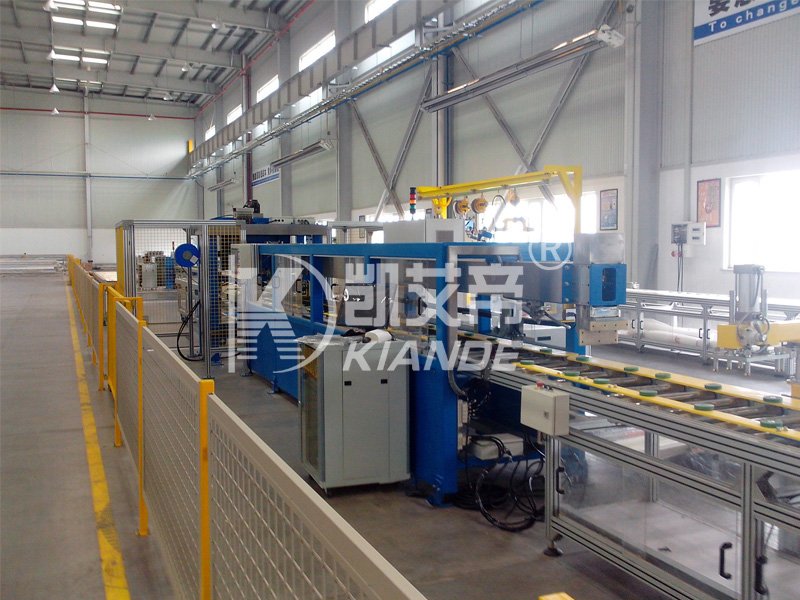
Line balancing divides total assembly work into equal, manageable portions. These portions must match the target takt time precisely to avoid bottlenecks. Automated lines utilize programmable logic controllers (PLCs) to manage this flow. Conveyor pacing enforces strict workstation time limits automatically. Interactive takt time calculators and simulation software play a vital role in process design. They determine the maximum time allowed per unit before you implement physical changes. Resolving balancing issues requires specific engineering strategies. You can reallocate tasks between stations using Yamazumi charts. You might implement parallel processing for complex, time-consuming steps.
Introducing targeted automation at specific bottleneck stations also restores continuous flow. Proper load distribution ensures no single station starves for materials or drowns in excess inventory. If the riveting station takes 40 seconds and the testing station takes 60 seconds, you have a severe imbalance. You must either speed up the testing process or add a second testing station in parallel. Automated lines handle this routing seamlessly. Diverter gates can send alternating busduct sections to parallel testing bays. This keeps the primary conveyor moving at the required 40-second pace.
Conduct Time Studies: Measure the exact cycle time of every discrete task in the assembly process.
Identify the Bottleneck: Locate the single station with the longest cycle time. This station dictates your maximum line speed.
Apply Yamazumi Charts: Visually stack task times to see which stations exceed the target takt time.
Reallocate Work: Move specific tasks from overloaded stations to underutilized stations.
Automate the Constraint: Deploy targeted machinery to speed up the bottleneck station if manual reallocation fails.
In-line automated testing is an absolute necessity for modern electrical manufacturing. You must perform dielectric withstand testing safely and accurately. Joint resistance measurements require precision micro-ohm meters. Visual dimension checks confirm structural accuracy using laser profiling systems. Integrating automatic busbar inspection isolates defects immediately. This prevents faulty units from consuming valuable downstream production time. It stops hidden defects from destroying your takt alignment completely.
Modern inspection systems include extensive data logging capabilities. This data ensures compliance and provides complete traceability for every serial number. It drives continuous process improvement initiatives across the entire plant floor. Catching a phase-to-phase short early saves hours of rework and potential field failures. Automated hipot testers apply high voltage to the busbars and measure leakage current instantly. If a unit fails, the conveyor automatically diverts it to a rework spur. The main line continues moving without interruption. This automated sorting protects the throughput of the entire facility.
Production lines must adapt easily to accommodate new and complex busduct profiles. Increased capacity demands require rapid and seamless reconfiguration. Modular equipment design future-proofs your substantial assembly line investment. It allows you to swap specific functional stations without rebuilding the entire line. This adaptability ensures your process design can meet shifting market demands efficiently. You can add automated riveting stations as volume increases. You can integrate advanced mylar wrapping modules when insulation specifications change.
Scalability prevents your production line from becoming obsolete within a few short years. It allows your manufacturing capabilities to grow alongside your expanding customer base. When you win a contract for a new, larger busduct profile, your line must handle the increased dimensions. Adjustable conveyor widths and programmable gantry limits make this possible. You simply load a new recipe into the HMI. The servo motors automatically adjust the physical guides to accommodate the wider housing. This eliminates days of manual mechanical adjustments.
Evaluating a new line requires analyzing the initial financial outlay against long-term savings. Full automation demands a high upfront CapEx to procure and install. However, it delivers substantial long-term OpEx savings year over year. You achieve drastically reduced scrap rates through precise machine handling. Copper is an incredibly expensive raw material. Scrapping a 10-foot section due to a manual assembly error represents a massive financial loss. Automation prevents these costly mistakes entirely. Direct labor costs drop significantly as headcount requirements decrease. Throughput reaches its maximum potential, maximizing revenue generation.
ROI timeline expectations depend heavily on industry-standard production shifts. Running two or three shifts accelerates the payback period dramatically. Energy consumption differences between pneumatic and servo-electric systems also impact your daily operating expenses. Servo-electric systems cost more upfront but consume far less electricity than massive compressed air networks. You must weigh these factors carefully before committing to an architecture. A detailed financial model must account for reduced rework, lower scrap, and increased output capacity.
Operational Metric | Manual Assembly | Semi-Automatic Line | Fully Automatic Line |
|---|---|---|---|
Initial CapEx | Very Low | Moderate | High |
Throughput Predictability | Poor | Good | Excellent |
Changeover Agility | High (Manual Setup) | High (Assisted Setup) | Low (Programmed Setup) |
Direct Labor Requirement | High (Physical Labor) | Moderate (Assisted) | Minimal (Monitoring) |
Scrap & Rework Rate | High | Low | Near Zero |
Ideal Production Environment | Prototyping / Custom | High-Mix, Low-Volume | High-Volume, Low-Mix |
Manufacturers face a conceptual trade-off between maximum throughput speed and changeover agility. Single-Minute Exchange of Die (SMED) principles apply directly to automated busbar tooling adjustments. Quick changeovers keep the line moving and maintain OEE targets. Rigid production scheduling negatively impacts facilities servicing highly customized client orders. You must recalculate takt time for different product families frequently. Flexibility allows you to handle these variations without shutting down production for extended periods.
Externalizing setup tasks reduces internal downtime significantly. Quick-release fixtures and programmable servo adjustments speed up the transition between different busduct amperages. Balancing speed with flexibility remains the ultimate goal for production planners. If you switch from producing 800A aluminum busduct to 4000A copper busduct, the physical dimensions change drastically. Automated lines use recipe-driven changeovers. The operator selects the new product code on the screen. The machine automatically adjusts the riveting heads, conveyor width, and testing parameters in seconds. Manual lines require operators with wrenches to physically move guide rails, which takes hours.
New assembly lines require a specific and often large physical footprint. They demand robust utility requirements, including high-voltage power, pneumatics, and data infrastructure. Phased installation minimizes downtime during the transition from legacy systems. You must align the new line's output rate with upstream fabrication processes. Copper and aluminum punching machines must feed the line at the correct pace. Downstream packaging must absorb the finished product seamlessly to prevent dock congestion. This ensures holistic plant floor synchronization.
Integrating Manufacturing Execution Systems (MES) with the new PLCs provides real-time visibility. Proper floor loading analysis prevents structural issues when installing heavy gantry systems. A fully automated line with heavy riveting stations requires a thick, reinforced concrete slab. You cannot simply bolt these machines to a standard warehouse floor. The vibrations and weight will crack the concrete. You must also verify your compressed air capacity. Pneumatic cylinders on a large assembly line consume massive amounts of CFM. Undersized compressors will cause the line to stall mid-cycle.
Transitioning a workforce creates a significant skills gap risk immediately. Operators move from manual assembly to troubleshooting complex automated machinery. You must implement a robust preventative maintenance schedule from day one. This avoids catastrophic line stoppages that destroy takt time targets completely. We strongly recommend negotiating strict vendor Service Level Agreements (SLAs). Maintain a strategic spare parts inventory to minimize recovery time during unexpected breakdowns.
Train your maintenance staff on PLC diagnostics and servo motor calibration. Cross-training operators ensures you maintain production flow even during personnel shortages. Proper training transforms operators into process owners. They stop acting as manual laborers and start acting as system technicians. They learn to read HMI fault codes and clear minor jams safely. This immediate response capability keeps the line running. Relying solely on a single maintenance engineer for every minor sensor fault will destroy your OEE.
Achieving a stable takt time in busduct manufacturing necessitates a strategic shift. You must move away from manual variability toward engineered, machine-paced assembly. Decision-makers should select their automation level based on a rigorous operational audit. Evaluate your specific demand volume, product mix volatility, and facility constraints carefully. Automation eliminates the guesswork from capacity planning and ensures consistent delivery schedules.
Initiate a formal capacity planning audit to establish baseline cycle time metrics across all current manual stations.
Utilize interactive line balancing simulations to identify hidden workstation bottlenecks before purchasing equipment.
Request proof-of-concept demonstrations from equipment integrators using your specific, heaviest busduct profiles.
Map out utility requirements, floor loading capacities, and physical space for potential automated station upgrades.
Develop a comprehensive cross-training matrix to transition manual operators into automated system technicians.
A: Takt time is not a fixed industry standard. It is a calculated metric based on specific customer demand and available working hours. Facilities often target cycle times in the low minutes per section. This calculation strictly dictates your target jobs per hour.
A: Automation standardizes the exact time required for each task, such as torquing bolts or applying insulation. It eliminates human speed variations entirely. This allows manufacturing engineers to perfectly distribute workloads across all workstations, ensuring a balanced, predictable flow.
A: Semi-automatic systems are preferable when the facility handles a high mix of custom busduct configurations. These environments require frequent, complex changeovers. Fully automating these rapid changeovers is often cost-prohibitive and technically rigid.
A: Automated in-line inspection prevents defective units from moving forward in the process. It eliminates the unpredictable time sinks associated with downstream rework and manual troubleshooting. Catching errors instantly protects the pacing of the entire assembly line.
A: You weigh the initial equipment and installation costs against long-term operational savings. Core variables include labor savings, reduction in scrap and rework, and increased production capacity. You also factor in the financial benefit of consistently meeting delivery schedules through strict takt time adherence.
A: Automated lines generally require high-capacity 480V 3-phase power drops, clean and dry compressed air lines with high CFM ratings, and reinforced concrete flooring to support heavy gantry systems and hydraulic riveting stations.

