
This sealing ring used in the busbar joint for protect and washer and also fix the tensile bolt and bars. When handling complex power distribution networks, ensuring absolute stability at connection points is a primary concern. It serves as a vital structural component that bridges the gap between rigid metal conductors, preventing microscopic shifts that could lead to electrical faults. The tactile feel of the silicone is dense yet pliable, indicating its capacity to compress firmly under pressure without losing its structural integrity. By maintaining a secure grip on the tensile bolts, it eliminates the risk of loosening caused by thermal expansion and continuous operational vibrations.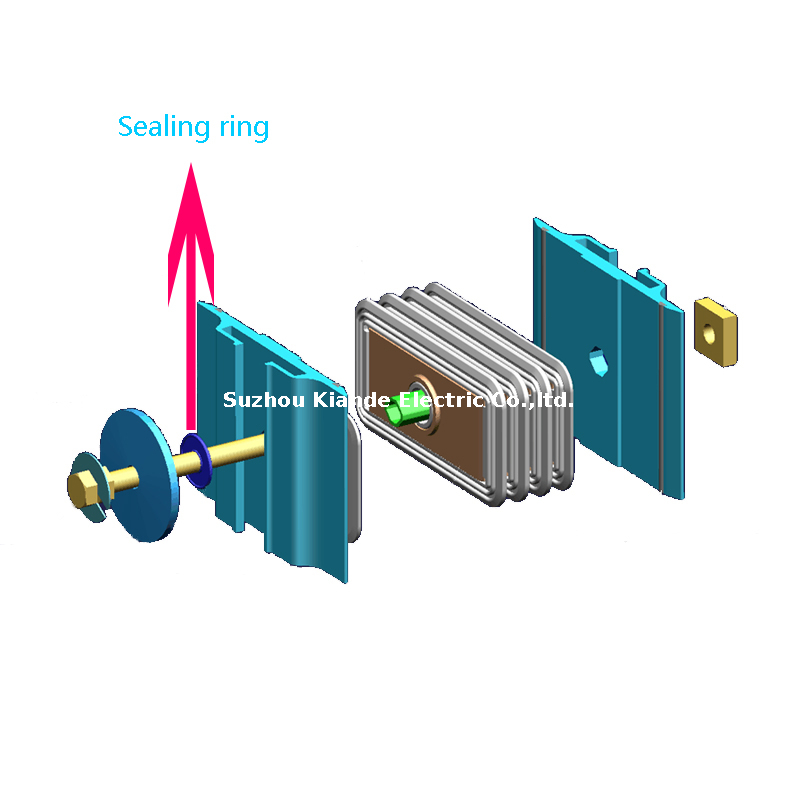
Crafted from premium-grade, heavily reinforced silicone elastomer, this component is engineered to endure some of the most unforgiving environmental conditions. The material itself possesses a smooth, non-porous surface that naturally repels moisture and resists the accumulation of airborne particulates. Unlike standard rubber alternatives that may become brittle over time, this specialized silicone formulation retains its flexibility and dimensional stability across extreme temperature fluctuations. Whether exposed to the freezing conditions of unheated facilities or the intense heat generated by continuous high-current electrical loads, the material resists premature aging. Furthermore, its inherent resistance to ultraviolet radiation ensures that installations in semi-exposed or outdoor enclosures do not suffer from surface cracking or degradation. This long-term material stability significantly reduces maintenance cycles and unexpected replacements, providing facility managers with a dependable solution for continuous power distribution.
Maintaining electrical safety is the most critical function of any component integrated into a power distribution system. This silicone component is formulated with advanced dielectric properties to prevent dangerous current leakage and arc flashes.
A primary vulnerability in any busbar system is the potential ingress of water, dust, and industrial contaminants at the joint connections. This product delivers an exceptional barrier against these intrusive elements. When compressed between the joint components, the silicone material flows into microscopic surface imperfections of the metal, creating an airtight and watertight seal. This precise fit is instrumental in helping the entire busbar assembly achieve stringent ingress protection ratings, easily accommodating requirements for IP54, IP65, and even IP68 environments. By completely blocking out ambient humidity, corrosive chemical vapors, and conductive dust particles, the seal prevents the oxidation and degradation of the copper or aluminum conductors inside. The resulting clean, dry internal environment ensures that electrical resistance remains consistently low, optimizing energy transmission efficiency and preventing localized overheating at the connection points.
Beyond its sealing capabilities, the structural mechanics of this silicone component play a significant role in the physical stability of the power network. The material boasts a remarkably low compression set, meaning it will consistently push back against the connecting hardware, maintaining a tight seal even after years of continuous compression. Additionally, the dense elastomer acts as a highly effective acoustic and mechanical dampener. It absorbs the subtle, continuous humming and micro-vibrations generated by alternating currents, preventing these forces from loosening the tensile bolts over time.
| Tensile Strength | Engineered to withstand significant stretching without tearing during installation and operational shifts. |
| Compression Set | Maintains original thickness and rebound force after prolonged heavy loading between metal plates. |
| Vibration Dampening | Actively absorbs mechanical shocks and electrical humming to protect delicate conductive joints. |
Recognizing that power distribution architectures vary significantly across different projects, this sealing solution is offered with extensive dimensional adaptability. Project engineers can specify exact geometric requirements, ensuring a flawless fit for both dense-type and air-insulated busbar trunking systems. The manufacturing process accommodates tailored requests, allowing for modifications in inner diameter, outer diameter, thickness, and even specific material hardness levels to match proprietary joint designs. Whether the requirement is for a standard commercial build or a highly specialized industrial application with unique spatial constraints, the production team can develop precise molds to deliver exact matches. This adaptability ensures that procurement teams can source the exact component needed without forcing incompatible standard sizes into custom-engineered power networks.
Reliability in electrical infrastructure is non-negotiable, which is why every batch of these silicone components undergoes rigorous testing protocols. The production environment operates under a strict ISO-certified quality management system, ensuring absolute consistency from the first unit to the ten-thousandth.
Due to its exceptional blend of thermal stability, electrical insulation, and physical resilience, this component is widely integrated into a diverse array of demanding environments. In heavy industrial manufacturing plants, it protects critical power feeds from the airborne metallic dust and corrosive vapors typical of such facilities. Within modern commercial complexes and towering skyscrapers, it ensures the safe, uninterrupted flow of electricity through vertical risers and horizontal distribution networks. Data centers, which require absolute zero-downtime reliability, rely on these exact components to secure the power pathways leading to critical server racks. Furthermore, they are extensively utilized in electrical substations and large-scale switchgear assemblies, providing the necessary protection and mechanical support where massive volumes of energy are transferred and regulated.


