
Views: 0 Author: Site Editor Publish Time: 2026-06-11 Origin: Site


Modern switchgear manufacturers face a constant, stressful struggle on the production floor. You must rapidly balance high-volume output demands while navigating strictly limited floor space and sharply rising labor costs. Finding this balance dictates your overall profitability. Traditional fragmented workflows rely heavily on separate, isolated stations for cutting, punching, and bending. This outdated decentralization quickly creates severe bottlenecks. It wastes valuable workspace and heavily burdens your machine operators. Operators waste hours moving heavy metals across the shop.
We need a smarter, leaner approach to material processing. This article sets out to objectively evaluate whether investing in a combined processing unit delivers a highly verifiable return on investment. You will discover exactly how consolidating your equipment impacts your daily operational efficiency. We will examine the verified performance metrics for copper and aluminum fabrication. By the end, you will know if a centralized production hub makes strategic sense for your facility.
Footprint Reduction: Consolidating equipment reclaims significant production floor space compared to operating three standalone units.
Workflow Continuity: Integrating punching, cutting, and bending eliminates inter-station material handling and reduces operator fatigue.
CapEx vs. OpEx Efficiency: While initial investment is notable, lower aggregate maintenance costs and reduced labor hours drive long-term profitability.
Risk Mitigation: Modern units utilize independent hydraulic cylinders to prevent single-point-of-failure risks during heavy copper processing.
Decentralized production lines quietly drain your profit margins. We often fail to see the hidden costs embedded in a fragmented workflow. When you separate your primary tasks into distinct geographical zones on the shop floor, inefficiencies multiply rapidly.
Consider the immediate problem of work-in-progress (WIP) inventory buildup. Materials pile up between machines waiting for the next available operator. This idle material represents tied-up capital. Furthermore, you significantly increase forklift and overhead crane movements. Every time a heavy pallet of copper moves, you introduce safety risks and waste valuable transit time. Finally, this traditional setup strictly requires multiple operators. You need different skilled workers manning different machines simultaneously to maintain any semblance of flow.
A multifunction busbar machine resolves these logistical headaches directly. It purposefully centralizes production into a single, operator-friendly hub. You no longer push carts of heavy metal across the room. Instead, you feed raw material into one end of the cell and receive a fully fabricated component at the other.
How do we measure the success of this integration? Successful implementation leaves clear, measurable evidence on your shop floor. You should expect to see:
Drastically reduced overall cycle times for standard parts.
Fewer material handling errors, drops, or scratches on expensive copper.
Standardized tooling that eliminates time-consuming die searches.
A noticeable drop in operator physical fatigue by the end of a shift.
Switching from single-purpose equipment to an integrated cell transforms daily operations. Let us break down the specific advantages you gain on the production floor.
Advanced CNC integration allows your team to experience seamless transitions between operations. In a fragmented setup, operators must constantly re-measure, re-mark, and re-jig the material at every new station. This repetitive manual input inevitably invites human error.
A unified control system changes this dynamic entirely. The operator loads the required program once. The software then commands the precise stops and sequence for the entire part. Because the machine handles the sequential alignment natively, you completely eliminate measuring discrepancies between the punch press and the bender. This synchronization guarantees high precision across large batches. You scrap fewer parts and deliver tighter tolerances to your assembly team.
Floor space acts as a premium asset in any manufacturing facility. Expanding your physical building costs a fortune. Consolidating your equipment offers a highly effective way to expand capacity without pouring new concrete.
When you utilize three independent machines, you do not just consume the footprint of the machines themselves. You also must allocate dedicated safety clearance zones, material staging areas, and operator walking paths for each unit. An integrated machine drastically shrinks this required footprint.
Requirement | Traditional 3-Machine Setup | Integrated Multifunction Unit | Space Savings Impact |
|---|---|---|---|
Machine Footprint | Requires 3 distinct physical spaces. | Requires 1 consolidated space. | Saves approx. 50-60% base area. |
Clearance Zones | Needs 3 safe-operation perimeters. | Needs 1 shared perimeter. | Frees up walkways for safety. |
Material Staging | Requires WIP staging at every station. | Requires one entry and one exit stage. | Eliminates mid-process clutter. |
Power Drops | Needs 3 separate heavy electrical drops. | Needs 1 central electrical connection. | Reduces infrastructure layout. |
Skilled labor remains increasingly scarce and expensive. You cannot afford to have three talented technicians doing basic repetitive tasks across three machines. Efficient busbar fabrication relies on smart resource allocation.
With an integrated unit, one properly trained operator manages the entire fabrication cycle. They oversee the complete transformation from raw stock to finished component. If you choose a model with independent cylinders, two operators can safely work at different stations on the same machine simultaneously. This efficiency instantly frees up your remaining skilled labor. You can redirect those valuable technicians to complex assembly tasks, quality control, or custom engineering work where they add much higher value to your business.
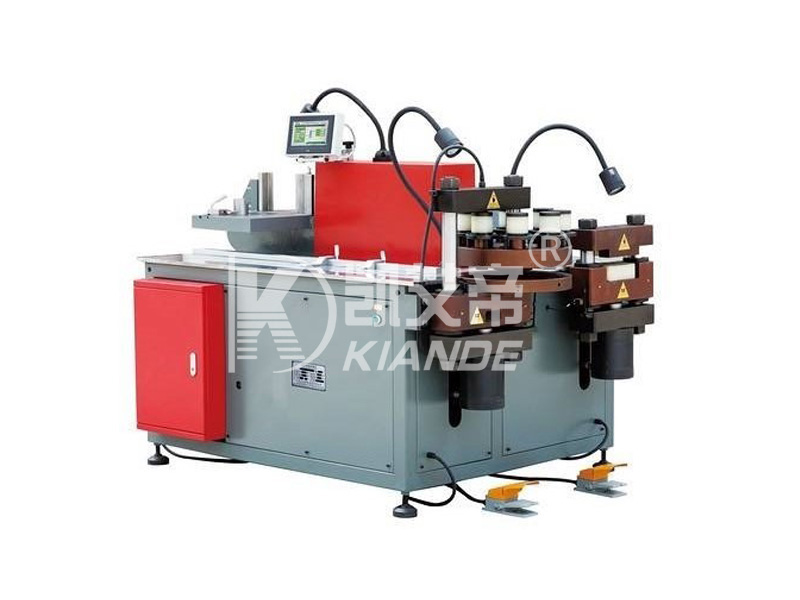
Working with thick, heavy copper bars demands immense physical force and rigid structural stability. Many production managers naturally question if an all-in-one unit can handle this stress without bending or failing.
We must first address the "single point of failure" myth. A common buyer hesitation goes like this: "If one part of a 3-in-1 machine breaks, my entire production halts." However, modern industrial engineering has largely solved this valid concern. High-quality systems feature modular designs. A localized sensor failure at the punch station rarely paralyzes the bending or cutting stations. They act independently within the same chassis.
You must carefully examine the internal architecture before buying. The market generally divides into two main categories: shared-pump systems and independent systems.
Budget models frequently utilize a shared-pump architecture. These units route all hydraulic pressure from a single pump. Consequently, you can only operate one station at a time. Conversely, a premium hydraulic busbar machine features three completely independent pumps and cylinders. This robust architecture delivers maximum tonnage to each station simultaneously. Two operators can punch and bend different parts at the exact same moment without experiencing any pressure drops or performance lag.
Thick copper bars represent a massive material cost. You cannot tolerate waste from poorly executed cuts or distorted holes. Integrated machines protect your material integrity through highly engineered clamping systems.
During the shearing process, heavy-duty hold-downs firmly grip the copper. This secure clamping prevents the material from tilting during the stroke. As a result, you achieve clean, sheer cuts without jagged burrs or rough edges. Furthermore, sheer-cutting mechanisms generate zero metal chips. You eliminate the messy clean-up associated with circular saws and preserve every ounce of usable copper.
Upgrading your fabrication floor requires a serious financial commitment. You must critically evaluate if the initial capital expenditure (CapEx) makes logical sense compared to your operational expenditure (OpEx) savings over time.
Let us look closely at the initial CapEx comparison. Procuring a premium, fully CNC-integrated combined system carries a notable price tag. However, if you attempt to purchase three separate high-end, CNC-controlled machines (a dedicated punch press, a dedicated shear, and a precision bender), your total combined procurement cost often exceeds the single unit. You are buying three heavy chassis, three distinct control interfaces, and three separate delivery and rigging fees.
The true financial victory emerges in your ongoing OpEx reductions:
Utility Infrastructure: You only pay an electrician to install a single heavy-duty power drop instead of three.
Consolidated Maintenance: Preventive maintenance shrinks dramatically. You change hydraulic fluid, replace filters, and lubricate guides on one chassis. You manage one standardized maintenance schedule.
Tooling Inventory: Unified systems often utilize interchangeable tooling. You stop buying redundant dies from multiple different vendors.
These daily operational savings quickly accelerate your time-to-value. Reduced setup times and incredibly fast changeovers between jobs drastically shorten your payback period. High-mix, low-volume job shops benefit the most. When you switch part profiles five times a day, saving fifteen minutes per changeover translates directly into pure profit by Friday afternoon.
Once you decide to upgrade, navigating the supplier market can feel overwhelming. You need a structured approach to separate capable machines from underperforming equipment. Follow this specific methodology to shortlist your best options.
Evaluate Capacity Needs: Never guess your sizing requirements. Audit your shop's heaviest standard workload. Identify the maximum thickness and maximum width you regularly process. If your toughest job involves 16mm x 250mm copper, use that exact metric as your absolute minimum baseline. Always buy slightly more capacity than you currently need to accommodate future business growth.
Compare Control Systems (CNC vs. Manual): Carefully contrast the user interfaces. Budget units rely on manual programmable logic controllers (PLCs) and mechanical hard stops. They require highly experienced operators to maintain accuracy. In contrast, full CNC systems offer touchscreen interfaces with auto-calculating backgauges. CNC systems drastically shorten the operator learning curve and guarantee high repeatability across massive production runs.
Verify Tooling Compatibility: Look closely at the punch and die formats. Emphasize the vital importance of universal or easily swappable dies. Some manufacturers intentionally use proprietary die shapes to trap you into buying their expensive consumables forever. Select a machine that accepts standard industry tooling to avoid frustrating vendor lock-in.
Taking the time to investigate these three critical areas prevents buyer's remorse and ensures your new equipment integrates smoothly into your daily operations.
Scaling switchgear production without expanding your physical factory footprint requires strategic thinking. We have clearly seen that the integrated approach proves vastly superior to maintaining fragmented, isolated workstations. By centralizing your workflows, you simultaneously reclaim valuable floor space, eliminate dangerous material handling tasks, and dramatically optimize your skilled labor force.
To move forward, you should quickly audit your current inter-station handling times. Track exactly how many minutes your team wastes moving copper between machines this week. Next, request a live, time-study demonstration from a reputable manufacturer using your specific part drawings.
Do not let outdated equipment dictate your production limits any longer. Consult a technical sales engineer today. You can download a detailed specification whitepaper or confidently request a custom quote based squarely on your specific fabrication needs and capacity requirements.
A: Yes, provided the machine is equipped with three independent hydraulic motors and cylinders. This robust design delivers dedicated pressure to each station. Budget models utilizing a single shared hydraulic pump only allow sequential operation, meaning only one person can work at a time.
A: No. Modern integrated units feature dedicated CNC bending stations equipped with advanced angle encoders. These high-tech sensors actively compensate for natural material spring-back. This technology easily matches or exceeds the rigorous accuracy standards of standalone premium benders.
A: Standard maintenance includes conducting regular hydraulic fluid level checks, executing scheduled filter replacements, and consistently lubricating the punching and shearing guides. Managing this consolidated list on one central unit is significantly faster and easier than servicing three totally separate power units.

