


| Quantity: | |
|---|---|


Application Focus: Purpose-built for critical busbar joint connections.
Structural Design: Advanced double head bolt configuration for balanced clamping.
Mechanical Strength: Certified Class 8.8 rating for high-stress environments.
Direct Sourcing: Supplied directly from the manufacturer, ensuring consistent engineering standards.
Customization: Flexible sizing options available to meet specific project demands.
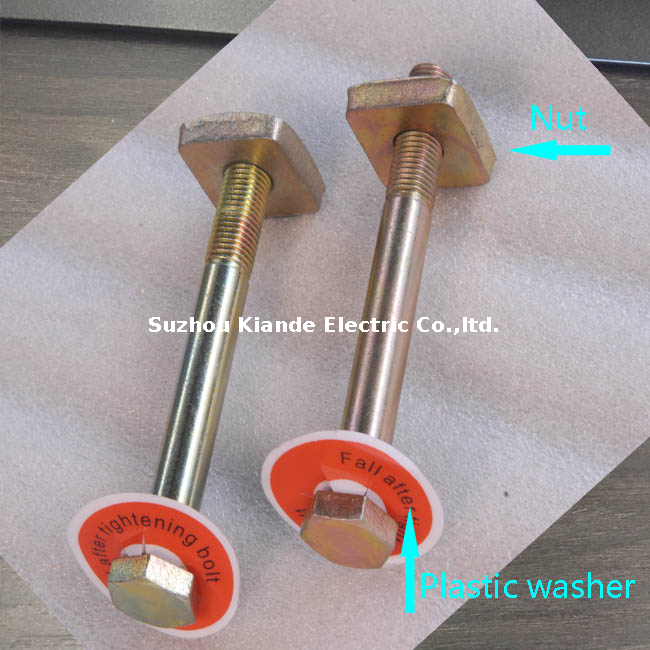
When constructing robust electrical infrastructure, the integrity of every connection dictates the safety and efficiency of the entire system. Our compact busbar joint torque bolts are meticulously crafted to provide unyielding mechanical support and flawless electrical continuity. Holding one of these bolts, you immediately notice the substantial weight and the smooth, friction-free finish of the galvanized coating, a testament to the premium 8.8-grade alloy steel used in its forging. The precision-cut threads glide effortlessly, ensuring a seamless installation process that seasoned engineers and facility managers will deeply appreciate during large-scale assembly.
Beyond their tactile superiority, these bolts are engineered to combat the unseen enemies of electrical joints: thermal expansion, microscopic contact gaps, and galvanic corrosion. The dual-head architecture, paired with a substantial square nut, creates a formidable clamping force that distributes pressure evenly across the metallic surface. This eliminates high-resistance hot spots and minimizes constriction resistance, ensuring that high-current loads flow without dangerous temperature spikes. Whether integrating into low-voltage distribution panels or massive industrial switchgears, this fastening solution delivers a reliable, maintenance-friendly, and highly secure connection that stands the test of time and rigorous operational demands.
Accurate specifications are the bedrock of safe electrical engineering and reliable procurement. As a dedicated manufacturer, we ensure every compact busbar joint torque bolt adheres to strict dimensional and performance tolerances. The data below outlines the precise specifications for our standard series, designed to accommodate a wide range of busbar thicknesses and high-amperage operational requirements. In addition to these standard configurations, our production facilities are fully equipped to manufacture M10 variants and other custom dimensions tailored to your specific project needs. The generous thread length provides exceptional versatility, while the standardized square nut dimensions ensure compatibility with standard installation tools. Every bolt is rigorously tested to meet the specified torque force, guaranteeing a secure and lasting connection.
Product Name: Compact Busbar Joint Torque Bolt
Application Scenario: Busbar joint
Bolt Head Type: Double Head Bolt
Available Sizes: M10, M12*115, M12*120, M12*125, M12*130
| Model | Class | Size of Square Nut | Thread Length | Torque Force | Color |
|---|---|---|---|---|---|
| M12*115 | 8.8 | 30*30mm/27*27mm | 45~65mm | 70 ~90 N.M | Yellow/White Galvanized |
| M12*120 | 8.8 | 30*30mm/27*27mm | 45~65mm | 70 ~90 N.M | Yellow/White Galvanized |
| M12*125 | 8.8 | 30*30mm/27*27mm | 45~65mm | 70 ~90 N.M | Yellow/White Galvanized |
| M12*130 | 8.8 | 30*30mm/27*27mm | 45~65mm | 70 ~90 N.M | Yellow/White Galvanized |
Our torque bolts are not just fasteners; they are highly engineered components designed to solve the most persistent challenges in power distribution. By focusing on the exact pain points of electrical assembly—such as joint degradation and thermal cycling—we have developed a product that significantly improves the lifespan of your infrastructure. The audible click of a torque wrench on these bolts signifies a perfect union of mechanical strength and electrical safety.
Optimized Clamping Profile: The specialized head and nut geometry prevent surface marring on soft copper or aluminum busbars, preserving the conductive cross-section.
Predictable Installation: Engineered threads ensure that applied torque translates directly into clamping force, removing the guesswork from panel assembly.
Long-Term Stability: Resists the microscopic backing-off effect caused by the 50/60Hz hum and vibration inherent in heavy-duty transformers and switchboards.
Streamlined Procurement: Sourcing directly from the manufacturer ensures that large-scale project rollouts are never delayed by component shortages or inconsistent batch quality.
The foundation of any reliable electrical joint is the metallurgical integrity of its fasteners. Manufactured from premium 8.8-grade alloy steel, these bolts offer an exceptional balance of tensile and yield strength. When heavy electrical loads cause the busbar system to heat up and expand, the bolt must endure immense thermal cycling stress without yielding.
High Yield Point: Prevents plastic deformation during extreme thermal expansion, ensuring the bolt returns to its original tension when the system cools.
Fracture Resistance: The dense molecular structure of the carbon steel alloy prevents sudden snapping under high short-circuit fault currents.
Consistent Performance: Every batch undergoes rigorous metallurgical testing to ensure the 8.8 rating is uniform across thousands of units.
Achieving the perfect contact pressure is a delicate science. Too little pressure results in high constriction resistance, while too much can deform the conductive metals. These bolts are engineered for a highly specific standard torque range (such as 70~90 N.M for the M12 series), providing the ultimate sweet spot for metal-to-metal contact.
Elimination of Micro-Gaps: The precise preload forces the microscopic peaks and valleys of the busbar surfaces together, maximizing the actual conductive area.
Reduced Constriction Resistance: By physically flattening the contact interface, the bolt drastically lowers the electrical resistance at the joint.
Thermal Runaway Prevention: Lower resistance means less heat generation, striking at the root cause of joint failure and preventing catastrophic meltdowns.
Predictable Maintenance: The standardized torque requirements allow maintenance teams to easily verify joint health using calibrated tools during routine shutdowns.
Electrical environments can be surprisingly hostile, with ambient humidity, industrial pollutants, and dissimilar metals creating a perfect storm for corrosion. Our bolts feature a superior yellow or white galvanized finish that serves as a sacrificial barrier against these elements. The distinctive sheen of the zinc coating is your first indicator of its premium defensive capabilities.
In complex panels where copper and aluminum components may interact, the risk of galvanic corrosion is ever-present. The high-quality electroplating effectively isolates the steel core from the conductive metals, neutralizing electrochemical reactions. This ensures that the threads remain clean and the clamping force remains constant, even after decades in unconditioned environments.
Vibration is the silent destroyer of electrical connections. Whether it is the constant mechanical vibration from nearby rotating machinery or the electromagnetic pulses from heavy current loads, fasteners naturally want to back out. Our double-head bolts are meticulously designed to counter this phenomenon.
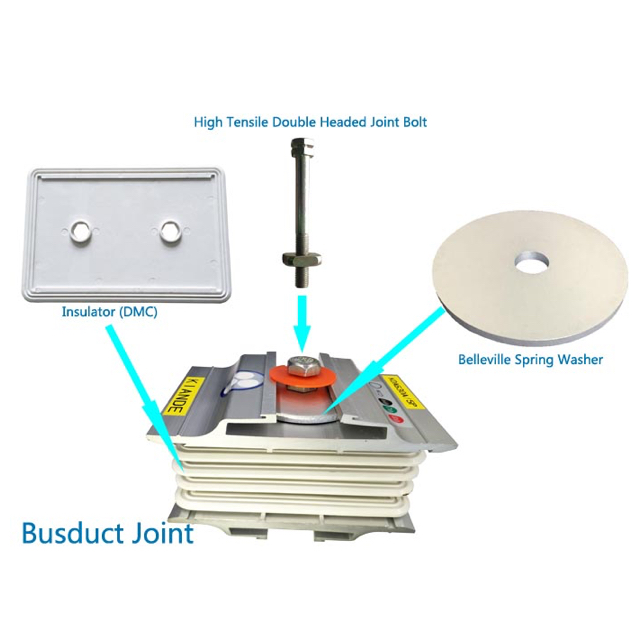
Belleville Washer Synergy: The flat, wide bearing surface of the nut perfectly accommodates Belleville spring washers, allowing them to compress and expand dynamically.
Automatic Tension Compensation: As the busbar expands and contracts, the compatible washers absorb the dimensional changes, while the bolt maintains a relentless grip.
Vibration Dampening: The precise thread pitch creates a self-locking friction angle that strongly resists vibrational unthreading, keeping the joint secure between maintenance cycles.
In low-voltage and medium-voltage switchgears, managing temperature rise is the most critical safety parameter. The unique design of our compact torque bolts directly contributes to superior thermal management. By utilizing an oversized square nut (30*30mm or 27*27mm), the clamping load is spread over a significantly larger surface area.
Load Distribution: Prevents the bolt head from sinking into the busbar, which would otherwise reduce clamping force and increase resistance over time.
Minimized I²R Losses: By ensuring a perfectly flat, high-pressure contact zone, the power loss (I²R) at the joint is reduced to an absolute minimum.
Hot-Spot Eradication: Even current distribution across the joint prevents localized heating, safeguarding the surrounding insulation materials from thermal degradation.
Time is a critical resource during facility construction and turnaround maintenance. The standardized double-head and square nut design is specifically tailored for rapid, error-free installation. Engineers can easily employ a star-pattern or cross-tightening sequence using standard torque wrenches, ensuring uniform pressure across complex, multi-bolt joints without needing specialized, proprietary tools.
Furthermore, post-installation verification is incredibly straightforward. During the crucial 48-to-72-hour re-torque window after initial energization, technicians can access the double heads easily, even in densely packed panel boards. The clear, unmarred surfaces also provide an excellent reference point for infrared (IR) thermography inspections.
When conducting annual preventative maintenance, the galvanized threads ensure that nuts do not seize or gall. This means that if a joint needs to be disassembled for panel expansion or modification, the bolts can be removed smoothly without needing to be cut or forcibly extracted, saving countless hours of labor.
No two electrical networks are exactly alike, which is why flexibility in component sizing is paramount. Our manufacturing lines are optimized to produce a comprehensive range of dimensions, covering the highly requested M10 and M12 specifications. The flexible thread lengths ranging from 45mm to 65mm mean that whether you are joining two thin distribution bars or a massive stack of generator output busbars, there is a perfect fit available.
Broad Compatibility: Seamlessly integrates into Power Control Centers (PCC), Motor Control Centers (MCC), and Automatic Power Factor Correction (APFC) panels.
Compact Busduct Ready: The low-profile design is ideal for the tight spatial constraints found in modern, high-density compact busway systems.
Rapid Customization: As a direct manufacturer, we offer agile response times for non-standard sizing requests, ensuring your unique engineering challenges are met swiftly.
Scalable Supply: From small facility upgrades to massive data center build-outs, our production capacity scales to meet your exact volume requirements without compromising precision.
Selecting the right manufacturing partner for critical electrical components is just as important as the components themselves. By sourcing directly from our specialized production facilities, you bypass intermediaries and gain direct access to engineering expertise, stringent quality control, and scalable production capabilities. We understand the high stakes involved in commercial and industrial power distribution.
Uncompromising Quality Assurance: Every batch of torque bolts is subjected to severe mechanical and environmental testing to guarantee performance under worst-case scenarios.
Direct Manufacturer Advantage: Enjoy streamlined communication, rapid prototyping for custom sizes, and highly competitive procurement economics for large-scale projects.
Deep Industry Expertise: Decades of experience in electrical fastening solutions mean we understand exactly how our products interact within complex switchgear environments.
Reliable Global Fulfillment: Our robust supply chain and inventory management systems ensure that your critical components arrive on-site, exactly when your construction schedule demands them.
Q1: How does the 8.8 strength class specifically benefit high-current busbar systems?
A1: The 8.8 class indicates a high-tensile carbon steel alloy that provides exceptional yield strength. In high-current systems, busbars undergo significant thermal expansion and contraction as loads fluctuate. An 8.8-grade bolt acts like a rigid spring, maintaining a relentless clamping force during expansion without permanently stretching, and contracting perfectly as the system cools, ensuring the joint never loosens.
Q2: Can these compact torque bolts accommodate varying thicknesses of busbar overlaps?
A2: Absolutely. Our bolts are designed with extended, precision-cut thread lengths (typically 45mm to 65mm). This generous threading allows a single bolt model to securely clamp varying stacks of copper or aluminum bars, providing great versatility for complex panel designs and reducing the number of distinct parts you need to procure.
Q3: What is the recommended maintenance protocol for re-torquing these joints?
Initial tightening to the specified torque (e.g., 70-90 N.M for M12) during assembly.
A mandatory re-torque check 48 to 72 hours after the system has been fully energized and subjected to its first thermal load cycle.
Annual verification using a calibrated torque wrench, ideally combined with infrared thermography to confirm the absence of resistive heating.
Q4: How does the galvanized finish perform in humid or chemically aggressive environments?
A4: The yellow or white zinc galvanization provides a robust sacrificial layer that oxidizes before the underlying steel can be affected. This electroplated barrier is highly effective at blocking moisture and atmospheric pollutants. Furthermore, it significantly mitigates the risk of galvanic corrosion when the steel bolt is in close proximity to copper or aluminum busbars, maintaining the integrity of the threads over decades.
Q5: Are Belleville spring washers required when installing these double-head bolts?
A5: While our bolts provide massive clamping force on their own, the use of Belleville (conical spring) washers is highly recommended in heavy-duty applications. The wide, flat profile of our square nuts is specifically designed to seat these washers perfectly. The washers provide dynamic tension compensation, absorbing severe vibrations and extreme thermal cycling, which works in perfect synergy with the bolt's high yield strength to create an essentially maintenance-free joint.


