
Views: 0 Author: Site Editor Publish Time: 2026-06-04 Origin: Site


Precision in electrical switchgear assembly relies entirely on accurate copper and aluminum components. Inconsistent bends quickly lead to assembly bottlenecks. They waste raw materials and compromise vital electrical clearances. Without reliable machinery, panel builders risk disastrous project delays and costly manual rework. Upgrading from manual methods or outdated equipment requires a careful balancing act. You must weigh immediate budget limitations against long-term production efficiency. Reducing scrap remains a top priority for most shop managers. The path forward demands a clear and objective strategy. We will explore a practical framework to evaluate the ideal equipment for your facility. You will learn to assess daily production volume and strict material specifications. We also guide you through defining required tolerance levels. This guide provides actionable insights to help you navigate hardware capabilities and vendor claims. Ultimately, you will make a smart procurement choice for your factory floor.
Selecting a busbar bending machine requires matching the equipment’s capacity (tonnage and tooling) to your factory's specific material dimensions and daily production volume.
Hydraulic and CNC solutions offer distinct advantages; hydraulic units provide rugged versatility, while CNC systems deliver high-repeatability for scale.
Evaluating busbar tooling changeover times and integrated functions (punching, cutting, bending) is critical for accurately calculating operational ROI.
Safety compliance and vendor-provided operator training should carry equal weight to hardware specifications during the procurement process.
Before reviewing manufacturer catalogs, establish your baseline operational needs. Clear parameters streamline your busbar fabrication workflow. You need distinct performance metrics before contacting equipment vendors. An ad-hoc approach often results in buying undersized machines or overpaying for unnecessary features.
Baseline Material Specifications: Document the absolute maximum width and thickness your facility handles daily. Copper and aluminum behave differently under mechanical stress. Copper requires significantly higher tonnage to manipulate successfully. Note your primary material grades. Hard-drawn copper resists bending more than annealed varieties.
Throughput Requirements: Calculate your current operational cycle times. Compare these figures against your target cycle times. This gap analysis determines if a standalone unit suffices. High-volume environments often demand continuous multi-station machines. Estimate your daily part count to justify the investment scale.
Tolerance and Scrap Metrics: Establish acceptable angular and dimensional tolerances. Precision directly minimizes raw material waste. Reworking thick copper pieces destroys your profit margins. Set clear benchmarks for acceptable first-pass yields. High-quality switchgear demands strict electrical clearance distances, making accurate bends non-negotiable.
Facility Constraints: Assess your available floor space carefully. Measure your power supply capabilities, as heavy machinery often requires three-phase industrial power. Workflow routing on the factory floor impacts overall efficiency. Ensure operators have ample room to load and safely maneuver heavy raw bars.
Managers often struggle to classify modern busbar processing equipment. We divide available machinery into three distinct categories. You must align these equipment classes with your specific operational scale. Understanding these tiers helps you filter out incompatible vendor options immediately.
Manual benders rely on human force or simple hand-pumped hydraulics. These lightweight tools travel easily to active job sites. Best for: Field installations, low-volume job shops, and custom, one-off repairs. Panel modifiers love them for quick on-site adjustments. Limitations: They offer lower precision repeatability. Quality depends highly on operator skill and physical fatigue. They prove incredibly inefficient for batch production runs.
A dedicated hydraulic busbar machine serves as the workhorse for most mid-sized panel builders. These units apply immense pressure through fluid mechanics. Best for: Medium-to-high volume factories requiring a balance of power, durability, and cost-effectiveness. Evaluation Note: Manufacturers often integrate these into 3-in-1 units featuring cutting, punching, and bending stations. They share a central hydraulic pump. Look specifically for dual-valve or multi-pump systems. These advanced manifolds allow simultaneous station use without pressure drops.
Computer Numerical Control (CNC) systems represent the pinnacle of automated fabrication. They read digital design files and execute bends automatically. Best for: High-capacity manufacturers requiring exact repeatability. They excel at complex Z-bends and automated spring-back compensation. Limitations: They carry a significantly higher initial capital expenditure. Facilities must invest in software integration. They also require specialized operator training to program the digital interfaces effectively.
Equipment Category Comparison | |||
Equipment Type | Production Volume | Precision Level | Primary Advantage |
|---|---|---|---|
Manual/Portable | Low | Operator Dependent | High portability |
Hydraulic (3-in-1) | Medium to High | High | Versatility and power |
CNC Automated | Very High | Exact / Repeatable | Software-driven accuracy |
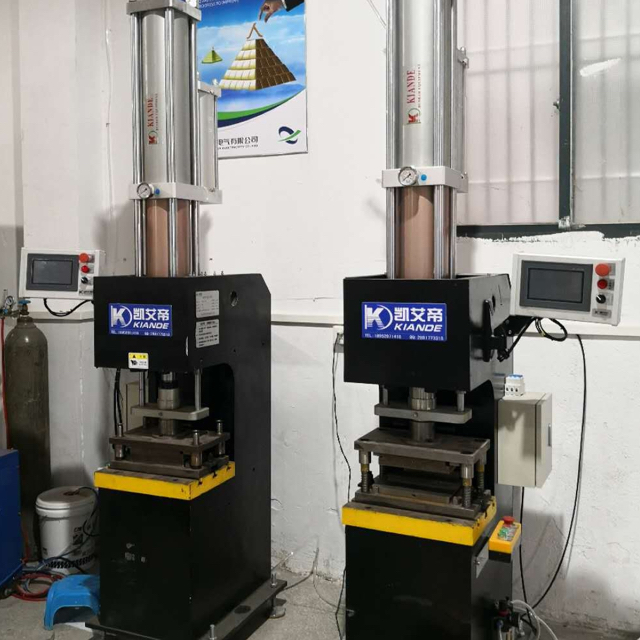
Evaluating a Busbar Bending Machine involves looking past surface specifications. You must interrogate how the machine actually performs under load. Hardware robustness determines long-term reliability. We recommend focusing on four primary mechanical dimensions during your assessment.
Consistent copper busbar bending demands excellent spring-back control. When you bend metal, it naturally attempts to return to its original flat state. This material memory causes angular inaccuracies. Ask vendors how their machine accounts for this phenomenon. Premium systems feature digital angle encoders. These sensors measure the bend in real-time. Simpler, highly reliable machines use adjustable physical stroke limits. Operators calibrate the stroke to over-bend the material just enough to achieve the perfect final angle.
Multifunctional machines save valuable factory floor space. They consolidate cutting, punching, and bending into one footprint. However, you must weigh these space-saving benefits against potential production bottlenecks. If three operators need access simultaneously, a single-pump machine will halt production. Two operators will stand idle while one works. Always specify multi-pump or independent dual-valve configurations if you plan to run concurrent operations.
Evaluate the Programmable Logic Controller (PLC) or touchscreen interface carefully. The software must serve the operator, not confuse them. Does it allow for easy recipe storage? A good interface lets you save common bend profiles. When a repeat order arrives, the operator simply selects the stored recipe. This eliminates trial-and-error scrap. Complex interfaces slow down production and increase operator frustration. Request a live software demo to gauge intuitiveness.
Understand the strict relationship between hydraulic pressure (tonnage) and cylinder stroke speed. You need enough tonnage to ensure thick copper bars bend smoothly. However, oversized cylinders move slowly. If you sacrifice cycle time for excessive, unnecessary power, your daily part output plummets. Match the machine's tonnage precisely to your maximum material thickness.
Tonnage vs. Cycle Speed Impact Chart | |||
Machine Tonnage | Max Copper Thickness | Estimated Cycle Speed | Ideal Application |
|---|---|---|---|
30 Tons | Up to 10mm | Very Fast | Light switchgear, high volume |
50 Tons | Up to 15mm | Moderate | Standard panel boards |
80+ Tons | 16mm to 20mm | Slower | Heavy industrial substations |
Procurement extends beyond the primary machine frame. The surrounding ecosystem determines your daily operational success. Tooling, safety measures, and maintenance protocols require strict scrutiny. Failing to evaluate these areas leads to unexpected downtime.
The physical busbar tooling dictates how quickly you can adapt to new jobs. Slow tooling changes represent a massive hidden cost. Evaluate the specific design of the die sets. How quickly can operators swap between flat bending, vertical bending, and U-bending dies? Quick-release pins and tool-less locking mechanisms drastically reduce setup times. Heavy, bolted-down dies frustrate operators and destroy batch efficiency.
Never compromise on physical safeguards. Verify the presence of active and passive safety systems. Look for properly calibrated light curtains that halt the machine if a hand enters the hazard zone. Check for accessible emergency stops on all sides. Foot pedal covers prevent accidental actuation from dropped tools. Ensure the equipment adheres strictly to regional machinery directives, such as CE marks in Europe or OSHA compliance standards in North America.
Assess the build quality of routine wear components. Hydraulic seals inevitably degrade over time. Inquire about the specific brand and material of the internal seals. Check if the machine includes an integrated oil cooling system. Heat destroys hydraulic fluid viscosity. A dedicated cooler proves absolutely essential for continuous, multi-shift operations. Furthermore, guarantee the fast availability of replacement wear parts from your chosen vendor.
Estimate the ramp-up time for operators. Transitioning from legacy manual methods to programmable hydraulic or CNC interfaces challenges older workforces. Assess the vendor's training programs. Do they offer on-site commissioning? Comprehensive training reduces initial machine damage and speeds up your return on investment. Do not underestimate the value of excellent vendor-supplied documentation and video tutorials.
Making the final procurement decision requires objective financial justification. You must present management with clear evidence of return on investment. Move beyond basic feature comparisons. Focus on quantifiable production improvements.
Quantify how much raw material you currently waste. Calculate the monthly volume of scrapped copper or aluminum. Improved first-pass yield directly impacts your bottom line. Precision bending eliminates trial-and-error waste. Documenting this raw material savings often justifies the machine's purchase price faster than anticipated labor savings.
Evaluate the manufacturer's warranty terms meticulously. Hardware breaks; how the vendor responds matters most. Check the geographic proximity of their service technicians. Ask about Service Level Agreements (SLAs) regarding guaranteed response times. Modern machines often feature remote diagnostics. This allows engineers to troubleshoot PLC faults via an internet connection, bypassing expensive on-site visits.
Formulate a standardized Request for Quote (RFQ). A rigid RFQ forces vendors to compete on your exact terms. Follow these steps to build your RFQ:
Compile a package of your most difficult, common busbar engineering drawings.
Send these exact drawings to your shortlisted vendors.
Require them to provide guaranteed cycle-time estimates based on those specific drawings.
Ask for a video demonstration of their machine producing your specific part.
Choosing the correct equipment relies on aligning machine capabilities directly with your production bottlenecks. Avoid the temptation to over-purchase unnecessary automated features if your volume does not support them. Conversely, do not under-buy a manual machine when your throughput demands hydraulic power. Assess your baseline materials, required tolerances, and tooling changeover needs.
We strongly recommend prioritizing live demonstrations. Demand test-bending of your own facility's specific material samples before signing final procurement documents. Seeing the machine handle your actual copper builds supreme confidence.
Take the next step toward optimizing your factory floor. Contact our engineering team for a comprehensive workflow assessment. Request a detailed spec sheet today to compare configurations and find the perfect fit for your operation.
A: Most standard industrial hydraulic machines comfortably bend copper and aluminum up to 15mm or 16mm in thickness. Heavy-duty variants, equipped with higher tonnage cylinders (e.g., 50 to 80 tons), can process solid busbars up to 20mm thick. Always verify the tonnage rating against your specific material grade.
A: A 3-in-1 machine saves significant floor space and reduces initial capital expenditure. It suits small to medium operations perfectly. Standalone units prove better for high-volume factories where multiple operators must perform cutting, punching, and bending tasks concurrently without waiting for a shared hydraulic pump.
A: CNC machines utilize intelligent material libraries and digital angle encoders. The software calculates the required over-bend based on the material type, thickness, and historical spring-back data. Real-time sensors measure the physical angle during the stroke, adjusting the cylinder pressure dynamically to achieve a perfect final resting angle.
A: Routine maintenance includes checking hydraulic fluid levels, inspecting lines for leaks, and replacing fluid filters annually. Operators must grease the bending dies and punching tools daily to prevent metal galling. You should also routinely check the oil cooling fan and inspect safety light curtains for proper calibration.

