
Views: 0 Author: Site Editor Publish Time: 2026-10-11 Origin: Site


Insulation integrity forms the absolute foundation of operational safety in high-voltage electrical distribution systems. When copper or aluminum conductors carry massive currents through commercial and industrial facilities, the dielectric barrier must remain flawless. Inconsistent insulation wrapping directly threatens this barrier. Improper film tension creates microscopic air gaps, overlapping faults, and severe partial discharge risks. These defects compromise busduct longevity and frequently cause assembled units to fail strict IEC and NEMA compliance standards during routine factory acceptance testing.
Precise tension control stands as the primary differentiator between legacy manual wrapping processes and modern automated systems. Shifting away from friction-based hand tools represents a necessary risk-mitigation strategy for any competitive manufacturing facility. Automated tension control optimizes material yield, eliminates operator-induced variance, and scales production throughput. Mastering this specific mechanical variable ensures that every linear meter of busduct delivers reliable, long-term dielectric performance under heavy electrical loads.
Dielectric Reliability: Consistent film tension eliminates micro-voids and wrinkling, directly reducing the risk of partial discharge and dielectric failure in the finished busduct.
Closed-Loop Precision: Modern automated systems utilize load cells and PLC-driven feedback loops to adjust tension in milliseconds, outperforming mechanical friction brakes.
Material Optimization: Automated tension control reduces film snapping and stretching, lowering raw material waste (Mylar, Nomex, PVC) by up to 15% compared to manual methods.
Scalability & ROI: Upgrading from manual tools to an integrated automatic busbar wrapping machine standardizes production throughput, removes operator-dependent variability, and delivers a measurable return on investment through reduced scrap and labor costs.
When you wrap a cylindrical cable, the distance from the center of rotation to the surface remains constant. The film pulls off the spool at a steady, predictable rate. Busbars introduce a completely different mechanical reality. They feature flat sides and sharp, 90-degree corners. As the wrapping head spins around a rectangular copper or aluminum bar, the geometry creates a severe cam effect. The distance from the center of rotation changes drastically every few milliseconds.
When the film contacts the flat side of the busbar, the pull rate slows down. As the head rotates past the sharp corner, the corner violently yanks the film. This sudden acceleration creates a massive tension spike. If the machine cannot compensate instantly, the film stretches or snaps directly on the corner. Conversely, as the head moves back over the flat side, the tension drops. Without active compensation, the film sags, creating air pockets between the insulation and the metal.
These air pockets represent the most common cause of partial discharge in high-voltage systems. Air has a lower dielectric constant than solid insulation. When subjected to high electrical stress, the air inside these microscopic voids ionizes. This ionization slowly eats away at the surrounding insulation, eventually causing a catastrophic short circuit. Maintaining a perfectly flat, tight wrap across both the flats and the corners requires dynamic mechanical intervention.
Engineers categorize tension control into open-loop and closed-loop architectures. Open-loop systems rely on mechanical friction brakes or magnetic powder clutches. You set a static resistance level, and the machine applies that exact braking force regardless of what happens at the wrapping head. These systems fail to account for the cam effect of rectangular busbars. They also ignore the changing diameter of the film spool as material depletes.
Modern facilities rely on closed-loop systems to guarantee dielectric integrity. A closed-loop architecture continuously measures the actual physical tension on the film and adjusts the braking force in real-time. This requires three primary components working in perfect synchronization: sensors, controllers, and actuators.
Load cells serve as the primary sensing mechanism. These devices utilize highly sensitive strain gauges arranged in a Wheatstone bridge circuit. As the film travels over a roller attached to the load cell, the mechanical downward force slightly deforms the strain gauge. This deformation alters the electrical resistance, sending a precise analog signal to the controller. Some machines also incorporate dancer rollers. These spring-loaded or pneumatically controlled arms absorb sudden mechanical shocks, providing a physical buffer against tension spikes while simultaneously measuring the web position.
The Programmable Logic Controller (PLC) acts as the central processing unit. It receives the analog signals from the load cells thousands of times per second. The PLC runs these inputs through a Proportional-Integral-Derivative (PID) algorithm. The PID loop calculates the exact difference between the actual measured tension and the target tension setpoint.
Based on this calculation, the PLC sends a command to the servo motor controlling the film spool. If the tension spikes at a corner, the servo motor instantly reduces its braking torque, allowing the film to spool out faster. When the tension drops along the flat side, the servo increases torque to pull the film tight. This entire cycle happens in milliseconds, ensuring uniform pressure across the entire geometry of the busbar.
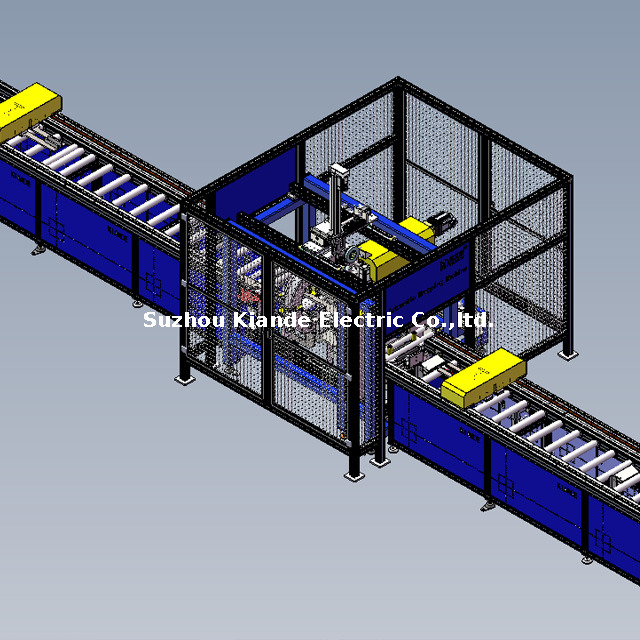
Relying on a manual busbar packing machine introduces unacceptable levels of variance into the production cycle. Manual machines depend entirely on the operator's physical feel and visual estimation. The operator turns a mechanical dial to increase or decrease friction on the film spool. They cannot adjust this dial fast enough to compensate for the corners during a high-speed wrapping cycle.
This static approach guarantees inconsistent overlap percentages. A standard busduct requires an exact 50% overlap to ensure uniform dielectric strength. When tension fluctuates, the film wanders laterally across the conductor. The overlap might drop to 30% in some areas and spike to 70% in others. This inconsistency creates localized weak points in the insulation barrier.
Operator fatigue compounds these mechanical limitations. Wrapping heavy copper bars requires significant physical exertion and intense concentration. As a shift progresses, operators naturally slow down and miss subtle defects. Scrap rates climb as finished units fail routine high-voltage testing.
Transitioning to an automated busbar packing platform removes human error from the equation. Automated platforms execute pre-programmed tension recipes with absolute repeatability. They maintain the exact same overlap percentage and tension profile at the beginning of a Monday morning shift as they do at the end of a Friday afternoon shift.
Furthermore, automated systems provide comprehensive data logging. The PLC records the exact tension parameters, rotational speeds, and overlap metrics for every single conductor. This traceability proves invaluable during quality assurance audits or when investigating field failures.
Feature | Manual Packing Machine | Automated Packing Platform |
|---|---|---|
Tension Adjustment | Static friction dials, reliant on operator estimation. | Dynamic closed-loop PID control via servo motors. |
Corner Handling | High risk of film tearing or excessive elongation. | Instantaneous torque compensation prevents corner stress. |
Traceability | None. Relies on post-production dielectric testing. | Comprehensive data logging for every wrapped conductor. |
Scrap Rate | High, especially with thin or delicate insulation films. | Minimal, due to consistent mechanical application. |
Operator Dependency | Requires highly skilled, experienced personnel. | Requires basic HMI recipe selection and monitoring. |
Different insulation materials possess vastly different mechanical properties. You cannot run Mylar, Nomex, and Kapton using the same tension settings. The equipment must adapt to the specific tensile strength, elasticity, and surface friction of the chosen film.
Polyester films like Mylar offer excellent dielectric properties but deform easily under excessive mechanical stress. If the tension runs too high, Mylar stretches and thins out. This thinning directly reduces the voltage rating of the finished busduct. Wrapping Mylar requires highly sensitive load cells and a very responsive PID loop to prevent elongation at the corners.
Nomex, an aramid paper, behaves differently. It lacks the elasticity of Mylar. If the tension spikes, Nomex does not stretch; it simply snaps. However, if the tension runs too loose, the stiff paper wrinkles heavily along the flat sides of the busbar. Wrinkles trap large volumes of air, guaranteeing a partial discharge failure. Nomex demands a firm, highly consistent tension profile with zero tolerance for sudden mechanical shocks.
Polyimide films like Kapton handle extreme temperatures but come at a premium cost. Wasting Kapton due to poor tension control destroys project margins rapidly. Kapton requires precise taper tension control. As the expensive roll depletes, the machine must dynamically adjust the braking torque to account for the shrinking diameter, ensuring you can use the roll down to the bare core without snapping the film.
Setting up a new material profile requires a systematic approach:
Measure the exact width and thickness of the new film roll using digital calipers.
Input the material's maximum tensile strength into the HMI recipe screen.
Run a short test section of bare copper at 25% of the standard production speed.
Inspect the corners for micro-tearing and the flats for air gaps.
Adjust the PID gain settings to increase or decrease servo responsiveness.
Gradually increase the wrapping speed while monitoring the load cell feedback on the HMI.
Save the optimized parameters as a locked recipe for future batches.
Upgrading your insulation capabilities requires looking at the entire manufacturing workflow. An automatic busbar wrapping machine does not operate in isolation. It must sync perfectly with upstream and downstream processes to maximize throughput.
Upstream, the bare copper or aluminum must arrive at the wrapping head perfectly straight and free of burrs. Sharp burrs left over from the cutting or punching stations will slice through the insulation film regardless of how well you control the tension. You must integrate deburring and straightening stations directly before the wrapping module.
The conveyor systems must communicate seamlessly. The linear feed rate of the conveyor dictates the overlap percentage of the film. If the conveyor speeds up while the wrapping head maintains a constant RPM, the overlap decreases. The PLC must synchronize the conveyor servo motors with the wrapping head servo motors. This electronic gearing ensures the overlap remains locked at exactly 50%, even as the machine ramps up to full speed or slows down to a stop.
Integrating this equipment into a complete Busduct Production Line requires careful spatial planning. You need adequate floor space for operators to load heavy film spools safely. The outfeed conveyors must transition smoothly into the high-voltage testing bays. Any mechanical binding or scratching during this transition will damage the freshly applied insulation, rendering the precise tension control useless.
Even with advanced closed-loop systems, operators will occasionally encounter wrapping defects. Diagnosing these issues quickly prevents massive scrap runs. You must train your maintenance team to identify the physical symptoms of tension failures and apply the correct mechanical or software fixes.
Telescoping film rolls indicate a severe alignment issue. When the film roll looks like a pushed-out telescope, the tension is pulling unevenly across the width of the web. This usually means the film spool shaft is no longer perfectly parallel to the wrapping head. You must realign the spool shaft using a precision machinist level and check the dancer rollers for uneven bearing wear.
Wrinkling along the flat sides of the busbar points directly to insufficient tension or a sluggish PID response. The servo motor is not increasing torque fast enough after passing the corner. To fix this, increase the proportional gain in the PID settings via the HMI. This forces the servo to react more aggressively to tension drops.
Micro-tearing at the corners means the tension is too high, or the mechanical brake is sticking. If you use a pneumatic dancer arm, check the air pressure regulator. A faulty regulator will apply too much resistance. If you use a fully servo-driven system, decrease the overall tension setpoint or inspect the load cell for calibration drift.
Inconsistent overlap percentages usually stem from conveyor slippage rather than the wrapping head itself. If the heavy copper bar slips on the drive rollers, the linear feed rate fluctuates. Inspect the polyurethane coating on the conveyor drive wheels. If the coating looks glazed or worn, replace the wheels to restore proper traction.
Closed-loop systems rely entirely on accurate sensor data. If the sensors drift out of calibration, the PLC will make incorrect torque adjustments, destroying the insulation quality. You must implement strict, documented maintenance protocols to keep the equipment running within factory tolerances.
Load cells require calibration checks every 90 days. Constant vibration and temperature fluctuations cause the strain gauges to drift. Technicians must hang certified calibration weights from the load cell rollers and verify that the HMI displays the exact corresponding tension. If the reading deviates by more than 2%, you must recalibrate the sensor through the PLC software.
Dust and copper shavings present a constant threat to the mechanical components. Copper dust is highly conductive and abrasive. If it infiltrates the servo motor encoders or the slip rings on the wrapping head, it will cause erratic behavior and sudden tension spikes. Operators must blow down the wrapping module with dry compressed air at the end of every shift.
Inspect the film guide rollers weekly. These rollers must spin freely with zero resistance. If a bearing seizes, the roller becomes a static friction point, artificially increasing the web tension and throwing off the load cell readings. Replace any bearings that feel gritty or emit noise during operation.
Selecting the right busduct insulation equipment requires evaluating specific mechanical trade-offs based on your production goals. Speed versus tension accuracy represents the most critical balance. Increasing the RPM yields higher daily throughput. However, the machine must maintain tight tension tolerances without snapping the film at high speeds. High-speed wrapping demands ultra-fast PLC scan times and highly responsive servo motors. Facilities must determine the optimal wrapping speed that maximizes output without compromising dielectric integrity.
Assess the initial capital expenditure against the long-term operational savings. Automated systems generate massive savings through reduced raw material waste. They lower direct labor requirements by allowing a single operator to manage multiple machines. Furthermore, they drastically reduce the frequency of failed dielectric tests, eliminating the costly process of stripping and re-wrapping rejected busbars.
Consider the physical footprint and layout of the machinery. Integrating a new wrapping module into an existing, continuous production line requires careful spatial planning. The equipment must align perfectly with infeed and outfeed conveyors to prevent mechanical binding or scratching of the bare copper. Ensure the facility layout allows adequate clearance for operators to load heavy film spools safely and perform routine maintenance on the wrapping heads.
To upgrade your facility's wrapping capabilities effectively, take the following actions:
Audit your current scrap rates and analyze recent dielectric failure logs to identify tension-related defects.
Map out the physical footprint of your existing production line to determine integration feasibility for automated modules.
Document the specific tensile properties and thickness variations of your current insulation materials.
Request a technical demonstration of closed-loop tension control systems using your specific busbar profiles.
Establish a 90-day calibration schedule for all load cells and dancer rollers to prevent sensor drift.
A: The machine utilizes servo-driven dynamic tension adjustments. As the wrapping head rotates, load cells detect the sudden increase in tension caused by the sharp corners. The PLC instantly commands the servo motor to reduce braking torque, preventing corner tearing while maintaining uniform pressure across the flat sides.
A: Open-loop systems use mechanical friction or magnetic powder brakes to apply constant resistance without monitoring actual film tension. Closed-loop systems use load cells and dancer rollers to measure tension in real-time, feeding data to a PLC that actively adjusts servo torque to maintain precise setpoints.
A: No. Manual machines rely on static friction dials and operator estimation. They cannot dynamically adjust tension for busbar corners or decreasing roll diameters. This lack of consistency and traceability leads to uneven overlap, air gaps, and higher rates of dielectric failure.
A: Highly elastic or easily deformable films require the highest precision. Thin Mylar (PET), Teflon, and certain Polyimide films will stretch, thin out, or snap if tension spikes. Nomex requires exact tension to prevent wrinkling without tearing the aramid paper structure.
A: Proper tension ensures the film lays perfectly flat against the conductor with exact overlapping. This eliminates micro-voids and air gaps between layers. Air gaps ionize under high voltage, causing partial discharge that rapidly degrades the insulation and lowers the overall dielectric strength.
A: Integration requires matching the wrapping machine's throughput speeds with upstream cutting and downstream testing stations. Engineers use PLC handshakes to synchronize conveyor movements, ensuring the busbar enters and exits the wrapping head seamlessly without mechanical binding or scratching.

