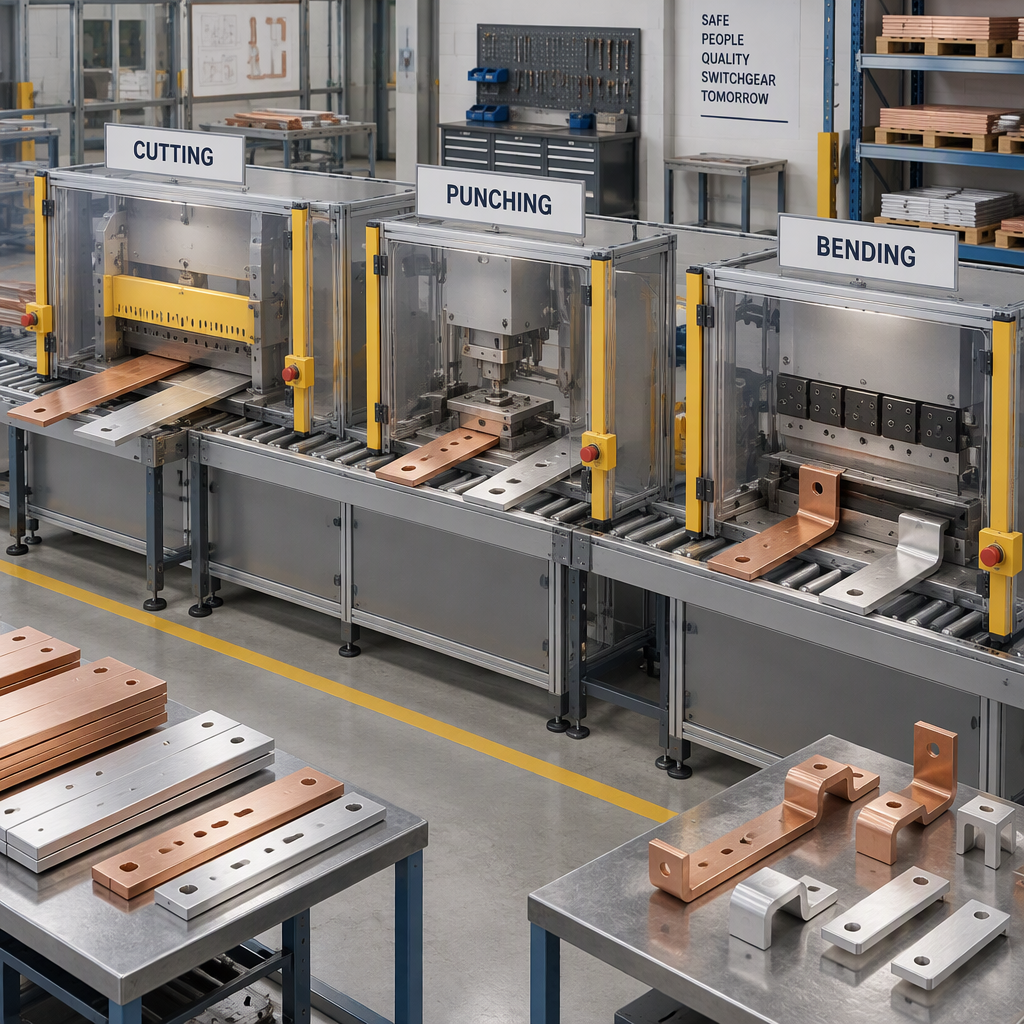
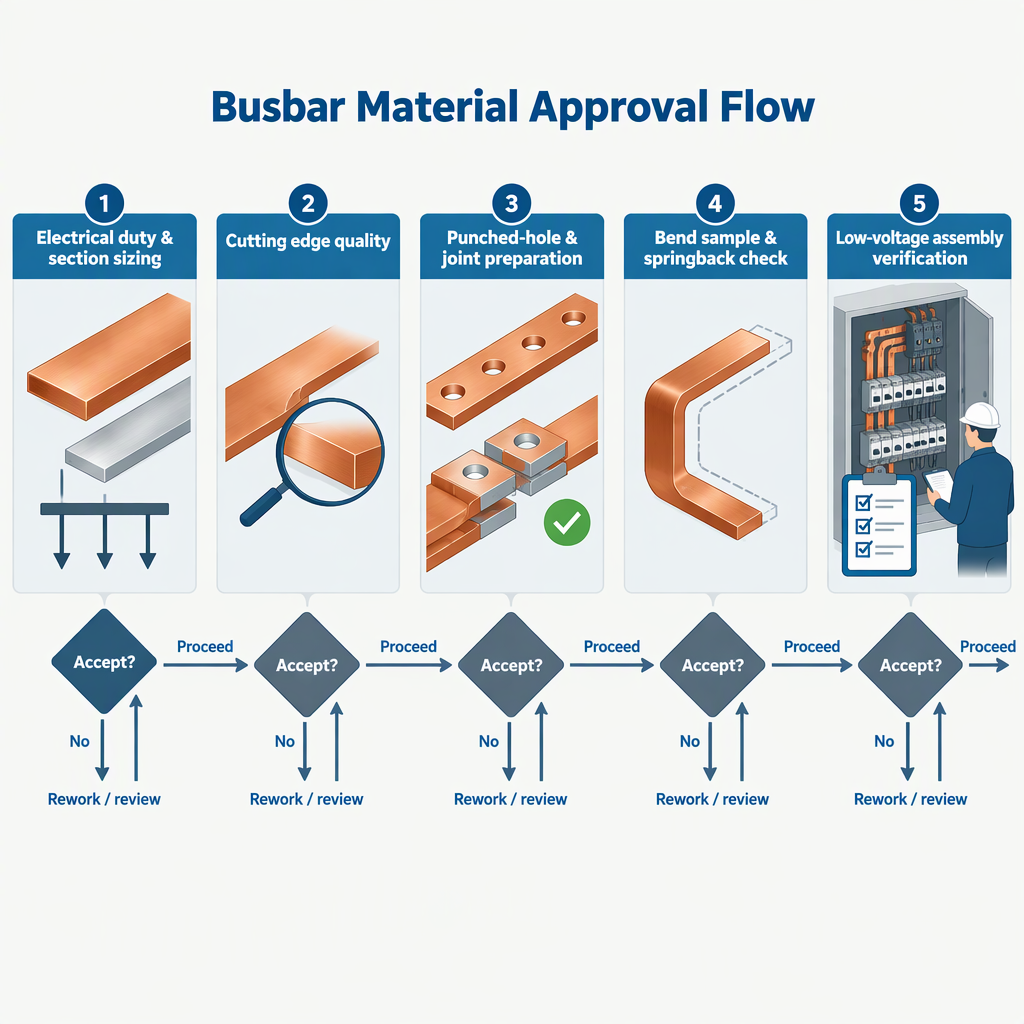
These questions focus on selection, processing and verification issues that should be resolved before copper or aluminum busbars enter production.
Is copper or aluminum the better busbar material?
Copper should be evaluated with copper busbar ampacity and temperature-rise assumptions. Aluminum should be evaluated with aluminum-specific conductor references. The better material is the one that satisfies the electrical duty, joint design, processing route and verification requirements for the project.
Can a factory use the same cutting settings for both materials?
Do not assume that one cutting setup is acceptable for both. Blade clearance, edge quality and burr control should be checked on the actual copper or aluminum bar, thickness and tooling.
What is the key punching risk when changing material?
The key risk is approving a hole pattern without checking hole quality, edge distance and burr condition on the selected material. The punched sample should be inspected as a connection part, not just as a hole in a coupon.
Why does bend radius need a separate trial?
Bend radius and springback are process variables in busbar bending. A separate trial confirms whether the selected material, thickness and tooling can produce the required geometry without unacceptable deformation.
How should procurement compare cost?
Include cutting, punching, bending, deburring, inspection and trial scrap. Also include any verification work required for the finished low-voltage switchgear assembly. A raw-material-only comparison can miss important production and approval costs.
Which standard matters for low-voltage switchgear assemblies?
IEC 61439-1:2020 covers general definitions, service conditions, construction requirements, technical characteristics and verification requirements for low-voltage switchgear and controlgear assemblies, and the IEC page states that the 2020 third edition replaces the 2011 second edition.
What should be in the first shop trial?
Include controlled samples for cutting, punching and bending; record settings; inspect burrs, holes, bend geometry and springback; and release only the settings that meet the buyer's drawing and inspection requirements.