


A three-in-one busbar machine makes sense when one unit that shears, punches and bends copper or aluminium bar covers every bar you routinely run, when most jobs need all three operations on the same bar, and when a supplier can document the rated capacity of each operation before you order. It is the wrong purchase when a single operation is your bottleneck, when your widest routine bar exceeds one station's rating, or when nobody will put the machine's capability in writing.
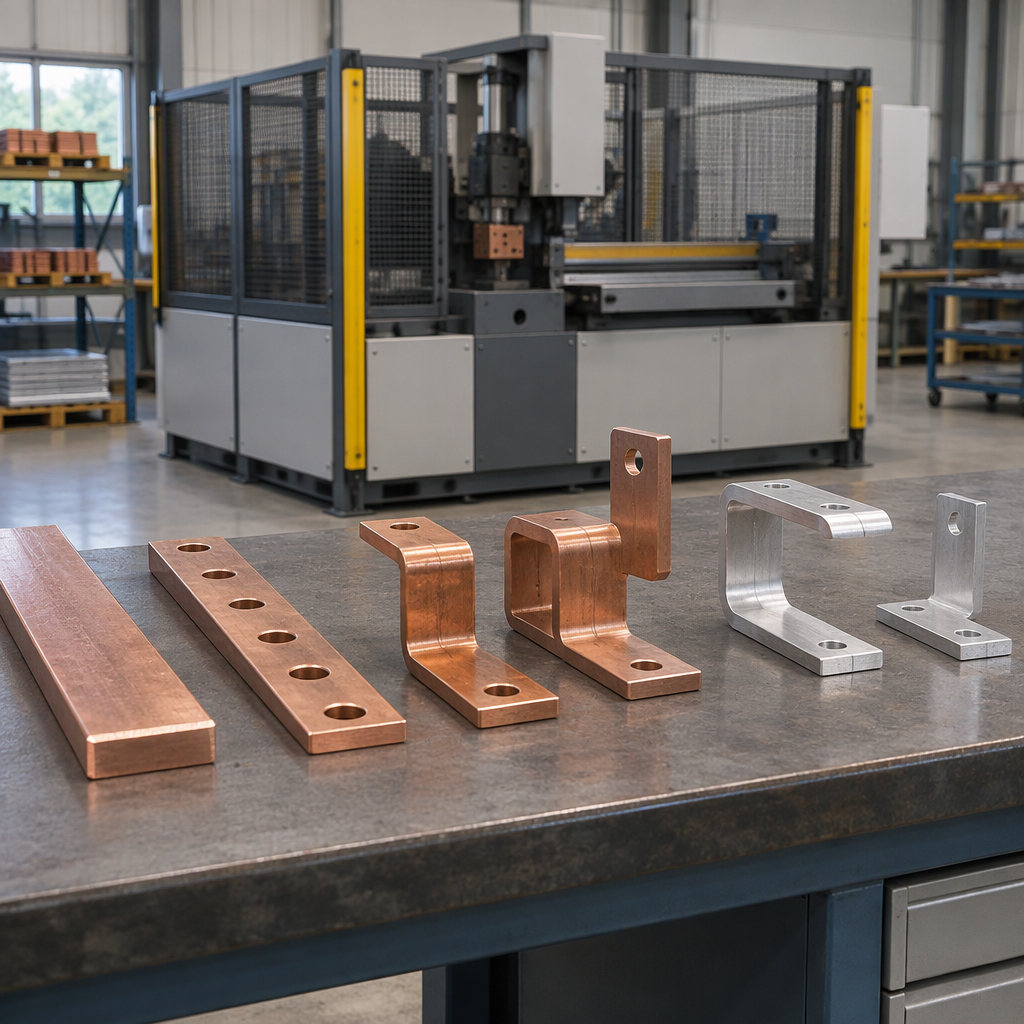
| Fit screen question | A combined machine fits when | Look elsewhere when |
|---|---|---|
| Bar range | Your routine widths and thicknesses are covered by shearing, punching and bending alike. | Your usual bar is covered by one operation but not another, so bar still travels to a second machine. |
| Operation mix | Most jobs need all three operations in modest batches, so one setup and one operator keep the bar moving. | One operation dominates your hours and would keep a dedicated machine busy on its own. |
| Tolerance | Cut length, hole position and bend angle can be checked on a first-off piece and held in production. | Tolerances are tighter than the machine can repeat, or no first-off check has been demonstrated. |
| Space and flow | Machine, tooling and bar handling fit the bay, with bar flowing from shear to punch to bend in one direction. | Bar must cross the shop between stations or be stored where it blocks access. |
How does one machine shear, punch and bend a copper or aluminium bar?
The bar stays on one frame and passes through three operations in sequence: it is sheared to length, punched for connection holes, and bent to the drawing angle, with stops and tooling reset between operations instead of the bar travelling to another machine. Equipment of this type is described as designed for cutting, punching and bending aluminium or copper bars for busway, switchgear and transformer production, so treat the rated limits as three separate numbers rather than one headline capacity.
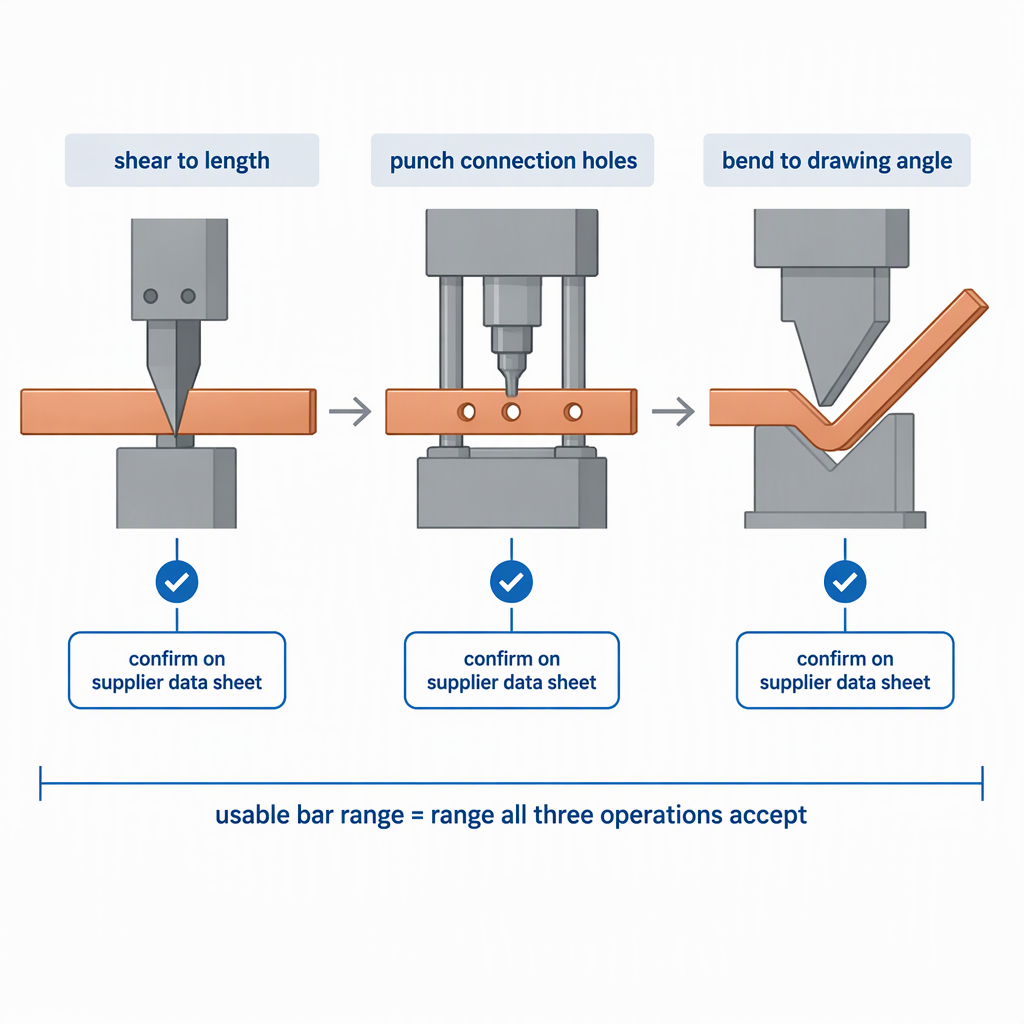
- Check the job against the machine. Confirm the bar's material, width and thickness sit inside the rated capacity of every operation you are about to run, and keep the supplier's data sheet at the machine.
- Shear to length. Set the length stop to the drawing dimension, hold the bar flat and square against it, cut, then measure the first piece before running the batch.
- Punch the connection holes. Fit the punch and die set matching the hole diameter and bar thickness, position the bar against the stop or template, and check hole position on the first piece.
- Bend to the drawing angle. Set the bend station, bend one piece, and check the angle and the distances between bends against the drawing before continuing.
- Verify the finished bar. Compare cut length, hole positions and bend angles with the drawing, and release the batch to assembly only when the sample pieces agree.
Two limits follow from combining the operations. The usable bar range is the range that every operation you use can accept, so a bar that shears and punches comfortably may still exceed what the bend station takes. And before any tooling change, die swap, or clearing of a jammed or offcut bar, switch the machine off at its isolator, disconnect the power supply, wait for all motion to stop, then use only the access the manufacturer's manual permits. Never reach into a shear, punch or bend station while the machine is energised or still moving.
What order volume and bar mix does a combined machine need to pay off?
No published order volume settles this for you; the case comes from your own job data. A combined machine pays off when a steady share of your work needs all three operations on the same bar, when bar currently spends real time queuing and being re-clamped between separate machines, and when your bar mix stays inside one machine's rated range.
- Count the jobs in a typical month that need shearing, punching and bending on the same bar, with their batch sizes.
- List the materials, widths and thicknesses you actually run, and mark the widest and thickest combinations.
- Time how long a bar waits, travels and is re-clamped between your current machines, including the operator time involved.
- Record the rework caused by handling and repositioning the same bar at more than one station.
- Note the floor space your current machines, bar storage and access routes occupy.
- Note how many jobs need only one operation, because those gain nothing from a combined machine.
A volume case built on a brochure figure, or on cycle times measured on somebody else's bar, will not survive production. Ask for documented capacity per operation, then agree an acceptance trial on your own material and drawing, and write the dimensions and sample size that trial must meet into the order.
Which data should you demand before you compare three-in-one machine quotes?
Ask every supplier for the same written data set, or the quotes cannot be compared at all: rated capacity for each of the three operations, the tooling included, how positions are set and checked, what guarding is fitted, the installation requirements, and the documentation and support that ship with the machine.
- Rated capacity stated separately for shearing, punching and bending: maximum bar width and thickness for each operation.
- Working limits per operation, including the hole diameters, edge distances and bend radii the supplied tooling can produce.
- Tooling included as standard, what is optional, and how blades, punches, dies and bend tooling are reordered.
- How cut length, hole position and bend angle are set and confirmed by the operator, and how repeatable that setting is.
- Guarding, interlocks and emergency stops fitted, and what the manual permits for tooling changes and clearing jams.
- Installation data: power supply, compressed air if required, footprint, weight and floor or foundation needs.
- Documentation and support: operating manual, spare-parts list, and who trains operators and services the machine in your country.
- Acceptance criteria: the sample pieces and dimensions the machine must produce on your material before you accept it.
Watch two traps. A quote that gives one capacity figure for a three-operation machine says nothing about which station limits your bar, and a specification copied from a brochure without a demonstrated trial carries no weight in the decision. Put the same questions to every supplier in writing and compare the answers line by line.
When are dedicated machines or an automated line the better choice?
Choose dedicated machines when one operation takes most of your hours and bars seldom need all three operations in one pass. Choose an automated or production-line setup when volumes are high and the same bar families repeat, because there the value comes from consistency and material handling rather than from one flexible workstation. A combined machine sits between the two.
Suppliers keep these choices as separate product categories rather than variants of one machine: the English-language range published by Kiande Electric lists busbar machines, busduct production lines, busbar automatic production equipment and switchgear production lines as distinct categories.
| Option | Best fit when | What it does not solve | What to check |
|---|---|---|---|
| Combined shear-punch-bend machine | Mixed, modest batches where the same bar needs all three operations and floor space is limited. | Little advantage when one operation runs continuously at high volume. | Per-operation capacity, tooling, first-off check, acceptance trial. |
| Separate dedicated machines | One operation dominates production and bars are cut, punched or bent in long runs. | Bar handling, queuing and re-clamping between stations stay in the process. | Material flow between stations, labour per operation, floor space per machine. |
| Automated or production line | High, repeating volumes of similar bars where consistency and handling dominate. | Little benefit on low-volume, high-variety work, with a larger footprint and investment. | Changeover time, programme flexibility, fit with your assembly flow. |
What safety and electrical checks belong with in-house busbar fabrication?
Two separate checks belong with doing your own fabrication. The mechanical hazards of shearing, punching and bending are controlled through guarding, isolation and a documented risk assessment before the machine runs in production. The electrical duty of the finished bar is decided separately, by conductor size and permissible temperature rise, and a clean cut does not by itself make a bar suitable for its current.
Conductor rating is a design decision taken before the bar is cut
The Copper Development Association defines busbar systems as copper conductors in bar form, exposed or enclosed, with one or more joints and take-off points, and publishes ampacity tables for rectangular copper No. 110 bar at rises of 30, 50 and 65 degrees C above ambient, together with mechanical-property data for stiffness and deflection checks. Its guidance advises designing for a 30 degrees C rise or less and states that rises above 65 degrees C are not recommended and are not energy-efficient. Start from the association's busbar conductor data for the current your bar must carry, then confirm the final bar size against the installation rules that apply to your project.
Shearing, punching and bending store energy and create sharp edges and pinch points, so the machine is a hazard to be assessed, not a bench tool. The United Kingdom's Health and Safety Executive frames electrical safety at work as a duty to assess and control electrical hazards, lists the standards and approved codes of practice used there, and notes that injury risk is generally greater at higher voltages and depends on individual circumstances. Treat that as the framework in its own jurisdiction and apply the equivalent national requirement where your shop operates.
Whichever rules apply, complete a risk assessment covering all three stations, guarding, interlocks and emergency stops before production use; fit and keep the guarding the machine was supplied with; and make isolation, tooling changes and clearing jams part of operator training. Before reaching into any station for a tooling change or to clear a jam, isolate the machine, switch off and disconnect its power supply, wait for all motion to stop, and follow the manufacturer's manual for permitted access only.
Conclusion
Buy a three-in-one busbar machine only when three things are settled in writing: its rated capacity for shearing, punching and bending covers every bar you routinely run; your job mix needs all three operations in batches where one flexible machine beats dedicated ones; and the supplier has agreed an acceptance trial on your own material with the dimensions it must hold.
- Settle the bar range per operation, not as a single capacity figure.
- Settle the workload case with your own timings, then prove it on a trial piece.
- Settle safety, installation and documentation requirements before the purchase order.
Frequently asked questions
These are the questions panel and busway shops raise most often before committing: bar sizes, speed against dedicated machines, aluminium, tolerance, floor space, and what to do when a bar falls outside the machine's rated range.
What busbar sizes can a three-in-one machine process?
The honest answer is per operation, not one figure. Machines of this class are built for cutting, punching and bending aluminium or copper bars, and shearing, punching and bending each carry their own maximum width and thickness, so the usable range is what all three cover. Ask each supplier for the three ratings separately and match them against your widest and thickest routine bar.
Is a combined machine as fast as three dedicated machines?
Not as a blanket comparison. A dedicated machine running one operation continuously holds the advantage on that operation, while a combined machine saves the handling, queuing and re-clamping of moving one bar between three workstations. Judge it on your own route: measure how long a bar takes today from cut to finished bend, then ask the supplier to demonstrate the same job on one machine.
Can it process aluminium bar as well as copper?
Both materials are in scope for the equipment type, which is described as designed for cutting, punching and bending aluminium or copper bars. The practical limit is the alloy and temper you buy, because different tempers behave differently under the same tooling and bend radius. Give the supplier your exact alloy and temper designations, ask which tooling and radii they recommend for each, and confirm the result on trial pieces before the order.
How tight a tolerance should we expect?
Ask for the machine's stated repeatability for cut length, hole position and bend angle, then test it yourself. What matters is the tolerance measured on your own bar, on the machine you are buying, with the tooling that ships with it. Agree the first-off check, the sample size and the acceptance dimensions, and record them in the order.
How much floor space and handling room does one machine need?
More than the machine's footprint, because long bars go in and come out. Request the footprint, weight and the clearance the manual specifies for loading, unloading, tooling changes and opening access panels, then lay that out with the longest bar you regularly run, plus bar storage and a clear route to the next assembly station.
What should we do when a bar falls outside the machine's rated range?
Do not force a bar through a station rated below it. Identify which operation sets the limit, then decide deliberately: keep or buy a separate machine for that size, choose a larger combined machine if your job mix justifies the extra capacity, or subcontract that bar. List the out-of-range sizes in your machine brief so the limit is known before the order rather than discovered in production.
