
Views: 0 Author: Site Editor Publish Time: 2026-06-17 Origin: Site


Plant managers and manufacturing executives face a critical crossroads today. You need to upgrade your busbar production facilities carefully. Over-investing in automation traps valuable capital in rigid systems. Under-investing cedes competitive advantage to faster, leaner rivals. We must recognize a harsh reality check. Automation is not a magic fix for broken manufacturing processes.
Choosing between a fully automatic assembly line and a semi automatic line requires deep analysis. You must evaluate production volume, product mix, and exact labor dependencies. This guide breaks down the operational, financial, and strategic differences between these systems. It helps decision-makers evaluate the exact level of automation their facility requires. You will learn how to bypass vendor hype. You will make choices rooted in operational reality.
Process Flow: Fully automatic lines prioritize continuous, software-driven workflows (from CAD to sorting), while semi-automatic lines rely on human operators for positioning, buffering, and quality-check interventions.
The Automation Paradox: Without stringent input material controls, fully automated systems risk "amplifying defects" at scale.
OpEx Over Price Tag: While semi-automatic setups boast lower initial CapEx, fully automated lines win on long-term OpEx for standardized, high-volume manufacturing.
The Hybrid Solution: Combining automated baseline processing with manual stations for custom shapes often yields the best ROI for mid-tier factories.
The foundation of any manufacturing upgrade begins with understanding equipment architecture. We classify production hardware into distinct operational philosophies. They differ vastly in how they handle raw materials and data.
A fully automated system functions as a closed-loop manufacturing environment. It requires almost zero human intervention during standard runtime. Equipment handles material loading via advanced gantry systems. The raw copper or aluminum moves directly into CNC processing modules. These stations perform high-speed punching and shearing. Next, the materials advance to automatic riveting stations. Finally, robotic arms handle finished-product sorting. The entire process mimics a single, uninterrupted organism.
Software synergy drives this seamless movement. Modern facilities utilize intelligent nesting software. This software translates CAD drawings directly into executable machine code. It optimizes cuts to minimize raw material waste. It pushes parameters down to the factory floor instantly. Furthermore, these lines integrate deeply with MES (Manufacturing Execution Systems) or ERP software. This provides real-time OEE (Overall Equipment Effectiveness) tracking. It guarantees full lifecycle data traceability for every single busbar produced.
Semi-automatic setups adopt a modular approach. They utilize distinct, separated workstations. A typical line might include a pre-assembly station, an automatic 180-degree flipping mechanism, and an accessory installation point. The system relies heavily on human operators. Workers handle complex component positioning. They often perform the initial single-side manual fastening. After this manual setup, the machine takes over heavy-duty repetitive tasks. Hydraulic riveting is a perfect example of a task offloaded to the machine.
These lines utilize asynchronous pallet-transfer conveyors or rotary dials. These mechanisms act as critical buffers. They accommodate the natural fluctuations in human work pacing. If an operator takes an extra ten seconds to align a custom bracket, the asynchronous conveyor simply queues the next pallet. It prevents a catastrophic line stoppage. This architecture marries human adaptability with mechanical force.
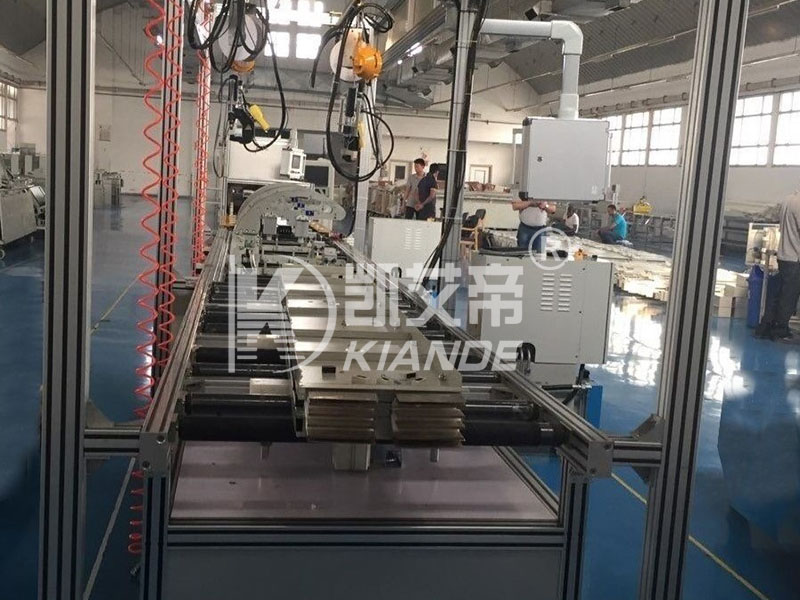
Executives must evaluate automation through a structured matrix. We look at five critical pillars to determine the right fit for your factory floor.
Output expectations dictate hardware choices. Semi-automatic machinery limits output to human ergonomic pacing. It works perfectly for localized factories producing under 100,000 units per year. Workers can only lift, align, and fasten at a specific maximum rate. Fully automatic equipment provides unrelenting, stable cycle times. It guarantees predictable output for mass busbar manufacturing. You eliminate shift-change bottlenecks and fatigue-related slowdowns.
You must weigh product variety against line speed. A semi-automatic line allows rapid tooling changes. Workers can adjust clamps quickly for custom or odd-shaped busbars. It excels in high-mix, low-volume scenarios. Conversely, fully automated lines are inherently rigid. They require extensive reprogramming and physical recalibration to handle new product dimensions. Changeovers become costly and time-consuming. You lose money every minute the automated line sits idle during a tooling swap.
Automation impacts quality control in unexpected ways. Fully automatic lines offer extreme precision. They use barcode scanning and vision inspection systems to verify dimensions. However, they remain highly sensitive to initial calibration. We call this the automation paradox. A single unspotted upstream error can result in massive batch scrap. The machine will perfectly replicate a flawed cut a thousand times before anyone notices.
Semi-automatic setups offer a distinct advantage here. They allow for mid-process human judgment. Operators can spot surface scratches or warped copper that sensors might miss. They catch anomalies early. However, this human element introduces minor variables in physical positioning. You trade absolute mechanical precision for cognitive error detection.
Modern product designs often dictate your automation level. Complex busduct assembly requires intense precision. Sandwich busbar configurations demand tight thermal and insulation wraps. They require exact pressure distribution during riveting. Fully automated systems apply uniform hydraulic pressure perfectly. This minimizes voltage drops and prevents dangerous hot spots. Human operators struggle to apply identical clamping force consistently across dense sandwich configurations.
Comparison Chart: Automation Impact Matrix | ||
Evaluation Criteria | Fully Automatic Line | Semi-Automatic Line |
|---|---|---|
Optimal Annual Volume | High (>100k units/year) | Low to Medium (<100k units/year) |
Changeover Agility | Slow and complex | Fast and adaptable |
Defect Risk | Batch amplification on calibration errors | Minor individual positioning variations |
Complex Geometries | Struggles with odd 3D bends | Easily handled by human operators |
Financial reality drives equipment procurement. You must look beyond the initial price tag to understand the true financial impact of your manufacturing setup.
Fully automated lines demand heavy upfront investment. You are not just buying machinery. You must purchase system integration, bespoke software programming, and physical safety enclosures. The capital expenditure hits the balance sheet all at once. Semi-automatic equipment allows for phased investment. You can purchase a standalone hydraulic punch today. You can add an automatic flipping station next quarter. This phased approach protects cash flow for smaller enterprises.
Operational expenditures tell a different story over time. Semi-automatic operations incur higher long-term labor costs. You must pay wages, handle employee turnover, and manage potential ergonomic liabilities. Output remains slower. Fully automated operations slash general labor costs. However, they require specialized, higher-paid maintenance technicians. You cannot rely on general operators to troubleshoot a PLC fault or a robot servo error. You must retain top-tier talent to prevent costly downtime.
Evaluate your investment over a 5-to-10-year horizon. Calculate labor displacement. Measure projected scrap reduction rates. Factor in the energy consumption of continuous robotics versus manual stations. High-volume factories typically see a rapid ROI on fully automated systems due to sheer scale. Mid-volume factories often realize better long-term returns from semi-automatic setups because they avoid idle machine depreciation.
Automation is rarely a zero-sum game. You do not have to choose between fully manual and fully automated extremes. The industry increasingly favors a blended strategy.
A hybrid approach integrates automated core processes with manual intervention stations. You automate predictable, high-volume tasks. Machines handle straight cutting, basic punching, and linear riveting. You retain manual stations for odd-shaped components or customized 3D bends. This gives you the speed of a machine and the adaptability of a human.
Implementing a hybrid line saves massive amounts of capital. You bypass the need for prohibitively expensive 3D-vision pick-and-place robots. Engineers often spend hundreds of thousands of dollars trying to automate the handling of complex, non-standard parts. If these parts only make up 5% of your total volume, automating them makes zero financial sense. A human operator can handle that 5% effortlessly at a fraction of the cost.
We recommend hybrid setups for scaling businesses. It proves ideal for manufacturers transitioning from a manual micro-factory to a mid-scale facility. Consider the following workflow implementation:
Identify Core Baseline Processes: Map out the repetitive tasks consuming 80% of your labor hours.
Integrate Automated Modules: Install CNC shearing and automatic linear riveting for those baseline tasks.
Retain Manual Buffers: Keep asynchronous conveyors to route complex jobs to specialized human operators.
Protect Output Speeds: Ensure the automated sections feed the manual stations at a controlled, steady pace.
This structure protects output speeds while retaining the flexibility to accept lucrative custom orders.
Making the final choice requires brutal honesty about your operations. We provide a clear framework to shortlist the right system.
Certain business models thrive on agility. You should prioritize semi-automatic investments if your facility matches these profiles:
Your product designs iterate frequently to meet shifting client demands.
You process a high mix of complex, irregular shapes that defy standard clamping.
Your facility focuses on localized, customized infrastructure projects rather than mass export.
Capital preservation remains your primary financial objective this fiscal year.
High-stakes environments demand relentless consistency. You should invest in a fully automated Busbar Assembly Line if you fit these criteria:
You supply mission-critical sectors like Data Centers, EV manufacturing, and Wind Farms. These clients demand strict zero-fault tolerances.
Labor shortages severely bottleneck your current output capacity.
Your product catalog relies on highly standardized, high-volume sandwich busbar designs.
Your clients demand digital data traceability and OEE reporting for every shipped unit.
Never automate a broken process. We see factories attempt to solve bad layout or poor material staging by buying expensive robots. It fails every time. Ensure your manual or semi-automated workflow is entirely optimized. Validate your clamping methods. Standardize your copper supply dimensions. Once your manual baseline is perfect, then you scale it with full automation.
The choice between a semi-automatic and a fully automatic assembly line dictates your factory's future. It hinges on balancing your tolerance for upfront capital expenditure against the need for production agility. Fully automated systems deliver unrelenting speed and data traceability for standardized products. Semi-automatic systems offer critical flexibility and rapid changeovers for custom jobs.
Your next steps require precise planning. Do not just look for an equipment vendor; look for an integration partner. Audit your current scrap rates immediately. Map your 5-year volume projections based on realistic sales data. Demand a verifiable return on investment calculation from suppliers before signing a purchase order. Make sure the equipment aligns perfectly with your specific production reality.
A: While some physical modular stations can integrate into larger setups, true upgrading is difficult. Converting a standalone semi-automatic machine into a continuous, PLC-driven fully automated line usually requires replacing the entire core control architecture. You cannot simply bolt a robot onto an older manual punch and achieve closed-loop automation.
A: Automation vastly improves sandwich busduct quality. Automated riveting and hydraulic clamping ensure exact pressure distribution across the copper plates. This uniform pressure is critical for minimizing voltage drop. It prevents dangerous "hot spots" from forming inside dense sandwich configurations during peak electrical loads.
A: You need two core software systems. First, CAD nesting software optimizes raw material cuts and generates machine code. Second, MES/ERP integration is vital. It automatically pushes work orders to the line, sets machine parameters, and collects real-time OEE data for factory management.

