
Views: 0 Author: Site Editor Publish Time: 2026-06-01 Origin: Site


Electrical panel and switchgear manufacturing demand absolute precision. Relying on manual or fragmented tools creates severe production bottlenecks. Operators face inconsistent bending tolerances, excessive material scrap, and massive labor inefficiencies. Material handling between disconnected stations wastes valuable floor time.
The standard solution is adopting a Busbar Processing Machine. This equipment consolidates cutting, punching, and bending into one verifiable, repeatable workflow. You eliminate guesswork and standardize your entire shop floor output.
In this guide, you will discover how these advanced systems operate. We provide technical buyers and production managers with an objective breakdown of machine mechanisms and distinct equipment categories. You will learn how to evaluate the right equipment for your specific volume requirements and strict electrical compliance standards.
A centralized busbar processing machine replaces standalone tools, integrating shearing, punching, and bending to eliminate material transfer bottlenecks.
The shift from manual to CNC-driven busbar fabrication standardizes output, significantly reducing copper and aluminum waste.
Selecting the right equipment requires assessing daily production volume, required bending precision (spring-back compensation), and CAD/CAM software integration capability.
True ROI depends not just on machine speed, but on tooling changeover times, operator safety features, and long-term maintenance reliability.
An integrated workstation engineered to manipulate conductive metals is the heartbeat of modern electrical distribution. Facilities primarily use this equipment to process pure copper and aluminum for switchgears, transformers, and control panels. These machines bring heavy-duty hydraulic power and precision measurement into a single footprint.
Traditional multi-station setups required operators to move heavy copper bars from a standalone saw to a separate drill press, and finally to a manual press brake. This fragmented approach introduced handling errors at every transfer point. The modern busbar processing center changes this dynamic entirely. It houses all three operations—shearing, punching, and bending—within one compact frame. Operators load the raw material once. The machine handles the rest.
Strategic value in busbar manufacturing comes from mitigating operational risk. Consolidating these processes drastically lowers scrap rates. When you rely on automated stops and programmed measurements, human error disappears. Fewer operator injuries occur because manual lifting and awkward positioning are minimized. Furthermore, tighter adherence to electrical safety standards becomes effortless. Achieving exact IEC or UL compliance for switchgear phase-to-phase spacing is guaranteed when your machine delivers repeatable, sub-millimeter accuracy.
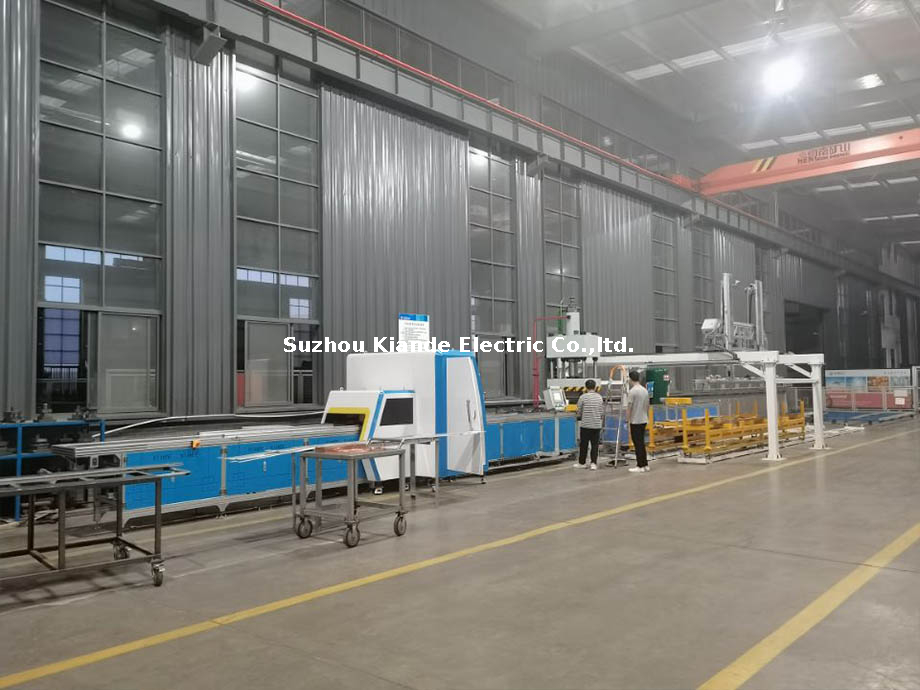
The foundation of electrical continuity starts with a clean cut. Modern systems utilize a heavy-duty hydraulic or servo-electric shearing mechanism. The blade descends with immense force, severing solid copper or aluminum up to 15mm or 20mm thick in seconds. The mechanical design of the blade dictates the quality of the finish.
When evaluating a machine, you must demand "burr-free" and "droop-free" cuts. A poor shear leaves ragged edges or crushes the material downwards (drooping). These defects reduce the optimal contact surface area when engineers bolt the bars together. Imperfect joints create electrical resistance, generating dangerous heat inside the panel. High-quality shears eliminate the need for operators to spend time filing or grinding the edges post-cut.
Connecting conductive routes requires precise holes and slots. Machines execute this using either a rotating turret or a linear tool punch press. A hydraulic cylinder drives a hardened steel punch through the metal into a matching die block below. The slug drops through, leaving a perfectly formed cavity.
Tooling matrix capacities dictate how many different punch sizes the machine holds simultaneously. A multi-station turret avoids manual tool changes, speeding up processing. You must also consider punch-to-die clearances. Different material thicknesses require specific clearances to prevent the punch from jamming or tearing the metal. Automated positioning systems pull the material into the exact X and Y coordinates. This completely eliminates manual layout errors and the archaic use of tape measures.
Bending is where manufacturers win or lose their quality control. The machine performs flat bending, vertical (edge) bending, and even twisting operations. Flat bends create L-shapes, while edge bends manipulate the bar along its narrowest profile. Twisting allows phases to shift alignment within a compact switchgear cabinet.
The physical reality of material "spring-back" complicates this process. Copper and aluminum possess elastic memory. When you bend them to 90 degrees, they relax slightly back to 88 or 89 degrees once the pressure releases. Advanced copper busbar machine models counter this physics problem brilliantly. They use active angle encoders or complex stroke-depth calculations. The machine slightly overbends the material, measures the relaxation in real-time, and adjusts automatically. This guarantees high-repeatability bending regardless of material batch variations.
Not every facility requires full automation. Manual or semi-automated units require operators to physically push the material to mechanical stops. They actuate the hydraulic cylinders via foot pedals.
These machines are best for low-volume custom shops or on-site field modifications. However, their limitations are steep. They remain highly dependent on operator skill. Throughput is significantly lower. Manufacturers face a higher risk of inconsistent tolerances because human fatigue alters how the material is loaded and clamped.
Stepping up to Computer Numerical Control (CNC) transforms the workflow. Operators load the program, and the machine dictates the positioning. These models feature programmable logic, automated material feeding, and precise digital storage of part profiles.
They are best for mid-to-high volume busbar production. Advantages include massive reductions in setup time. Once you prove a part program, any operator can recall it months later and produce identical pieces. You eliminate the constant measuring and marking phases.
At the apex of the market sit automated cells. These machines require minimal human intervention. Operators load bulk material into automated magazines. The machine feeds, punches, shears, and bends sequentially, dropping finished parts onto a conveyor.
These are strictly for enterprise-level manufacturers requiring continuous or lights-out operations. They boast seamless CAD/CAM integration, robotic handling, and automated tool changing. They deliver maximum throughput.
Equipment Category | Ideal Production Volume | Operator Skill Required | Core Advantages |
|---|---|---|---|
Manual / Semi-Automated | Low / Custom modifications | High (Needs mechanical intuition) | Low initial investment, highly mobile. |
CNC Processing Center | Medium to High | Medium (Software literacy needed) | High precision, digital part storage, repeatable bending. |
Fully Automated Cell | Enterprise / Lights-out | Low (For operation), High (For programming) | Maximum throughput, zero handling between stations. |
Technical buyers must look beyond glossy brochures. Assess software integration first. Can the machine import 3D CAD files directly from programs like SolidWorks or EPLAN? Bypassing manual data entry on the shop floor prevents transcription errors. It bridges the gap between the engineering department and the operator station.
Next, examine tooling compatibility. Proprietary punch and die sets lock you into a single vendor. This inflates replacement costs and extends lead times if tools break. Standard industry tooling ensures you can source replacements locally and keep production moving.
Match the machine specifications to your projected five-year product roadmap. Do not buy a machine that merely meets today's requirements. Assess the maximum material width and thickness capabilities. If you plan to bid on heavy-duty industrial switchgear contracts next year, a machine limited to 10mm thickness will hold you back. Always build a buffer into your capacity planning.
Integrating heavy machinery requires facility preparation. Evaluate the physical space required for the machine and the material loading zones. Processing 6-meter copper bars demands significant clearance on both sides of the equipment. Check the hydraulic oil capacity and determine if you need specialized industrial chillers to keep the oil cool during high-volume runs. Verify electrical power prerequisites to ensure your facility can handle the voltage and amperage draw without massive infrastructure upgrades.
Avoid over-indexing on "maximum speed" specifications. Sales sheets often highlight rapid ram stroke speeds. However, actual throughput is rarely dictated by how fast the hydraulic cylinder moves. Instead, throughput depends heavily on tooling changeover times and software programming speed.
Common Mistake: Buying the fastest punching machine but losing hours daily manually swapping punch dies.
Best Practice: Time a complete changeover during a demonstration. Ask the vendor to switch from a 10mm round punch to an 18x14mm oval slot.
Transitioning a team from manual tools to CNC controls creates friction. It requires software literacy. Factor in the learning curve for CAD/CAM nesting and navigating machine interfaces. Operators who master a manual press brake rely on feel and sight. CNC machines demand trust in numbers and coordinates. You must allocate dedicated training weeks. Rushing this phase leads to machine crashes, broken tooling, and frustrated employees.
High-tonnage hydraulic operations present severe amputation and crushing hazards. Essential safety features must be non-negotiable. Ensure the machine includes optical light curtains that instantly halt operations if an arm breaks the beam. Look for integrated emergency stops positioned intuitively near all operation zones. Two-hand controls ensure the operator's hands remain entirely clear of the pinch points during actuation.
Machines degrade without proactive care. Transparently discuss maintenance assumptions with your team before installation.
Hydraulic Fluid: You must replace fluid at defined intervals to prevent internal seal degradation. Viscosity breakdown causes pressure drops, which directly ruins bending accuracy.
Blade Sharpening: Shearing blades dull over time. Track cut cycles and sharpen blades before they start creating burrs.
Sensor Calibration: Angle encoders and linear scales require periodic calibration. If a sensor drifts, every single part will bend incorrectly.
Choosing the right processing equipment bridges the critical gap between engineering design and shop floor execution. A well-integrated machine drastically reduces friction, eliminating the translation errors that plague manual fabrication. You achieve faster cycle times, safer operator environments, and zero material waste.
Your next step is demanding proof of concept. Advise your purchasing team to request physical or live-video demonstrations. Send the vendor your own complex part files and specify your exact copper or aluminum grades. Verify the programming speed, cycle times, and bending accuracy on your actual parts before ever issuing an RFQ. This ensures the machine delivers reality, not just promises.
A: These machines primarily process highly conductive metals like pure copper and aluminum used in electrical distribution. Some high-tonnage models can occasionally process mild steel, but this requires specialized, hardened tooling to prevent rapid die wear and blade damage.
A: CNC models utilize active angle measurement sensors or stroke-depth compensation software. The machine calculates the elastic memory of the specific metal, overbends the material slightly, and allows it to relax back precisely into the target angle, ensuring perfect repeatability.
A: Lifespan depends on material hardness and maintenance. When processing standard copper, a high-quality die can last for tens of thousands of hits. Regular application of cutting lubricants and adhering to strict sharpening intervals extends die life significantly.
A: Yes. Modern CNC models offer seamless integration with industry-standard 3D CAD/CAM platforms like EPLAN and SolidWorks. This allows engineers to push design files directly to the machine's control unit, bypassing manual data entry on the floor.

