
Views: 0 Author: Site Editor Publish Time: 2025-08-12 Origin: Site


In the electrical manufacturing industry, the growing demand for higher-quality and more efficient power distribution systems is placing new pressure on production processes. Traditional fabrication tools often fall short in meeting modern standards, particularly when it comes to producing consistent, customized busbars. That’s where machinery specially designed for busbar production becomes a game-changer. At Suzhou Kiande Electric Co., Ltd., we deliver advanced automation solutions that combine intelligent tooling, process integration, and real-time quality assurance to help manufacturers increase output and reliability. This article explores how specialized busbar equipment directly contributes to better product quality and greater operational efficiency.
In a conventional setup, busbar fabrication often involves multiple standalone machines operated manually or semi-automatically. While this may seem adequate for basic tasks, it introduces serious limitations when precision and consistency are critical.
Manual and general-purpose punching systems lack the precision and stability needed for consistent hole alignment. Even minor deviations can compromise fitment in electrical enclosures or create weak points that affect current flow and safety.
Standard cutting tools often generate burrs—sharp metal residues on edges—that require secondary finishing. This not only slows down production but also risks damage to insulation layers or injuries during assembly if not removed properly.
Without properly calibrated bending tools and supports, busbars can warp or deform under pressure. Warped components are not only aesthetically problematic but can also cause installation difficulties or stress on connected parts, leading to long-term reliability issues.
Machines specially designed for busbar production are purpose-built to meet the exact needs of busbar manufacturing, from material handling to shaping and finishing.
Unlike generic equipment, these machines are equipped with tooling designed specifically for the hardness and thermal characteristics of copper and aluminum busbars. Whether it’s die sets for punching or blades for cutting, every element is optimized for the task.
Handling bare conductors safely is a challenge in any production line. Specialized machines include insulated clamps, fixtures, and conveyor systems to prevent accidental shorts or contamination during processing.
From CNC programming to servo-controlled bending arms, these machines are built with automation in mind. Operators can load a design file and let the system execute the entire job with minimal human input, reducing the opportunity for mistakes.
Consistency in production is one of the key advantages of using specialized automated systems. It not only improves part quality but also increases trust in the final product.
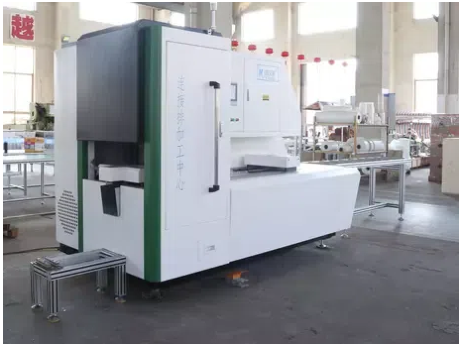
For example, the BMF 60 CNC busbar bender—used in leading global factories—integrates automatic insulation stripping and precise bending in a single operation. This eliminates the need for manual preparation and ensures every bend is smooth, accurate, and ready for further processing.
Modern busbar production systems from Kiande include inline sensors and scanners that continuously monitor part dimensions and tool wear. Any deviation from the programmed parameters triggers alerts or automatic corrections, minimizing scrap. Additionally, barcode and QR code tagging enable full traceability of each part, aiding in certification and warranty management.
Once a process is programmed and validated, it can be repeated hundreds or thousands of times without performance degradation. This makes specialized machinery especially valuable in applications where uniformity is non-negotiable, such as switchgear, transformers, or EV battery modules.
Absolutely. One of the most compelling reasons to invest in specialized busbar machinery is the potential to consolidate previously separate operations.
Our equipment can perform cutting, punching, and bending in a single pass without moving the material between machines. This “3-in-1” capability eliminates transitional steps, reduces handling time, and improves alignment accuracy.
Some advanced systems even integrate insulation film application or plating preparation. This is particularly useful in high-volume lines where post-processing causes bottlenecks. By managing everything inline, the entire workflow becomes faster, cleaner, and more reliable.
Consolidating steps into fewer machines also saves space. Rather than needing separate stations and operators for each function, one compact unit can manage the entire production sequence, freeing up floor space and reducing overall energy consumption.
Modern busbar production isn't just about volume—it's about versatility. Customers increasingly demand busbars in various shapes and configurations, tailored to different electrical panels and layouts.
Specialized machines can produce flat bars as well as more complex U, L, and T-shaped busbars. Adjustable tooling and programmable profiles make it easy to switch between formats without extended downtime.
Different applications may require specific hole patterns, bend angles, or surface finishes. Our CNC-based systems allow users to program new configurations on demand, making it easy to handle custom jobs, test prototypes, or make design revisions quickly.
With modular add-ons and software updates, Kiande’s equipment can scale as your product line grows. Whether you’re producing for HVAC, EV, or power grid sectors, the machines can be adapted to serve each vertical with precision and efficiency.
The financial advantages of using machinery specially designed for busbar production go beyond just labor savings. It’s about optimizing every element of production.
Automated machines require fewer operators and reduce reliance on highly skilled labor. One technician can oversee multiple operations, resulting in lower staffing costs without sacrificing quality.
With built-in quality control and accurate tooling, the number of defective units drops significantly. This lowers material waste, reduces rework time, and improves your profitability over each production cycle.
Simulation tools integrated into our systems allow manufacturers to prototype and simulate production steps digitally before launching full-scale production. This shortens design cycles and accelerates the time it takes to bring new products to market.
While the initial investment in specialized equipment may be higher than standard tools, the return on investment comes quickly through higher productivity, better product quality, and increased customer satisfaction.
Investing in machinery specially designed for busbar production is not just a step toward automation—it’s a strategic decision that enhances quality, reduces errors, and significantly boosts efficiency. At Suzhou Kiande Electric Co., Ltd., we engineer our solutions to meet the evolving demands of the electrical manufacturing industry. Whether your focus is speed, precision, or flexibility, our systems deliver the tools you need to compete and grow in a demanding global market.
Contact us today to schedule a live demo or to speak with a specialist about your production requirements. Let Kiande help you take your busbar manufacturing to the next level.

