
Views: 0 Author: Site Editor Publish Time: 2026-06-14 Origin: Site


Demand for high-capacity power distribution is surging globally. Data centers and smart manufacturing facilities require robust electrical infrastructure to function safely. However, legacy manual assembly processes create significant operational bottlenecks. Hand-operated tools often result in inconsistent torque applications and higher labor dependencies. They also demand extensive factory floor space, which threatens profit margins and delays urgent project delivery timelines.
Transitioning to a dedicated, Busbar Assembly Line replaces unpredictable human variables with measurable, continuous flow. Modern machinery ensures precision at every single joint. It optimizes operational speed, ensures strict regulatory compliance, and maximizes overall equipment effectiveness inside a modern busbar factory. Readers will learn how automation transforms inefficient workstations into streamlined production hubs, what technical features matter most, and how to evaluate hybrid versus fully automated deployments.
Automated clamping and anti-repeat riveting reduce human error rates to sub-1%, preventing costly electrical faults (e.g., abnormal tripping, overheating).
Transitioning to manufacturing automation can compress floor space requirements while reducing direct labor dependencies by up to 70%.
Built-in inline quality inspections ensure every unit meets strict international electrotechnical standards before packaging.
Evaluating between fully automated and hybrid setups depends heavily on a facility's ratio of standard high-volume production versus custom prototype runs.
Sticking with legacy manufacturing processes carries a heavy financial burden. You cannot simply scale up manual labor to meet modern electrical demands. When facilities rely on manual handling, baseline costs multiply rapidly.
Consider labor variance. Manual operations naturally lead to inconsistent torque application. A worker might tighten one bolt perfectly but under-torque the next due to fatigue. These tiny inconsistencies trigger higher defect rates during post-production testing. Quality assurance teams then spend hours identifying the fault, disassembling the unit, and performing rework. This cycle directly drives up overhead costs and disrupts delivery schedules.
Safety and compliance risks also plague manual workflows. Poor connections have severe downstream impacts on the final product. Loose joints increase electrical resistance. High resistance causes voltage drops and dangerous thermal hotspots. If you ignore these hotspots, they can trigger severe arc faults or equipment fires in the field. Clients rely on your product to safely distribute immense power loads. A manual busduct assembly process leaves too much room for catastrophic electrical failure.
Finally, manual production faces strict space and throughput limits. Fragmented manual workstations require extra staging areas. Parts sit idle in logistical dead zones while waiting for the next assembly stage. These dead zones extend cycle times dramatically. They prevent a factory from scaling up when large orders arrive. Your factory floor becomes a maze of heavy copper and aluminum instead of an optimized manufacturing environment.
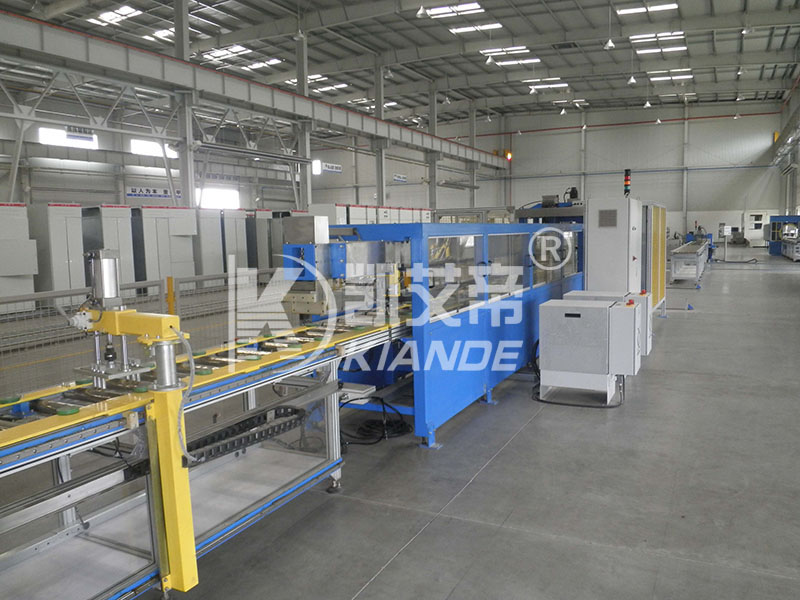
Technology intervenes precisely where human limits appear. An automatic assembly line applies standardized technological solutions to eliminate logistical bottlenecks.
Modern pre-assembly relies on automated 18-meter continuous flow conveyors. These conveyors transport heavy conductors effortlessly. They eliminate the start-stop pauses typical of manual handling. The system includes adaptive clamping mechanisms. Adaptive clamps automatically adjust to different conductor profiles. They hold the conductive bars perfectly square and flush. This ensures the housing aligns precisely before any fastening occurs. It completely removes the need for manual hammering or forced alignments.
Once clamped, the unit moves into the fastening stage. Here, programmable logic controllers (PLCs) take command. The machinery employs anti-repeat riveting technology. This system maintains exact 150-220mm intervals between rivets. It prevents operators from double-riveting the same spot or missing a hole. Precision bolting tools apply the exact Newton-meter torque required. They guarantee structural integrity without requiring manual measuring or secondary hand-tightening.
Testing must happen during production, not just at the end. Automated systems shift facilities away from slow post-production testing. They introduce inline sensor-based testing. As the busduct moves down the line, automated probes verify dielectric strength. They also confirm grounding safety seamlessly. If a unit fails the test, the system flags it instantly. Operators can correct the issue immediately rather than scrapping a fully finished product.
Performance Chart: Manual vs. Automated Processing Times (Minutes per Unit) | |||
Process Stage | Manual Method | Automated Line | Time Saved |
|---|---|---|---|
Clamping & Alignment | 12 mins | 3 mins | 75% |
Riveting/Bolting | 18 mins | 4 mins | 77% |
Dielectric Testing | 10 mins | 2 mins | 80% |
Engineering upgrades must translate into financial wins. You must map these equipment features directly to CFO-level success criteria. Transitioning to manufacturing automation yields measurable returns across several critical categories.
Labor Reduction: Automated equipment reduces direct manual labor by up to 70%. Machines handle the repetitive alignment and fastening tasks.
Skill Reallocation: You do not just eliminate jobs; you reallocate skilled workers. Technicians move to complex troubleshooting, custom fabrication, and preventative maintenance roles.
OEE Improvement: Overall Equipment Effectiveness (OEE) skyrockets. Machines do not take breaks, and their error rates remain negligible. Continuous uptime drives a higher OEE score, maximizing the value of your capital investment.
Unpredictable cycle times create inventory nightmares. When you automate, cycle times become highly predictable. You know exactly how many panels the line will produce per hour. This predictability enables true Just-In-Time (JIT) production. You only order raw copper and aluminum when needed. JIT integration lowers inventory holding costs drastically. Furthermore, sensor-driven accuracy minimizes scrap material and waste, further protecting your profit margins.
Worker fatigue carries a hidden but massive financial cost. Lifting heavy copper bars and operating vibrating hand tools leads to repetitive strain injuries. These injuries spike absenteeism and increase worker compensation claims. Automation handles the heavy lifting entirely. It assumes the burden of repetitive strain. This stabilizes shift output. A physically comfortable workforce experiences lower turnover, which reduces your ongoing recruitment and training costs.
Best Practice: Always baseline your current OEE before installing new equipment. You need concrete "before and after" metrics to prove the success of your investment to stakeholders.
Procurement teams must approach deployment with a healthy dose of skepticism. Not every factory needs a fully unmanned system on day one. You must align your equipment strategy with your actual production mix.
The case for fully automatic lines is strong for specific environments. They remain best suited for high-volume, standardized busbar trunking production. Automotive plants and data center infrastructure providers typically demand thousands of identical straight lengths. A fully automated setup requires higher initial CapEx. However, it delivers the absolute lowest per-unit production cost over time. If your catalog consists primarily of standard runs, full automation is the correct path.
Conversely, acknowledge the hybrid approach. Automation is rarely one-size-fits-all. Many facilities process a mix of standard lengths and highly customized prototype shapes. A hybrid model routes standard components down the automated backbone. Meanwhile, complex or low-batch custom pieces divert to specialized manual finishing stations. This strategy balances high-speed throughput with necessary production flexibility.
Facility readiness is another crucial factor. Automation requires preparation. Before installation, you must verify your floor load capacity. Heavy conveyor systems and hydraulic presses require reinforced concrete. You also need software integration readiness to link the PLC data to your factory ERP system. Finally, budget time for operator training timelines. Your workforce needs time to transition from manual assemblers to digital machine operators.
Comparison Matrix: Full Automation vs. Hybrid Setup | ||
Criteria | Fully Automated Line | Hybrid Setup |
|---|---|---|
Best Fit | Standardized, high-volume production. | High product mix, custom prototypes. |
Initial CapEx | Highest upfront investment. | Moderate upfront investment. |
Per-Unit Cost | Lowest possible cost at scale. | Moderate cost, depending on manual input. |
Flexibility | Low. Harder to retool for custom shapes. | High. Manual stations handle anomalies easily. |
Common Mistake: Do not buy a fully automated line if 60% of your business relies on custom, angled busduct fittings. You will spend more time re-programming the machine than actually producing parts.
Choosing the right manufacturing partner dictates your long-term success. Give your procurement team a practical scorecard to evaluate potential vendors objectively. Look beyond the initial purchase price and evaluate the system's long-term capabilities.
Scalability & Modularity: Can the line grow alongside your business? Ask vendors if the system accepts modular workstations later. For example, you might want to add an AI visual inspection camera next year. You should be able to integrate this without entirely rebuilding the existing conveyor system.
Data Integration: Information is just as valuable as the physical product. Does the equipment offer real-time data analytics? Look for machinery equipped with predictive maintenance sensors. Temperature and vibration sensors alert operators to failing bearings before the machine breaks down. This prevents costly unplanned downtime.
Compliance & Standardization: Regulatory compliance is non-negotiable. Verify the machinery produces panels and ducts reliably meeting IEC and UL standards out of the box. Ask the vendor for case studies proving their equipment consistently passes third-party dielectric and thermal testing.
Upgrading to a dedicated assembly line fundamentally changes how a factory operates. It is not merely a mechanical speed upgrade. It serves as a comprehensive risk-mitigation and margin-expansion tool. By removing human variance, you secure your product's electrical integrity and protect your brand reputation in the market.
Decision-makers should immediately audit their current operations. Track your exact cycle times, calculate your monthly scrap rates, and measure your floor space utilization. Use these baseline metrics to build a compelling business case for automation.
Take the next step toward modern manufacturing. Contact a specialized equipment manufacturer today. Request a thorough OEE assessment or a custom ROI calculation tailored to your facility's specific production volumes.
A: Full automation struggles with extreme flexibility. If your facility processes a high product mix with low volumes, a fully automated line may be overkill. Instead, recommend a hybrid system. Standardized runs use the automated backbone, while highly customized or small-batch orders divert to manual, PLC-assisted modular stations.
A: Most facilities see a complete return on investment within 18 to 36 months. This timeframe depends heavily on your daily shift volumes. The rapid ROI stems directly from severe reductions in direct labor costs, lower scrap material rates, and the newly gained capacity to accept larger orders.
A: Yes. Automated precision guarantees tighter mechanical joints and optimal torque application. This precision directly reduces electrical resistance across the connections. Lower resistance minimizes voltage drops and thermal energy loss, creating a highly energy-efficient power distribution system for the end-user.

