
Views: 0 Author: Site Editor Publish Time: 2026-10-14 Origin: Site


In electrical manufacturing, moving a withdrawable unit from quality control to inventory storage often causes data loss and handling delays. Once a unit passes electrical and mechanical inspection, manual routing creates operational bottlenecks. Disconnects between testing station software and the warehouse management system (WMS) lead to misplaced units, inaccurate inventory counts, and stalled final assembly. The physical bulk of these components means routing errors translate directly into lost production time. Implementing an industrial-grade barcode architecture bridges this physical and digital divide. Scanning units immediately post-inspection triggers material handling systems automatically. This routes components into automated storage and retrieval systems (AS/RS), eliminating manual data entry delays. Establishing this digital thread transforms a fragmented workflow into a synchronized operation.
Automated Routing: Scanning a barcode at the inspection station instantly updates the Manufacturing Execution System (MES) and dictates the exact storage location in the WMS.
Error Elimination: Replacing manual data entry with automated scanning and item counting prevents misplacement of high-value components.
Location & Carrier Mapping: Effective barcoding extends beyond the drawers themselves to include storage racks, pallets, and transport trolleys, creating a unified digital map of the facility.
System Interoperability: Effective integration requires a synchronized handshake between barcode scanners, the MES, the WMS, and automated material handling equipment.
Scalability: A standardized barcode framework supports future automation upgrades, from automated guided vehicles (AGVs) to fully robotic storage retrieval.
Standard manufacturing workflows dictate that drawers complete dielectric testing, mechanical interlock checks, and continuity verification before awaiting transfer. Operators connect the secondary contacts, run the automated test sequence, and wait for the pass or fail indication on the bench monitor. When a unit passes, the physical handling process often reverts to outdated manual methods. Operators write serial numbers on paper logs or type them into isolated spreadsheet terminals. This manual logging creates immediate physical congestion on the factory floor.
Completed units, sometimes weighing over 100 kilograms, pile up at testing stations. Operators wait for transport instructions or forklift availability. The transition from an advanced testing bench to a manual routing process wastes labor hours. The lack of automated item counting causes discrepancies between physical factory output and digital system records. Unrecorded rework routing complicates the process. If a unit fails inspection and moves to a rework bench without a system update, operators downstream search for components that never reached the warehouse. This disrupts the entire switchgear drawer production line.
A technical gap often exists between testing software and storage databases. When a withdrawable unit passes inspection, the proprietary testing software records a pass on its local server. The WMS remains blind to the fact that the physical unit is ready for storage. The systems do not communicate in real-time. This communication failure creates inventory blind spots across staging areas, quarantine zones, and transit aisles.
The impact of this data silo cascades downstream to the LV switchgear assembly line. Final assembly teams rely on the WMS to pull the exact components needed for specific cabinet configurations. When the WMS cannot locate required drawers because they sit un-scanned in a post-inspection buffer zone, production schedules halt. Bridging this data silo requires automated status updates triggered by a physical scan. This forces the testing environment and the warehouse environment to share a single source of truth. Data must flow from the scanner to the MES, and immediately to the WMS via API calls or direct database integrations.
Workflow Metric | Manual Routing Process | Barcode-Driven Automated Routing |
|---|---|---|
Data Latency | High (Batch updates at end of shift) | Zero (Real-time database updates) |
Error Rate | High (Typographical errors, missed logs) | Near Zero (Automated data capture) |
Labor Requirement | Dedicated personnel for data entry and tracking | None (Scan performed by testing operator or fixed camera) |
Traceability | Fragmented paper trails | Complete digital history with timestamps |
Selecting the right barcode format depends heavily on the data required at the point of scan and the environmental conditions of the facility. Linear 1D barcodes offer universal compatibility and generally lower implementation costs. They work well when the system only needs to read a simple serial number to query a centralized database. However, they are easily rendered unreadable by minor scratches or smudges, which are common in heavy manufacturing.
Conversely, 2D Data Matrix or QR codes provide high data capacity and robust fault tolerance. They embed complex inspection data, part configurations, operator IDs, and precise timestamps directly into the code itself. If network connectivity drops temporarily, mobile scanners extract routing information directly from a 2D code, allowing material handling to continue uninterrupted. The built-in error correction of 2D codes ensures readability even if up to 30% of the label is damaged by grease or abrasion.
A comprehensive warehouse barcode system must label both the moving assets and the static infrastructure. While individual drawers require unique serialized barcodes, the storage environment demands equal attention to establish a reliable routing network. Applying durable barcodes to AS/RS bins, staging racks, floor locations, and pallets establishes verifiable destinations for the WMS.
This dual-labeling approach ensures the system confirms not just what is being moved, but exactly where it lands. For high-bay storage racks, facilities use retroreflective barcode labels scanned by forklift operators or automated cranes from several meters away. Floor labels used for AGV routing must be constructed from ultra-durable polycarbonate to withstand constant traffic. Without location barcoding, the WMS knows a drawer exists, but cannot verify its physical placement, defeating the purpose of automated storage.
Hardware choices must match the physical layout of the facility, the reflectivity of the materials being scanned, and the degree of existing automation. Fixed mount scanners support high throughput and require zero operator intervention. They require precise drawer alignment on the conveyor to ensure successful reads. Glare from bare metal switchgear components interferes with fixed lasers, requiring careful angling and polarized lighting.
Mobile handheld scanners fit manual inspection stations or rework benches. They offer flexibility for operators navigating tight spaces around large electrical cabinets. Industrial handhelds must feature high IP ratings, typically IP65 or IP67, to resist dust and survive drops onto concrete floors. While flexible, they rely entirely on operator compliance to maintain data accuracy.
Scanner Type | Optimal Location | Primary Advantage | Technical Limitation |
|---|---|---|---|
Fixed-Mount Laser | High-speed conveyor belts | Rapid reading of 1D codes in motion | Struggles with damaged codes or metal glare |
Fixed-Mount 2D Imager | AS/RS induction points | Reads damaged codes, captures images for proof of condition | Requires precise focal distance calibration |
Rugged Mobile Handheld | Manual inspection and rework benches | Maximum operator flexibility in tight spaces | Relies on operator compliance to execute the scan |
Wearable Ring Scanner | Final assembly picking zones | Keeps operator hands free for heavy lifting | Lower battery capacity requires mid-shift swapping |
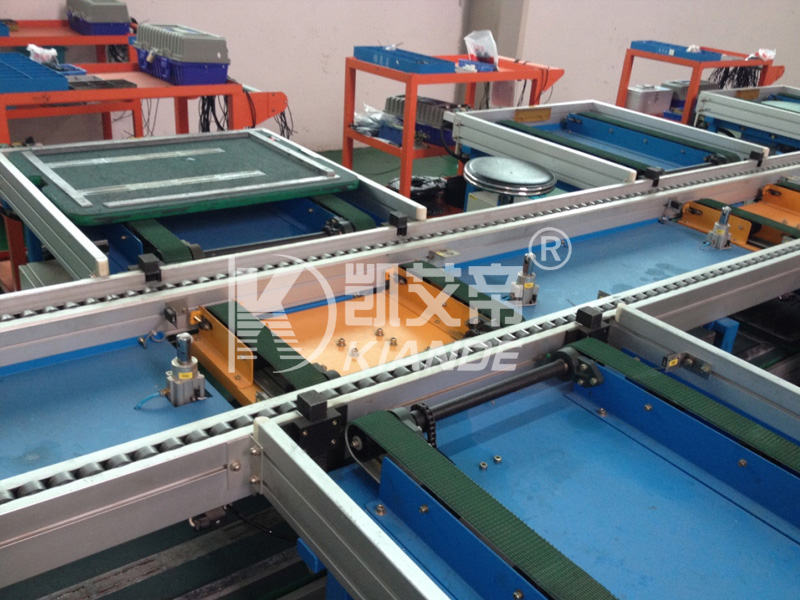
A successful inspection scan serves as an immediate dispatch signal. Once a unit passes testing and the operator scans the barcode, the MES communicates with the fleet management software. The system automatically dispatches a switchgear material trolley or an automated guided vehicle (AGV) directly to the testing station. This eliminates the need for operators to manually call for transport or push heavy carts across the factory floor.
The barcode data informs the routing logic. It directs the trolley to transport the unit to a specific staging area for immediate assembly or to the AS/RS induction point for long-term storage. Introducing dual-scanning workflows tightens inventory control. Operators or automated scanners read both the drawer's barcode and the trolley's barcode simultaneously. This digital handshake links the asset to its carrier. It maintains a verifiable chain of custody during transit across the facility. If a trolley deviates from its programmed path, the fleet management system flags the anomaly immediately.
The barcode scan acts as the primary database key linking the physical drawer to its designated AS/RS bin. When the transport trolley delivers the unit to the storage induction point, a fixed scanner reads the drawer's barcode one final time before it enters the racking system. This scan triggers the put-away sequence.
During this sequence, the WMS reads the barcode and queries the master data to calculate optimal storage density based on the drawer's specific size, weight profile, and expected retrieval date. A heavy main breaker drawer requires a different storage slot than a lightweight control drawer to maintain rack stability. The system directs the AS/RS crane to the corresponding location barcode. The crane deposits the unit and confirms the placement back to the WMS. This synchronized handshake eliminates manual slotting errors, prevents rack overloading, and maximizes overall warehouse capacity.
The transport trolley arrives at the AS/RS induction conveyor and aligns with the fixed optical sensors.
A fixed-mount 2D area imager scans the drawer's barcode as it passes the induction gate.
The WMS receives the scanned serial number and queries the SQL database for the item's weight, dimensions, and center of gravity.
The WMS algorithm calculates the optimal rack location to maintain structural balance and minimize future retrieval time.
The AS/RS crane receives the destination coordinates, picks up the drawer, and deposits it into the assigned high-bay slot.
The crane sends a confirmation signal back to the WMS, updating the inventory status to stored in real-time.
Scanning a barcode fails if the WMS lacks the corresponding master data required to assign a storage slot. Dimensions, exact weight, and configuration details must exist in the system before the physical unit arrives at the storage induction point. If the WMS expects a 20kg unit but receives a 60kg unit because the master data is missing, the AS/RS crane could fail, drop the unit, or damage the racking.
Facilities must establish a strict master data governance protocol. All SKU profiles, engineering changes, and inventory master data must be updated and synchronized across the ERP, MES, and WMS before any new drawer variant enters the switchgear production line. Automated data validation checks block the printing of a barcode if the corresponding master data profile is incomplete. This prevents undocumented physical assets from entering the automated storage environment and causing mechanical faults.
Standard paper labels degrade rapidly due to handling, machine grease, or temperature fluctuations common in heavy manufacturing environments. Direct thermal labels turn completely black if exposed to high heat near testing equipment. Damaged, faded, or peeling labels lead to unreadable scans, forcing the automated system to reject the unit and halting the workflow.
Specifying industrial-grade, synthetic labels prevents these failures. Materials such as polyester or polyimide offer extreme resistance to chemicals, abrasion, and heat. Using aggressive industrial adhesives ensures the label stays attached to textured metal surfaces. Employing thermal transfer printing with resin ribbons guarantees that the barcode remains crisp and readable for both moving items and static warehouse locations over years of operation.
Latency or API failures between barcode scanning middleware, the MES, and the WMS disrupt the entire routing process. If an operator scans a drawer and the system takes ten seconds to respond, the physical workflow stalls. Real-time data exchange is required for automated material handling.
Facilities must require hardware vendors to provide proven, low-latency API connectors. Implementing edge computing solutions helps process the scan locally before sending the confirmation to the cloud, reducing latency significantly. Utilizing standardized industrial communication protocols like OPC UA or MQTT guarantees lightweight data exchange across different software platforms and legacy testing equipment.
During high-pressure production quotas, operators attempt to bypass the scanning process entirely to save a few seconds. This breaks the digital data chain and causes immediate inventory discrepancies between the physical floor and the WMS. Training alone rarely prevents workarounds under pressure.
Implementing hard stops in the physical workflow forces absolute compliance. Programmable Logic Controllers (PLCs) integrate with the scanning system to create physical barriers. Facilities program the system so the automated storage induction door will not open, the testing bench will not release the unit, or the transport trolley will not move until a valid, verified scan registers. These physical hard stops ensure data integrity remains intact regardless of production pressure.
Next Steps:
Conduct a site audit to map the physical distance, network connectivity, and data flow between the final inspection station and the automated storage entry point.
Initiate a localized pilot program using ruggedized mobile scanners to validate data synchronization between the testing software and the WMS.
Review and update all master data profiles in the WMS, ensuring precise weight and dimensional data are present to guarantee compatibility with automated slotting algorithms.
Standardize label materials across the facility, transitioning entirely to thermal transfer synthetic labels to eliminate unreadable scans caused by environmental degradation.
A: It eliminates manual data entry and provides real-time location tracking of components. The system automates item counting and triggers the routing of units from inspection to storage. This reduces cycle times and prevents physical bottlenecks at testing stations.
A: The barcode must contain a unique serial number linking directly to the MES database. Advanced 2D barcodes also embed part numbers, configuration details, and specific inspection timestamps to ensure data availability during network outages.
A: Yes. A warehouse barcode system links every physical asset. Barcoding material trolleys and AS/RS racks ensures the WMS can verify both the item being moved and its exact current location or final destination.
A: Yes. When integrated through a centralized WMS or fleet management system, scanning a barcode automatically dispatches an automated trolley or AGV to pick up the inspected drawer and transport it to its designated storage slot.
A: The barcode acts as the physical identifier. When scanned at the storage induction point, the WMS identifies the unit against its master data, assigns an optimal storage location, and commands the automated machinery to place the drawer in that exact slot.

