
Views: 0 Author: Site Editor Publish Time: 2025-12-01 Origin: Site


In busbar manufacturing, ensuring quality and reliability is crucial for the safe operation of electrical systems. Traditionally, inspections were performed manually, relying on human operators to check for defects and verify specifications. However, manual checks come with limitations, such as human error, inconsistent results, and being labor-intensive. As demand for high-quality, high-volume production has increased, there has been a shift toward automation in busbar inspection. Automated busbar inspection systems have transformed the process by providing faster, more accurate, and consistent results. Using advanced sensors, cameras, and real-time data analysis, these systems ensure each busbar meets the required standards. The move from manual checks to full automation has improved inspection speed, accuracy, and overall production efficiency, while reducing labor costs and enhancing product quality. This article explores the evolution of busbar inspection technology and the benefits automation brings to the manufacturing industry.
One of the most significant challenges of manual busbar inspection is the potential for human error. Factors such as operator fatigue, oversight, and variability in skill levels can all impact the accuracy of the inspection process. As operators work long shifts, their attention may decrease, leading to missed defects or inaccuracies in measurements. This variability introduces inconsistencies into the inspection process, which can result in defective busbars passing through the system undetected, compromising overall product quality.
Manual busbar inspection is inherently time-consuming and labor-intensive. Inspecting each busbar for defects, measuring specifications, and performing quality checks require a significant amount of time and human resources. As production volumes increase, scaling manual inspection to meet demand becomes more challenging. The need for a large workforce dedicated to quality control adds to operational costs and limits the ability to efficiently handle high-volume production runs.
Manual inspections are prone to inconsistencies in outcomes, largely due to human factors. Operator fatigue, differences in training, and subjective judgment can all affect the results of the inspection. These inconsistencies can lead to variations in product quality, with some busbars being inspected more thoroughly than others. This can result in defects being overlooked or rejected products not being identified, ultimately impacting the overall reliability and quality of the busbars produced.
The transition to automated busbar inspection technology marks a significant advancement in manufacturing efficiency and quality control. Automated systems use advanced sensors, cameras, and real-time data processing to inspect busbars with high precision. These machines are designed to detect even the smallest defects and measure critical parameters such as dimensions, surface quality, and electrical characteristics. By automating the inspection process, manufacturers can ensure that every busbar is thoroughly tested, minimizing human intervention and optimizing the production workflow.
One of the key advantages of automated busbar inspection is the improvement in accuracy. Unlike manual inspections, where human error can lead to inconsistencies, automated systems provide consistent, precise inspections based on predefined criteria. The use of high-resolution sensors and imaging technology ensures that every busbar is inspected to the same exacting standards, significantly reducing the likelihood of defects being missed. This consistency not only enhances the quality of the busbars but also ensures uniformity across large production runs.
Automation dramatically speeds up the inspection process, leading to faster throughput and improved overall efficiency. Automated inspection systems can process multiple busbars simultaneously or in quick succession, reducing the time spent on each inspection cycle. This acceleration allows manufacturers to maintain high production rates without compromising on quality. By improving production speed, automated systems enable manufacturers to meet growing demand and optimize their manufacturing capacity, making the production process more scalable and responsive.
One of the most significant advancements in busbar inspection technology is the development of high-resolution sensors and cameras. These technologies enable the detection of minute defects that would be nearly impossible to spot with the human eye. The sensors measure key parameters such as dimensions, surface quality, and electrical characteristics with exceptional accuracy. This precision ensures that every busbar is tested to the highest standards, reducing the risk of defects and enhancing overall product reliability.
Automated inspection systems are designed to seamlessly integrate with existing production lines, enhancing workflow without disrupting ongoing operations. These systems can be easily incorporated into the manufacturing process, allowing busbars to be inspected during or after the production stages, without requiring major changes to existing setups. This integration streamlines the production process, reducing the time between manufacturing and quality control, which ultimately improves overall efficiency and minimizes downtime.
Automated inspection systems generate real-time data, which is invaluable for decision-making, process optimization, and predictive maintenance. By continuously collecting and analyzing inspection data, manufacturers can gain insights into production trends, identify areas for improvement, and make informed decisions to enhance operational efficiency. This data-driven approach also enables predictive maintenance, allowing potential issues to be identified and addressed before they result in costly downtime, ensuring smooth, continuous production.
One of the primary benefits of full automation in busbar inspection is the reduction in manual labor costs. Automated systems perform inspections quickly and accurately, minimizing the need for a large workforce dedicated to quality control. This allows manufacturers to reallocate resources more efficiently, reducing labor expenses and freeing up staff to focus on other critical areas of production. The reduction in human involvement also decreases the chances of errors caused by fatigue or oversight, further improving operational efficiency.
Automated inspection systems ensure consistent, uniform inspections across every busbar, leading to significantly higher quality control. Unlike manual inspections, which can vary depending on the operator's skill or focus, automated systems provide the same level of precision for each unit. This consistency helps eliminate defects that might have been overlooked, resulting in higher-quality busbars and reducing the likelihood of faulty products reaching customers. With automation, manufacturers can maintain stringent quality standards while ensuring every busbar meets the necessary specifications.
Automation significantly boosts production rates by speeding up the inspection process, allowing for quicker testing of each busbar. With faster, more efficient inspections, manufacturers can process more units in the same amount of time, increasing throughput and meeting higher demand without sacrificing quality. This enhanced efficiency allows production lines to scale more effectively, ensuring that manufacturers can keep up with growing market demands while maintaining high-quality standards and operational performance.
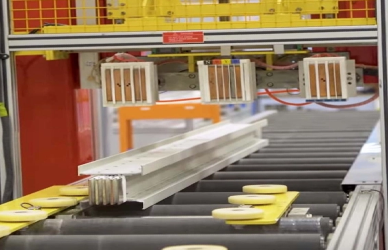
The initial investment for automated busbar inspection systems can be significant, including equipment purchase, integration, and training. A thorough cost-benefit analysis is crucial to assess long-term savings, such as reduced labor costs, fewer defects, and faster production times. While upfront costs are high, the potential return on investment from improved efficiency and product quality is generally worthwhile.
Seamless integration with existing production lines is essential for minimizing disruption. The new system must be compatible with current equipment, ensuring smooth data exchange and minimal downtime. Proper planning and potential adjustments are needed to ensure the automated system works efficiently within the established workflow, maintaining production continuity.
Automated systems require ongoing maintenance to stay at peak performance. This includes software updates, sensor calibrations, and hardware maintenance. Regular operator training is also critical to troubleshoot issues and maintain efficiency. Without proper upkeep, system malfunctions or suboptimal performance can affect production and product quality.
 FAQ
FAQ A1: Automated systems use high-resolution sensors and cameras to inspect each busbar with precision, eliminating human error. This ensures consistent results, reducing the likelihood of defects that may be overlooked in manual inspections.
A2: Automation significantly speeds up the inspection process by conducting tests quickly and without pauses, allowing more busbars to be processed within the same time frame, thereby increasing production throughput.
A3: Automated inspection systems are designed to integrate seamlessly with existing production lines, requiring minimal adjustments to existing machinery or workflows, ensuring a smooth transition without major disruptions.
A4: The long-term benefits include reduced labor costs, improved product quality, higher production rates, and greater operational efficiency. Automation ensures consistent quality control, leading to fewer defects and lower rework costs, while also enhancing overall manufacturing efficiency.
The evolution from manual inspection to full automation in busbar manufacturing has transformed the industry, significantly improving efficiency, accuracy, and consistency. Automated busbar inspection systems now play a crucial role in enhancing product quality while reducing human error, labor costs, and production time. The long-term benefits of automation include higher throughput, better quality control, and improved profitability, all of which contribute to a more streamlined and reliable production process. As the manufacturing landscape becomes increasingly automated, the shift to automated busbar inspection systems is essential for staying competitive. Embracing automation not only ensures that manufacturers meet growing demand but also positions them to adapt to future technological advancements and industry trends.

