
Views: 0 Author: Site Editor Publish Time: 2026-06-07 Origin: Site


Modern electrical panel manufacturing facilities face a critical production bottleneck today. You must scale operations rapidly without sacrificing part precision. Manual fabrication tools simply cannot keep up with current high-voltage industry demands. Upgrading your shop floor often brings you to a major equipment crossroads. You must decide between a dedicated, high-speed standalone Busbar Punching Machine and an integrated, multi-station processing center. Multi-station units typically function as comprehensive 3-in-1 punch, shear, and bend systems. Both architecture types offer distinct workflow advantages for modern fabricators. This article provides a vendor-neutral, engineering-focused evaluation framework. We will help plant managers match equipment capabilities directly to your specific daily production volume. You will discover how to evaluate floor space, throughput constraints, and digital integration levels. Ultimately, you will learn how to select the exact machinery required to optimize your copper fabrication workflows.
Volume Dictates Architecture: Dedicated busbar punching machines excel in high-volume, single-process workflows, while CNC processing centers offer maximum versatility for low-to-medium volume, high-mix production.
Space vs. Throughput: Processing centers consolidate footprint (3-in-1 integration), whereas separating punching from bending requires more floor space but allows concurrent batch processing.
Software is the Great Equalizer: Both systems require advanced CAD/CAM integration (direct DXF/3D import) and nesting capabilities to minimize scrap rates and reduce reliance on operator programming.
Compliance Matters: The right machine ensures end-products consistently meet strict electrical standards like IEC 61439 and UL 508A through servo-driven ±0.02 mm positioning accuracy.
Understanding the fundamental engineering behind each system helps you make an informed decision. Both machine types process heavy conductive metals. However, they approach the fabrication lifecycle from entirely different design philosophies.
A dedicated CNC puncher operates as a highly specialized unit. It focuses strictly on rapid material removal. You use it to fabricate clean holes, complex slots, and specialized geometric patterns. Most industrial standalone models utilize a robust multi-tool turret design. You might find seven or eight distinct punch stations loaded simultaneously. This multi-tool capacity drastically reduces mechanical changeover times.
In execution reality, a standalone puncher delivers phenomenal cycle speeds. You can regularly achieve up to 120 to 150 stroke impacts per minute. It handles complicated repeating hole patterns almost instantly. However, this architectural focus creates a divided workflow. Operators must physically move the punched busbars to completely separate machines for shearing and bending phases. You must account for this inter-station material transit in your production timing.
The integrated CNC busbar machine functions as a comprehensive fabrication hub. It combines punching, shearing, and bending modules into one unified mechanical chassis. You operate a true multi-station platform.
This integrated execution reality completely eliminates inter-station material handling. Operators can perform end-to-end copper processing without ever moving the heavy metal bars across the shop floor. You simply slide the bar from the punch die directly over to the shear blade. However, you must recognize a critical mechanical limitation. Overall system throughput remains gated by the operator's speed. A single piece of material must move sequentially through all three phases before you start the next bar.
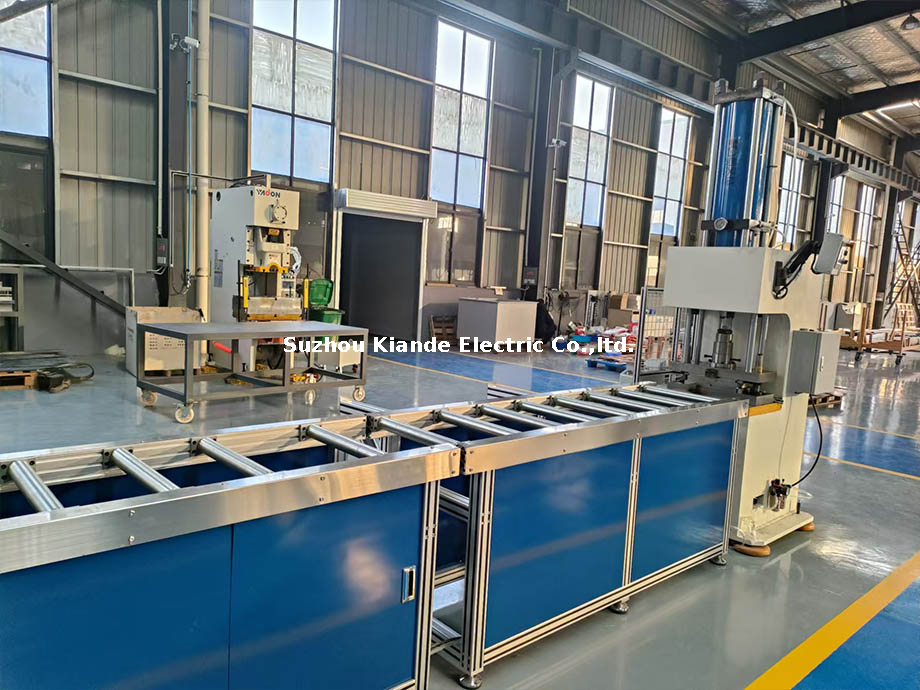
You cannot determine which system performs better without evaluating your specific operational constraints. We must compare them across three primary functional categories. This helps you identify exactly where each machine excels or struggles.
Dedicated punching units remain unmatched for pure batch processing tasks. Suppose your primary production bottleneck involves fabricating hundreds of identical connection holes. A dedicated puncher will clear that manufacturing backlog incredibly fast. You feed raw material continuously. The machine punches it rapidly without waiting for bending modules to finish.
Processing centers process individual batches slower. However, they excel at single-piece continuous flow. You can produce a completely finished, multi-process part from scratch rapidly. This integrated approach prevents Work in Progress (WIP) inventory from building up between separate workshop stations. You maintain a leaner, more organized production floor.
Modern electrical enclosures demand extreme physical tolerances. Both machine variants utilize advanced CNC servo motors for precise X-Y axis control. This baseline technology achieves positioning accuracies of ±0.02 mm. Such high precision guarantees perfect alignment for heavy switchgear assemblies.
However, processing centers offer a slight advantage regarding human handling errors. You do not need to repeatedly unclamp and re-clamp long, heavy bars across different machines. Keeping the material on a single chassis from punch to shear reduces the risk of minor alignment shifts.
Copper represents a massive operational resource. You must minimize material waste rigorously. Advanced busbar punching systems equipped with nesting software excel here. They optimize part layouts automatically. They squeeze maximum yield out of every standard raw bar.
Integrated centers match this efficiency through specialized tooling. Many premium units feature center shearing capabilities. This zero-waste shearing technology cuts thick copper bars without leaving a scrap kerf. You utilize virtually 100% of the expensive raw conductive material.
Evaluation Metric | Dedicated Punching Machine | Integrated Processing Center |
|---|---|---|
Best Workflow Fit | High-volume batch manufacturing | High-mix, low-volume continuous flow |
Handling Requirements | Requires moving material to next machine | Zero inter-station transport needed |
WIP Inventory Buildup | High (parts stage between machines) | Low (parts finish completely on one machine) |
Space Requirement | High (needs multiple independent machines) | Low (compact 3-in-1 footprint) |
Common Mistake: Many facility managers buy an integrated processing center to handle high-volume identical batch runs. They quickly realize that bending large batches completely blocks the punching station. Always align your machine architecture carefully with your specific workflow bottlenecks.
Your daily fabrication volume serves as the most reliable indicator for equipment selection. We developed a straightforward decision matrix based on proven industrial use cases. You can apply this framework to your shop floor directly.
High-Volume Mass Manufacturing (>500 pieces/day)
We strongly recommend a separated machine architecture for massive output. You should deploy a dedicated standalone puncher alongside a separate bending machine. This setup enables simultaneous parallel processing. Operator A punches hole patterns into batch one. Meanwhile, Operator B simultaneously bends batch two on the separate unit. You achieve maximum possible equipment utilization.
Medium-Volume Daily Workshop Use (50–300 pieces/day)
We recommend a heavy-duty processing center for this volume tier. You should look specifically for multi-motor driven units. Three separate hydraulic motors allow fully independent operation. Different operators can use the punch, shear, and bend stations simultaneously. This configuration perfectly balances your operational footprint with robust daily output capabilities.
Low-Volume, Custom, or Maintenance Projects (<50 pieces/day)
We recommend entry-level or portable 3-in-1 machines for custom fabricators. Field service teams and small panel builders rarely need maximum cycle speeds. Instead, you prioritize extreme workflow flexibility. You benefit greatly from a highly compact deployment footprint. You can easily switch between processing unique copper configurations without disrupting a massive production line.
Procuring advanced machinery requires careful facility preparation. You cannot simply drop a heavy-duty CNC machine onto an unprepared shop floor. We must analyze the physical infrastructure and human operational elements required for success.
Your available square footage heavily dictates your equipment choices. Processing centers save significant workshop square footage. They consolidate three massive fabrication processes into a single footprint. Conversely, separated architecture demands extensive floor space. You must allocate room for multiple machines. You also need dedicated staging areas for WIP carts holding long, heavy copper bars between the separate punching and bending phases.
Do not underestimate the utility requirements for industrial busbar automation. Heavy-duty punchers and integrated centers both require robust 3-phase industrial power supplies. You must also evaluate hydraulic cooling infrastructure carefully. Premium machines utilize massive 600KN pressure systems to punch 20mm thick copper. You must ensure the machine features integrated oil temperature sensors and active cooling modules. This prevents hydraulic fluid degradation during continuous summer operation shifts.
Modern electrical fabrication equipment changes how you deploy your workforce. Both machine architectures require operators trained in basic digital CNC interfaces. Fortunately, top-tier machines leverage advanced PLC systems. Brands like Siemens, Beckhoff, or Fanuc provide highly intuitive touchscreens. These systems feature extensive memory storage. Operators simply recall previously programmed jobs from the database. This software dramatically reduces the operator learning curve. Once an engineer programs a part, anyone can easily recall and run it flawlessly.
Best Practice: Always assign your most experienced digital CAD engineers to program the central database. You can then safely assign junior operators to load material and execute the saved programs. This division of labor maximizes output while maintaining strict quality control.
Equipment manufacturers often present identical baseline claims regarding speed and accuracy. You must dig deeper during your procurement phase. We compiled a strict checklist of essential hardware and software features. Verify these specifications before finalizing any vendor agreements.
Tooling Versatility: Ensure the machine accommodates diverse hole geometries instantly. Your turret should accept square, oval, and triangle dies alongside standard round punches. Verify maximum material capacities. Modern industrial machines must handle heavy bars up to 15x200 mm or 20x300 mm without stalling.
Digital Ecosystem: Look for software that natively supports direct file imports. Your machine controller should read DXF, DWG, STEP, or IGES files directly from your design department. Direct imports eliminate manual operator programming errors entirely.
Hydraulic & Electrical Reliability: Verify the manufacturer uses globally supported, premium internal components. Look for names like Rexroth for hydraulic valves or ABB for driving motors. Component reliability remains critical. If a centralized processing center experiences downtime, it halts all three of your production phases instantly.
Safety Redundancies: Industrial safety features remain absolutely non-negotiable. Ensure the machinery includes rapid safety emergency brakes. Verify the presence of active optical light curtains around the shearing zones. Confirm the machine utilizes automatic tool-change interlocks to protect operators during die swaps.
You face a significant engineering choice when upgrading your fabrication floor. We must conclude with a clear verdict: there is no universal "better" option. A dedicated busbar punching machine remains the ultimate weapon for pure operational speed. It dominates high-volume, single-process batch manufacturing. Conversely, an integrated processing center stands as the most efficient choice for high-mix environments. It perfectly serves space-constrained facilities producing complex, multi-process electrical components daily.
Your next step requires gathering internal facility data. Audit your current output meticulously. Record exactly how many pieces you process per day. Measure your available clear floor space. Finally, calculate your material waste percentages over the last quarter. Compare this concrete data against our decision matrix. This preparation ensures you request the exact right vendor quotes for your operational reality.
A: Yes, you can process aluminum easily. However, aluminum features different tensile properties. Processing aluminum requires roughly 60 to 70 percent of the hydraulic pressure used for copper. You must ensure your machine pressure settings and specialized dies are adjusted properly. This careful adjustment prevents unwanted material deformation and severe edge burring.
A: You must adhere to a strict preventative maintenance schedule. Routine tasks include comprehensive hydraulic fluid changes and continuous sensor calibration. You must also sharpen or replace turret tooling dies regularly to prevent edge tearing. Scheduling planned downtime every quarter ensures your heavy-duty hydraulic systems and sensitive servo motors maintain optimal longevity and perfect alignment.
A: Punching is unequivocally superior for professional production manufacturing. Drilling remains inherently slow and frequently leaves dangerous metal burrs. Drilling also limits you strictly to round holes. Conversely, CNC punching creates varied, complex geometries in fractions of a second. It delivers superior edge quality, which prevents micro-arcing inside high-voltage electrical panels.
A: Modern high-end processing units support robust LAN and WiFi connectivity natively. This connectivity allows your engineering teams to push nested CAD files directly from the design office to the shop floor. It creates a seamless digital production line. You completely bypass manual data entry, reducing scrap rates and accelerating your total manufacturing timeline.

