
Views: 0 Author: Site Editor Publish Time: 2026-06-23 Origin: Site


What if the biggest hidden issue in your switchgear production line is not labor costs or material supply, but the way your busbars are fabricated? Outdated busbar processing methods can increase manufacturing costs, reduce efficiency, and affect the long-term reliability of switchgear systems. In an industry where precision and speed directly impact profitability, choosing the right fabrication equipment has become more important than ever.
With the rapid growth of renewable energy, EV charging infrastructure, industrial automation, and smart grids, the demand for high-performance switchgear is rising quickly. This puts greater pressure on manufacturers to improve production efficiency, maintain quality, and control costs.
However, many factories still rely on manual processing or separate machines for cutting, punching, and bending, which often leads to slower workflows, more material waste, and inconsistent quality. In this article, we will explore why a busbar machine is essential for switchgear production, how it improves efficiency and precision, and what factors to consider when selecting the right machine.
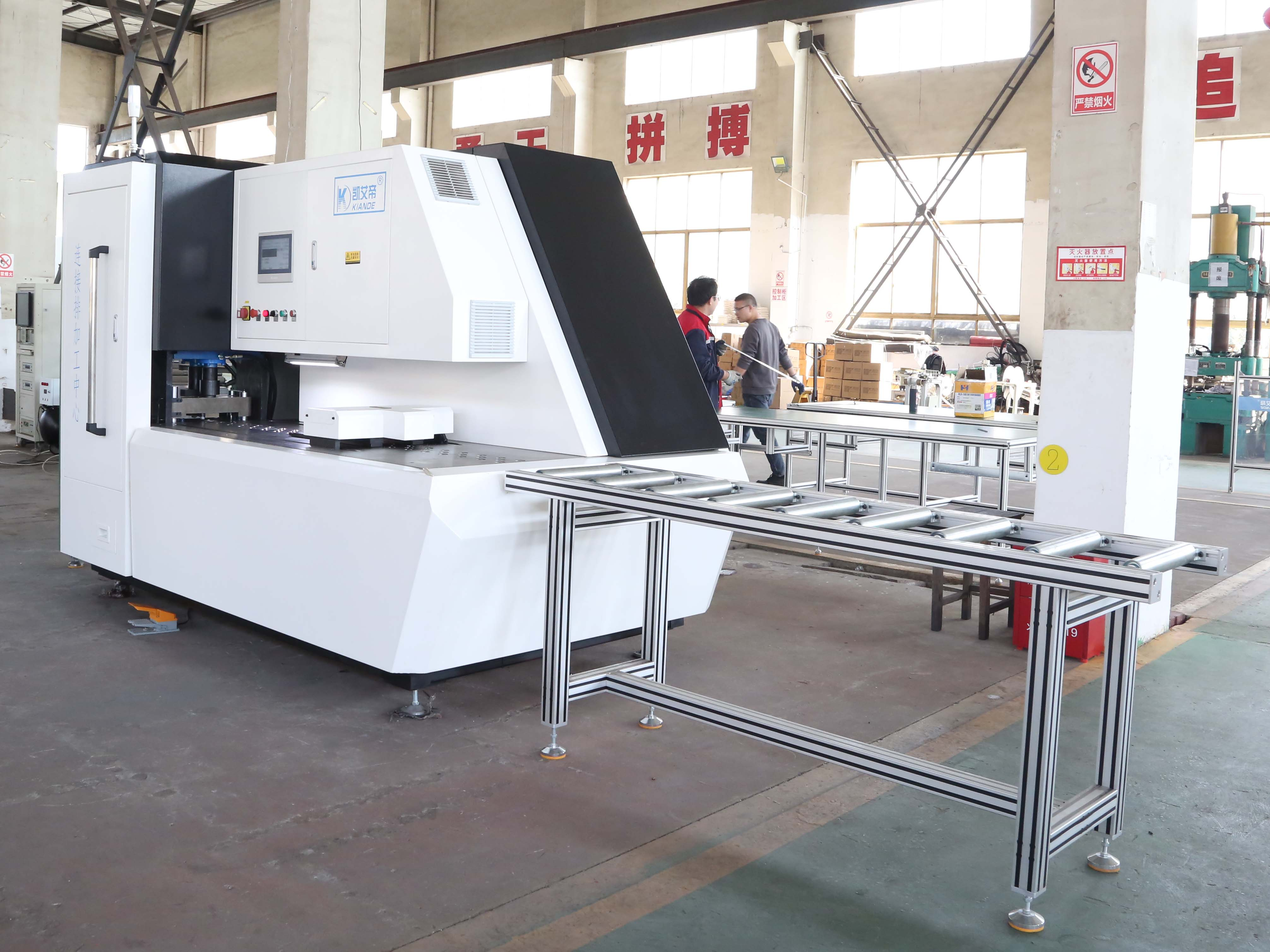
A busbar fabrication machine is a specialized industrial machine designed to process conductive metal bars, usually copper or aluminum, into finished busbar components used in electrical systems. Unlike traditional fabrication methods that require multiple machines or manual operations, a modern busbar machine integrates multiple processing functions into one efficient workflow, allowing manufacturers to achieve higher productivity and better consistency.
The main functions of a busbar machine usually include cutting, punching, and bending, although some advanced models may also support embossing, twisting, and marking. These functions are critical because switchgear systems require busbars with precise dimensions, exact hole placement, and accurate bending angles to ensure safe and reliable electrical connections.
Busbars themselves are one of the most important components inside switchgear because they serve as the main conductive pathways between circuit breakers, switches, transformers, and other electrical devices. Their quality directly affects the performance of the entire system, which is why the fabrication process must be highly accurate and repeatable.
By using a professional busbar machine, manufacturers can ensure that every busbar is produced according to exact engineering specifications, reducing assembly errors and improving overall system performance.
Switchgear production refers to the manufacturing of electrical systems used to control, protect, and isolate electrical circuits. These systems are essential for power distribution in industrial facilities, substations, renewable energy installations, and commercial buildings.
A switchgear system typically includes multiple components such as circuit breakers, disconnect switches, relays, fuses, and busbars. Among these components, busbars are responsible for carrying and distributing electrical current efficiently throughout the system.
The reason busbar quality matters so much is because busbars must handle large current loads while maintaining low resistance and stable conductivity. If the busbar dimensions are incorrect or the bending angles are inaccurate, the result can be poor contact surfaces, increased heat generation, and reduced electrical efficiency.
For example, in a high-voltage switchgear cabinet, a small alignment error in the busbar can create uneven pressure at connection points, leading to overheating or even arcing. Over time, this can reduce the lifespan of the equipment or cause dangerous electrical failures.
This is why a high-quality busbar machine is essential in switchgear production, because it ensures precise and repeatable fabrication that directly supports system safety and reliability.
Efficiency is one of the most important performance indicators in switchgear manufacturing, especially as order volumes continue to increase. A busbar machine improves production efficiency by combining cutting, punching, and bending into a streamlined workflow, eliminating the need for operators to move materials between separate machines.
In a traditional setup, a worker may first cut the busbar, then move it to another machine for punching, and finally transfer it again for bending. Each of these movements adds time and increases the risk of errors. By contrast, a modern busbar machine allows these operations to be completed much faster and with fewer interruptions.
The difference in efficiency can be clearly seen in the table below:
Processing Method | Average Time Per Busbar | Daily Output |
Manual + Separate Machines | 15–20 mins | 30–40 pcs |
Hydraulic Busbar Machine | 7–10 mins | 60–80 pcs |
CNC Busbar Machine | 3–5 mins | 120–160 pcs |
For switchgear manufacturers working with large orders, this productivity increase can dramatically reduce lead times and improve customer delivery performance.
Switchgear systems require extremely precise busbar fabrication because every connection point must align perfectly with other electrical components. Even small dimensional errors can create installation difficulties or electrical inefficiencies.
A professional busbar machine offers significantly higher accuracy compared to manual processing, especially in high-volume production where consistency is essential.
Typical precision levels include:
● Cutting accuracy within ±0.2 mm
● Punching accuracy within ±0.1 mm
● Bending angle accuracy within ±0.3°
The following table shows the difference between manual processing and machine-based fabrication:
Operation | Manual Accuracy | Busbar Machine Accuracy |
Cutting | ±1.0 mm | ±0.2 mm |
Punching | ±0.8 mm | ±0.1 mm |
Bending | ±2° | ±0.3° |
This level of precision reduces assembly errors and improves the reliability of the finished switchgear product.
Copper and aluminum are expensive materials, and waste directly impacts profitability. Traditional fabrication methods often result in higher scrap rates due to inaccurate cuts, incorrect hole placement, and bending mistakes.
A busbar machine reduces these issues by improving process accuracy and repeatability. Many CNC systems also include software that optimizes cutting layouts, helping manufacturers maximize material utilization.
Typical savings from using a busbar machine include reduced scrap rates of 8% to 15%, which can generate substantial cost savings over time, especially for factories processing large volumes of copper busbars every month.
In an industry where raw material costs fluctuate frequently, reducing waste has become one of the most important advantages of automated fabrication.
Labor costs continue rising globally, and many manufacturers are facing skilled worker shortages. A busbar machine helps solve this problem by reducing the number of operators required for fabrication.
Instead of assigning separate workers for cutting, punching, and bending, one trained operator can manage the entire machine. This reduces payroll costs, simplifies workflow management, and lowers the risk of communication errors between production stages.
Additionally, training new workers becomes easier because modern busbar machine systems often feature user-friendly interfaces and programmable settings.
For growing switchgear manufacturers, this labor efficiency is a major competitive advantage.
Safety is one of the most important reasons why busbar quality matters. Poorly fabricated busbars can create loose connections, uneven contact surfaces, and excessive resistance, all of which increase heat generation and the risk of electrical failure.
A precision busbar machine helps ensure that every busbar fits perfectly, creating stable and secure electrical connections. This improves heat dissipation, reduces resistance, and enhances overall system stability.
For industries such as power distribution, renewable energy, and industrial automation, where downtime can be extremely costly, reliability is critical.
A reliable busbar fabrication process supported by a high-quality busbar machine directly contributes to safer switchgear systems and lower maintenance costs.
As demand for switchgear continues to grow, manufacturers need scalable production systems that can handle larger order volumes without sacrificing quality.
A busbar machine supports high-volume manufacturing by offering faster processing speeds, automated repeatability, and stable performance over long production cycles.
This is especially important for OEM manufacturers and export-focused factories that must meet tight delivery schedules and large batch orders.
Without a modern busbar machine, scaling production often requires adding more labor and increasing factory space, which raises costs significantly.
When comparing traditional fabrication methods with automated machine processing, the advantages of using a busbar machine become clear.
Factor | Traditional Processing | Busbar Machine |
Speed | Slow | Fast |
Precision | Medium | High |
Labor Requirement | High | Low |
Material Waste | High | Low |
Safety | Medium | High |
Scalability | Limited | Strong |
This comparison explains why more switchgear manufacturers are upgrading their production lines.
Although the initial cost of a busbar machine may be higher than manual tools or basic standalone equipment, the long-term return on investment is much stronger.
ROI improvements come from several areas:
● Faster production increases order capacity
● Lower scrap rates reduce material costs
● Fewer workers reduce labor expenses
● Higher product quality lowers rework costs
● Better delivery performance improves customer retention
Typical payback periods for busbar machine investments range from 12 to 24 months depending on production volume.
For manufacturers with stable demand, this is considered a highly profitable investment.
Choosing the right machine depends on several factors, including production volume, busbar thickness, material type, required precision, and future growth plans.
For small workshops, hydraulic busbar machine models may be sufficient. Medium-sized factories often benefit from multi-function machines, while large-scale production facilities usually require CNC systems for maximum efficiency.
It is also important to choose a supplier that offers strong after-sales support, spare parts availability, and technical training, because long-term machine reliability depends on proper maintenance and support.
A busbar fabrication machine has become an essential part of modern switchgear production because it directly improves speed, precision, material efficiency, labor productivity, and product reliability. As electrical systems become more advanced and quality requirements continue to rise, relying on manual or outdated busbar processing methods can significantly limit a manufacturer’s ability to compete.
By investing in a high-quality busbar machine, switchgear manufacturers can improve production performance, reduce waste, lower costs, and deliver more reliable products to their customers. Whether your factory is small or large, the right busbar machine is not simply a production tool—it is the foundation of efficient, scalable, and profitable switchgear manufacturing.
A busbar machine is used for cutting, punching, and bending copper or aluminum busbars to precise dimensions required in switchgear systems.
Precise busbars improve electrical conductivity, reduce heat generation, and ensure safe installation inside switchgear cabinets.
Yes, most modern busbar machine systems are designed to process both copper and aluminum materials.
Yes, CNC systems offer higher precision, faster production, lower labor costs, and better consistency.
You should evaluate your production volume, material requirements, accuracy needs, budget, and future expansion plans before choosing a machine.

