
Views: 0 Author: Site Editor Publish Time: 2026-06-30 Origin: Site


Modern electrical infrastructure demands flawless power distribution. Engineers face a tough challenge in busbar manufacturing today. They must securely join enclosure profiles without degrading material strength. They also need to avoid introducing heat distortion. Production cycles must remain incredibly fast to meet market demand.
Traditional spot welding introduces intense heat. It warps thin panels and ruins protective coatings. Bolting requires tedious pre-drilling. These old methods cause massive bottlenecks on the factory floor. Engineers are shifting away from them. They now favor cold-forming mechanical fastening.
A completely different approach is revolutionizing this workflow. We will explore how a Self Piercing Riveting Machine transforms electrical enclosure assembly. You will understand its operational role perfectly. You will also learn the exact evaluation criteria needed. This helps you specify the right equipment for high-volume production lines.
Core Function: A Self Piercing Riveting Machine (SPR) fastens busduct enclosures in a single step without pre-drilled holes, creating a highly repeatable, watertight, and vibration-resistant joint.
Material Advantage: SPR is uniquely suited for dissimilar materials (e.g., aluminum to galvanized steel) common in modern aluminum profile assembly, avoiding the metallurgical issues of welding.
Production ROI: Integrating automatic rivet feeding systems reduces cycle times to seconds per joint, directly impacting throughput in large-scale busbar manufacturing.
Evaluation Focus: Successful implementation requires careful assessment of C-frame throat depth, tonnage capacity, and die selection based on specific enclosure thicknesses.
Cold-forming relies on immense physical pressure rather than heat. The machine presses a semi-tubular rivet down into the metal sheets. It drives the rivet directly through the top layers of the casing. An upsetting die sits beneath the bottom layer. This die guides the rivet skirt outward. The rivet flares perfectly inside the bottom layer. It never punctures the final sheet. This creates a solid, permanent mechanical interlock. The entire action finishes in less than two seconds.
This method drastically simplifies busduct assembly. Traditional fastening demands intensive preparation. You usually have to align holes precisely. You must drill or punch through multiple layers. Drilling creates metal shavings. Swarf easily damages sensitive electrical components inside the busduct. Punching causes material fatigue around the hole edges. These steps create massive bottlenecks. The machine completely bypasses hole alignment. You just position the metal sheets and activate the press.
Coating preservation stands out as a massive benefit. Busduct enclosures often use pre-painted steel. They frequently rely on galvanized finishes or anodized aluminum. High heat destroys these coatings instantly. Even pre-drilling scratches the protective surface. Scratches invite rust over time. The cold-forming process protects the surface completely. It pushes the coating down along with the metal grain. You maintain the essential corrosion resistance. This is critical for electrical infrastructure exposed to harsh environments.
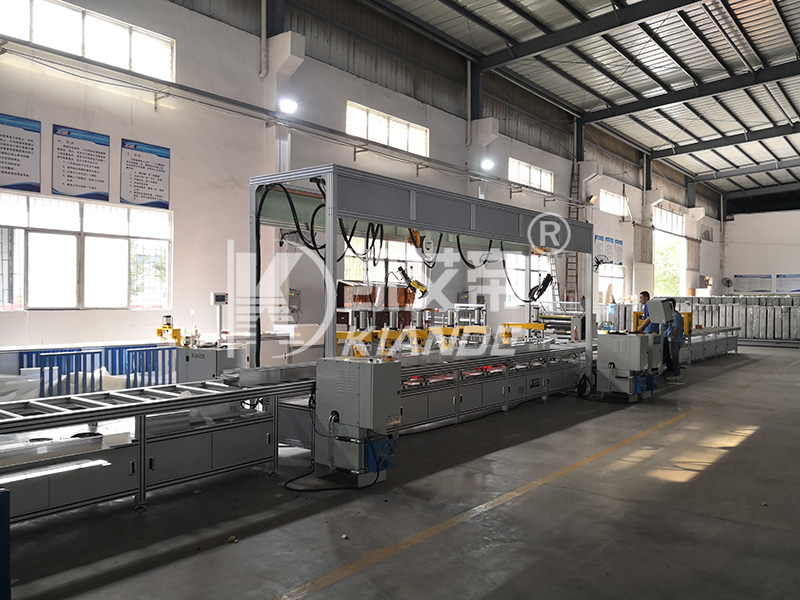
Thermal dynamics make spot welding problematic for enclosures. Welding generates a distinct Heat Affected Zone (HAZ). This intense localized heat destroys metal tempers. Thin aluminum profiles warp almost immediately under welding torches. SPR generates zero heat. You completely eliminate the HAZ. Panels remain perfectly flat and structurally sound.
Material limitations also plague traditional welding. Modern enclosures combine different metals to save weight. You might join an aluminum casing to a heavy galvanized steel bracket. Spot welding dissimilar metals is notoriously difficult. The metals melt at completely different temperatures. They reject each other metallurgically. Cold-forming ignores these metallurgical limits. An SPR machine locks dissimilar metals together flawlessly.
Blind riveting and bolting present structural integrity issues. Both require pre-drilled holes. These holes create vulnerable moisture ingress points. Moisture causes catastrophic short circuits in electrical systems. SPR leaves the bottom layer entirely intact. It forms a continuous, leak-proof barrier. Furthermore, cycle times drop significantly. You consolidate multiple steps into one quick press action. You skip the drill station entirely.
Compliance and reliability remain top priorities for engineers. Busducts carry heavy electrical loads. They heat up during peak power demand. They cool down when idle. This causes constant thermal expansion and contraction. Bolted joints frequently loosen under this stress. Loose bolts cause dangerous electrical arcing. SPR joints handle thermal cycling brilliantly. The flared rivet acts like a compressed spring. It maintains constant tension. The joint never loosens over time.
Comparison Table: Joining Methods in Enclosure Manufacturing | |||
Feature | Spot Welding | Blind Riveting | Self Piercing Riveting |
|---|---|---|---|
Pre-Drilling Needed? | No | Yes | No |
Heat Distortion | High (HAZ present) | None | None |
Joins Dissimilar Metals | Poor / Inconsistent | Good | Excellent |
Watertight Base Layer | Yes | No (Hole through all layers) | Yes |
Cycle Speed | Fast | Slow (Requires alignment) | Very Fast |
Selecting proper riveting equipment requires deep technical evaluation. You cannot buy these machines off the shelf blindly. Engineers must match the machine specifications to the exact enclosure profile.
Tonnage and Force Control: Metal thickness dictates pressing force. Yield strength also plays a major role. Most busduct housings require between 30 and 80 kN of force. Harder steel alloys demand the upper limit. Aluminum needs less pressure but higher precision. Look for servo-driven or hydropneumatic systems. They offer programmable force monitoring. You can set strict tolerance windows for quality assurance.
Throat Depth and C-Frame Geometry: The machine frame must clear the enclosure body. Throat depth measures the distance from the punch to the back of the C-frame. Match this measurement to your maximum profile width. A shallow throat causes clearance collisions. Deep throats provide flexibility. However, extremely deep frames require heavier structural reinforcement to prevent deflection under high pressure.
Automatic Rivet Feeding Systems: Manual loading destroys production efficiency. Operators fumble small parts easily. For high-volume runs, demand automatic rivet feeding systems. A vibrating bowl or pneumatic tube delivers the hardware instantly. The punch loads automatically after every cycle. This prevents manual loading bottlenecks. It dramatically reduces operator fatigue during long shifts.
Process Monitoring Integration: Quality control must happen in real-time. Do not wait for manual inspections. Advanced equipment measures force-displacement curves continuously. The sensors plot the pressure applied against the distance traveled. This curve detects errors instantly. It flags missing rivets immediately. It catches wrong material thicknesses. It even detects worn dies before the product ever leaves the assembly station.
Tooling lifecycle management is a harsh reality. Dies and punches are highly stressed consumables. They endure thousands of pounds of pressure every minute. They will eventually wear out. You must schedule periodic replacement. Calculate your expected return based on exact cycles per die. Preventative maintenance saves thousands of dollars in scrapped parts.
Rivet selection brings immense complexity. You cannot treat hardware as generic. Geometry matters immensely. The rivet leg length must exactly match your combined material stack. The rivet hardness must always exceed the top sheet hardness. Otherwise, the rivet collapses instead of piercing. Coatings are equally vital. You must match the coating to the specific alloys involved. Incorrect coatings cause aggressive galvanic corrosion between the rivet and the housing.
Prototyping ensures long-term success. Never assume generic capability based on a brochure. Send your actual production materials to the machine builder. Demand comprehensive shear and peel strength tests. A shear test pulls the metals horizontally. A peel test pulls them vertically apart. Inspect the joint cross-sections under a microscope. You must validate the exact die and rivet combination before signing any purchase orders.
Always match rivet hardness to material yield strength.
Schedule die replacements before deformation occurs.
Request force-displacement curve samples for your specific stack-up.
Verify coating compatibility to prevent latent galvanic corrosion.
Scaling up aluminum profile assembly requires distinct equipment choices. Manufacturers offer various automation levels. You must match the configuration to your production volume. Overbuying wastes capital. Underbuying restricts growth.
Entry-level setups rely on standalone manual C-frames. These units sit on stationary pedestals. The operator manually positions the heavy enclosure. They trigger the press using a foot pedal. This style works best for low-mix, highly customized runs. It handles short batches perfectly. It requires lower upfront capital. However, it relies entirely on operator consistency. Misalignment happens if the worker loses focus.
High-volume operations demand automated CNC or robotic integration. These systems handle standardized, mass-produced enclosures. Engineers mount the SPR heads onto multi-axis robotic arms. Alternatively, they use large CNC gantries. The machine moves the tool head around the stationary busduct. It performs rapid multi-point fastening flawlessly. Cycle times plunge dramatically. Consistency reaches near-perfect levels.
Configuration Chart: Standalone vs. Automated Systems | |||
Configuration Type | Best Use Case | Operator Dependency | Throughput Level |
|---|---|---|---|
Standalone Manual C-Frame | Low-mix, custom, prototypes | High (Manual positioning) | Low to Medium |
Semi-Automated Pedestal | Consistent short runs | Medium (Jig guided) | Medium |
CNC Gantry Integration | Heavy enclosures, flat panels | Low (Machine controlled) | High |
Robotic Arm Mount | Complex 3D geometries | Very Low (Fully automated) | Very High |
Your next-step action is straightforward. Advise your procurement teams to request a formal Time Study. Have the manufacturer run your parts. Validate their cycle time claims against real data. Ask to inspect the cross-sectional cutaways of the resulting joints. Only proceed when the data proves out.
Upgrading to cold-forming technology transforms the assembly floor. It eliminates the severe defects associated with thermal welding. It removes the tedious preparation of pre-drilled fastening. Manufacturers can drastically scale their throughput while improving structural integrity. The joints withstand thermal cycling and resist severe vibrations.
Successful adoption hinges on careful evaluation. Base price matters less than technical alignment. You must match the tooling precisely to your materials. You must select the right rivet metallurgy to prevent galvanic corrosion. Finally, integrating automated feeding systems unlocks the true speed of the equipment.
Demand cross-sectional testing on actual production samples before buying.
Ensure C-frame dimensions handle your widest enclosure profile comfortably.
Prioritize servo-driven machines for accurate force-displacement monitoring.
Invest in automated rivet feeding to maximize factory floor efficiency.
A: The joint creates an extremely tight mechanical and electrical bond. It penetrates surface oxides during the pressing phase. This often makes it suitable for continuous grounding of the outer casing. However, you must conduct independent resistance testing to meet specific regional electrical safety standards.
A: Industry thresholds vary based on metal hardness. Generally, standard machines handle up to 6mm to 8mm of combined thickness for soft aluminum alloys. Harder materials reduce this maximum. High-tonnage specialty machines can push slightly beyond these limits if engineered correctly.
A: Yes. Joining three or more sheets is entirely possible. For example, you can fasten a bracket, a main housing, and an interior flange simultaneously. The total combined thickness and hardness gradient must simply allow the rivet to flare properly inside the bottom-most layer.

