
Views: 0 Author: Site Editor Publish Time: 2026-06-24 Origin: Site


As data centers and high-rise commercial facilities scale rapidly, demand for modular power networks grows exponentially. High-capacity operations require robust electrical infrastructure. General sheet metal fabrication no longer suffices for these critical applications. Transitioning to specialized Busbar Trunking System manufacturing demands extreme precision. You must strictly navigate electrical standards like IEC 61439-6. You must also maintain demanding mechanical tolerances throughout production. Poorly manufactured systems face localized overheating and catastrophic electrical failures.
This article provides an evidence-based roadmap for facility planners. We help plant managers, investors, and industrial engineers make informed decisions. You will learn how to select, evaluate, and budget for a commercial-grade busduct production line. We outline exactly which machines process raw conductors safely. We also cover equipment required for insulation application and mandatory safety testing. Understanding these equipment requirements helps you build a compliant, high-throughput manufacturing facility.
A compliant busbar assembly line requires three distinct zones: Conductor Processing, Insulation/Assembly, and Electrical Testing.
Conductor fabrication requires CNC precision (±0.1mm) in cutting, punching, and bending to prevent joint impedance and localized overheating.
The choice between a 3-in-1 multi-station machine and dedicated standalone CNC centers dictates your facility's daily throughput and CAPEX.
Testing rigs are not optional; automated temperature rise and dielectric testing are mandatory for market certification and safety compliance.
Your primary evaluation objective focuses on raw material handling. You must process 99.9% ETP copper or 6101/6063 aluminum efficiently. You must manipulate these conductive metals without causing mechanical degradation. Reliable busbar fabrication relies heavily on three distinct CNC centers. Each machine performs a specific task to prepare conductors for assembly.
CNC Shearing and Cutting Machines: Absolute accuracy remains paramount here. Your machine must achieve ±0.1mm cutting accuracy. Poor cutting generates rough metallic burrs. These burrs easily puncture delicate insulation films during later stages. Punctured insulation ultimately leads to fatal dielectric failure. High-end shears use precision blades to leave perfectly clean edges.
Hydraulic CNC Punching Centers: You need substantial high-tonnage output for thick conductors. Engineers calculate this requirement using a standard mechanical formula. The formula is: Tonnage = Perimeter × Thickness × Shear Strength / 10,000. Always look for machines offering quick-change tooling turrets. Rapid tool changes significantly minimize downtime between different phase configurations. They keep your production moving smoothly.
CNC Press Brakes and Bending Machines: Bending introduces immense stress into metal. You must strictly control the minimum bend radius. Typically, this radius sits between 1.5x and 2x the material thickness. Maintaining this specific radius prevents micro-cracking. Micro-cracking creates dangerous impedance spikes under heavy electrical loads. Look for machines featuring automatic spring-back compensation algorithms. This technology ensures exact alignment during the final assembly phase.
Best Practices: Regularly inspect your cutting blades. Dull blades cause microscopic fractures in copper. These fractures increase electrical resistance slightly, causing massive heat generation over time.
This section explains the machinery needed for system integration. You must transition bare conductors into a safe, enclosed system. A well-equipped busbar assembly line relies heavily on robust automation. Manual processes simply cannot meet modern certification standards.
Automated insulation wrapping systems form the first critical barrier. These machines apply Class B, F, or H Mylar/PET films seamlessly. They can also handle extruded epoxy coatings. Manual wrapping consistently introduces human error. It frequently traps microscopic air pockets between insulation layers. Air pockets drastically reduce the short-circuit withstand capability of your product. Automated winders guarantee consistent tension and uniform dielectric strength across every unit.
Profile roll forming and extrusion handling equipment create the exterior. You need this machinery to manufacture outer aluminum or galvanized steel housings. Equipment must handle non-magnetic materials cleanly and precisely. Using non-magnetic materials is crucial for high-capacity systems. Doing so ensures the final product eliminates eddy currents under high-load conditions.
Automated riveting and pressing machines finalize the assembly process. This represents the last stage for sandwich and compact busways. Hydraulic pressing ensures optimal conductor-to-housing contact. This intimate contact is strictly critical for thermal management. It allows the metallic housing to act as a massive heat sink. Efficient heat sinking keeps temperature rise strictly below the standard 35°C threshold.
Assembly Stage | Equipment Required | Primary Function | Risk of Manual Process |
|---|---|---|---|
Insulation | Automated Winder | Apply PET/Mylar films | Air pockets causing short-circuits |
Housing | Profile Roll Former | Shape non-magnetic enclosures | Inconsistent dimensions, poor fit |
Final Pressing | Hydraulic Riveting Press | Compress layers for heat transfer | Poor contact causing overheating |
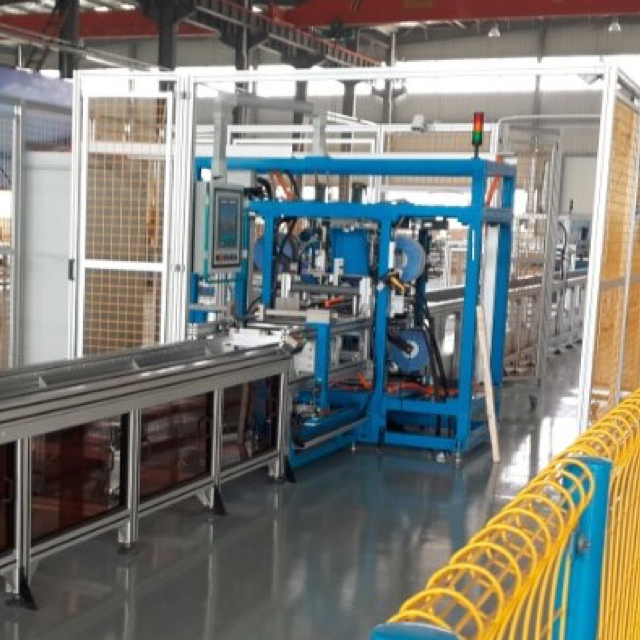
Reliable busway equipment manufacturing requires rigorous testing. You cannot bypass standards like IEC 61439-1/6 or UL 857. Electrical testing gating ensures product safety before shipment. Without these rigs, your facility operates blindly.
Micro-Ohmmeters (4-Wire Resistance Testers): You use these specific tools to verify continuous conductor resistance. They rely on Kelvin connections to eliminate test lead resistance. They confirm joint efficiency before you move to final assembly. High resistance indicates poor punching or bad material quality.
Dielectric Withstand (Hi-Pot) Testers: These critical units apply extremely high voltage to the assembled system. They ensure your insulation layers hold up under severe stress. They verify phase-to-phase separation holds perfectly without dangerous flashovers. Any failure here means the insulation was punctured during assembly.
Temperature Rise Test Stations: These rigs simulate full electrical load capacity in a controlled environment. They verify thermal limits remain completely unbreached during maximum operation. Bare copper, for example, must stay below 105°C absolute temperature.
Investing heavily in in-house testing rigs builds a massive trust factor. It proves your commitment to engineering excellence. Internal testing drastically reduces failure rates during third-party certifications. Organizations like ASTA or CPRI charge heavily for certification testing. Failing their tests costs you time, materials, and market reputation.
Common Mistake: Skipping intermediate micro-ohm testing before final pressing. Once the housing is hydraulically riveted, fixing a high-resistance joint becomes impossible. You must scrap the entire unit.
You need a clear decision framework for machinery capital expenditures. Production volume and factory floor space dictate your optimal path. Choosing the wrong setup bottlenecks your entire operation. We break down the two primary approaches below. Review the comparison chart to evaluate your specific needs.
System Type | Footprint | Production Speed | Best Use Case | Major Drawback |
|---|---|---|---|---|
3-in-1 Multi-Station | Small (< 15 sq meters) | Low to Medium | Custom tap-off boxes, small runs | Severe process bottlenecks |
Dedicated CNC Lines | Large (> 50 sq meters) | High (Continuous) | Mass production of straight lengths | Higher initial capital investment |
3-in-1 busbar processing machines combine cutting, punching, and bending. These multi-station units offer an incredibly low factory footprint. They are highly cost-effective for custom tap-off boxes. They suit low-volume facilities or tight startup budgets perfectly. However, they create a severe operational bottleneck. You simply cannot simultaneously cut, punch, and bend at high speeds. Operators must wait for one process to finish before starting another.
Dedicated standalone CNC lines unlock high-volume continuous production. They operate independently, allowing simultaneous fabrication across different stations. Integrated software optimizes material nesting automatically. This software reads DXF files and plans cuts perfectly. This drastically reduces copper and aluminum scrap. Given extremely high raw material costs, scrap reduction remains crucial. The downside involves a significantly higher initial investment. They also require a larger facility footprint and highly skilled automation operators.
Deploying power distribution system manufacturing equipment carries hidden operational realities. Unprepared plant managers often face costly surprises during initial setup. Managing these risks protects your projected margins.
Mixed-metal contamination presents a massive galvanic corrosion risk. This serves as a vital reality check for new facilities. If you process both copper and aluminum, you need strict protocols. You must install aggressive industrial dust extraction systems. You must enforce rigorous tool cleaning between material runs. Scrap separation must be perfect. Co-mingling copper and aluminum shavings leads directly to galvanic corrosion. It also causes premature wear on your costly CNC tooling.
Material handling integration requires serious logistical planning. Raw copper bars are extremely heavy and awkward. Manual handling causes severe worker fatigue quickly. It also leads to dangerous material drops and dents. Overhead factory cranes are absolutely mandatory. You also need automated conveyor feeds between the cutting and bending stations. Automation keeps heavy materials flowing safely.
Return on investment relies heavily on operational efficiency. Profit margins in this sector typically float between 10% and 25%. You protect these margins strictly by minimizing raw material scrap. Software-driven layout planning achieves this scrap reduction effortlessly. Never cut corners on machinery quality to save money upfront. Machine reliability directly drives your actual production volume. Precision equipment ensures your final products pass certification on the first attempt.
Building a reliable, certified modular trunking system relies entirely on precision equipment. Every single step matters immensely for electrical safety. The process demands exactness from initial conductor shearing to final hydraulic riveting. Substandard machinery inevitably produces unsafe, uncertifiable electrical infrastructure.
Take these actionable next steps to ensure your project succeeds:
Audit your projected daily throughput carefully in meters per day.
Map out your available factory floor footprint to identify spatial constraints.
Calculate your maximum required punching tonnage based on conductor thickness.
Consult directly with established OEMs to design a scalable, integrated layout.
Avoid buying disjointed machines piece by piece without a unified software strategy.
A: Yes, but tooling dies, cutting clearances, and tonnage settings must be adjusted. Aluminum is softer and lighter than copper. However, aluminum requires a larger cross-section (roughly 1.6x) for equivalent ampacity. You must ensure your CNC machinery can accommodate these larger physical dimensions.
A: Usually, the insulation wrapping and final riveting stages cause delays. While CNC conductor processing operates rapidly, manual or semi-automated insulation alignment slows down the entire line. Investing in fully automated Mylar wrapping machines eliminates this specific bottleneck effectively.
A: Regular die sharpening is critical to prevent metal burrs. You must also perform routine hydraulic fluid checks on punch and press brake systems. Finally, frequent calibration of the press brake's bending angle algorithms ensures your bends remain perfectly accurate over time.

