
Views: 0 Author: Site Editor Publish Time: 2026-06-30 Origin: Site


What if the real bottleneck in copper busbar manufacturing is not your workforce, not your raw materials, and not even your production schedule, but the equipment you rely on to cut, punch, and bend the material in the first place? In modern electrical manufacturing, where precision and efficiency directly determine profitability, even small inefficiencies in copper processing can lead to significant cost increases, production delays, and quality inconsistencies. As industries such as switchgear production, power distribution systems, renewable energy infrastructure, EV charging stations, and industrial automation continue to expand globally, copper busbar fabrication has become a core process that requires both high precision and high efficiency.
Copper, as a material, is widely used because of its excellent electrical conductivity and long-term stability, but it is also one of the most demanding materials to process in industrial fabrication. Unlike aluminum, copper requires higher force during cutting and punching operations, and it demands strict control during bending to avoid deformation or micro-cracking. This raises an important question for manufacturers: is a busbar cutting punching and bending machine truly suitable for copper processing, or is it better to rely on separate machines for each operation?
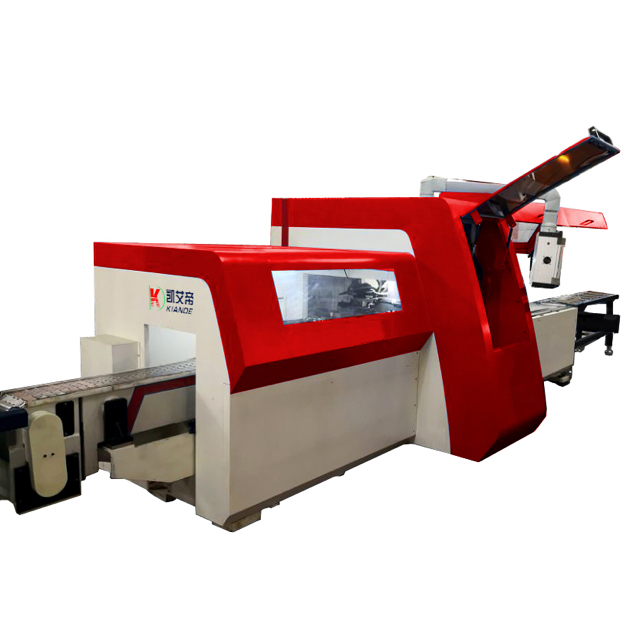
In this article, we will explore this question in depth by analyzing the working principles, technical requirements, advantages, limitations, and real-world performance of a busbar cutting punching and bending machine when used for copper fabrication. We will also compare integrated systems with traditional workflows so that manufacturers can make informed investment decisions based on production needs rather than assumptions.
A busbar cutting punching and bending machine is an integrated industrial system designed to complete three essential busbar fabrication processes—cutting, punching, and bending—within a single machine structure. Instead of transferring copper busbars between separate workstations for each process, the machine allows continuous processing within one unified system, significantly improving efficiency and reducing positioning errors.
In practical manufacturing environments, this type of machine is widely used for producing busbars that are installed in electrical panels, switchgear cabinets, transformers, distribution systems, renewable energy inverters, and EV charging infrastructure. Because copper busbars require high precision to ensure stable current flow and safe electrical connections, the accuracy and consistency provided by a busbar cutting punching and bending machine play a critical role in overall system reliability.
When used for copper processing, the machine must be capable of handling higher resistance forces and maintaining stable operation under continuous load, which makes its structural strength, hydraulic system, and tooling quality extremely important.
Copper is considered one of the best conductive materials in electrical engineering, but from a manufacturing perspective, it is also one of the most challenging materials to process efficiently. The main difficulty comes from its combination of high density, strong ductility, and resistance to deformation under pressure, which directly affects cutting, punching, and bending operations.
During cutting, copper requires sharp and stable shearing force to avoid burr formation and edge deformation. During punching, insufficient force can result in incomplete hole formation or excessive tool wear, while during bending, uncontrolled pressure may cause surface cracking or uneven angle formation. These issues are not only technical problems but also directly affect electrical performance, because poor dimensional accuracy can lead to weak connections, overheating, or even system failure in high-load applications.
As a result, manufacturers must ensure that any busbar cutting punching and bending machine used for copper processing is specifically designed or properly configured for high-force, high-precision operations.
The answer is yes, a busbar cutting punching and bending machine is highly suitable for copper processing, but its performance depends heavily on machine configuration, hydraulic capacity, and tooling quality. A properly designed system can handle copper busbars efficiently, providing high precision and stable output, especially in medium and large-scale production environments.
However, not all machines are equal. The suitability depends on whether the machine can meet the following essential requirements: sufficient hydraulic pressure to handle copper thickness, a rigid machine frame to prevent deformation under load, high-quality cutting and punching tools designed for copper hardness, and a precise positioning system to ensure repeatability across production batches.
When these conditions are met, the machine becomes not only suitable but also more efficient than traditional separate systems.
The busbar cutting punching and bending machine processes copper through three sequential operations that are integrated into one continuous workflow, which reduces handling time and improves accuracy.
In the cutting stage, copper busbars are cut into precise lengths using hydraulic or CNC-controlled force systems that ensure clean edges and minimal material deformation. This step is critical because any deviation in length will directly affect the accuracy of punching and bending operations that follow.
In the punching stage, the machine creates holes required for electrical connections, mounting, and assembly. Because copper has higher resistance than aluminum, the machine must apply greater force while maintaining precise alignment to ensure that each hole matches design specifications. Poor punching accuracy can result in installation misalignment or unstable electrical contact, which may increase resistance and heat generation in operational systems.
In the bending stage, the copper busbar is shaped into required angles such as 30°, 45°, 90°, or 135°, depending on installation requirements. This process requires controlled hydraulic pressure to ensure smooth bending without damaging the material structure or affecting conductivity performance.
One of the most significant advantages of using a busbar cutting punching and bending machine for copper processing is the improvement in overall production efficiency. By combining three separate processes into one continuous workflow, manufacturers eliminate the need for repeated material handling, which significantly reduces production time and labor requirements.
Another important advantage is improved precision. Since all operations are completed within a single positioning system, cumulative errors caused by repositioning are greatly reduced, resulting in higher consistency across production batches. This is particularly important in electrical manufacturing, where even small deviations can affect system safety and performance.
In addition, integrated machines help reduce material waste because better positioning accuracy leads to fewer rejected parts. Labor costs are also reduced because fewer operators are required to manage the entire production process, making the system more cost-effective in the long term.
To better understand the value of integration, it is useful to compare integrated systems with traditional separate machines used for copper processing.
Comparison Factor | Separate Machines | Integrated Machine |
Production Efficiency | Lower due to material transfer | Higher due to continuous workflow |
Precision Stability | Medium, depends on multiple setups | High, unified positioning system |
Labor Requirement | High | Low |
Material Waste Rate | Higher due to repositioning errors | Lower due to consistent alignment |
Floor Space Requirement | Large | Compact |
Maintenance Complexity | Multiple systems | Single system |
This comparison clearly shows that a busbar cutting punching and bending machine offers significant advantages in efficiency and consistency, especially for copper processing applications where precision is critical.
When selecting a machine for copper busbar fabrication, manufacturers must carefully evaluate key technical parameters such as hydraulic pressure capacity, punching force, bending force, positioning accuracy, and tooling durability.
Technical Parameter | Recommended Standard for Copper Processing |
Copper Thickness Range | 3–15 mm |
Hydraulic Pressure | 20–70 MPa |
Punching Force | 30–100 tons |
Positioning Accuracy | ±0.2 mm |
Bending Capacity | Up to 135° |
These specifications ensure that the machine can handle copper’s mechanical resistance while maintaining stable production performance.
A busbar cutting punching and bending machine is widely used in industries that rely on copper busbars for electrical connectivity, including switchgear systems, electrical control panels, transformer connections, renewable energy systems, and EV charging stations. In all these applications, copper busbars must meet strict standards of precision and reliability, making integrated processing systems highly valuable.
Although the busbar cutting punching and bending machine offers many advantages, it also has some limitations that should be considered. One limitation is that not all machines are designed to handle extremely thick copper busbars, which means manufacturers must carefully match machine specifications with production requirements. Another limitation is tool wear, as copper processing places higher stress on cutting and punching dies, which may increase maintenance frequency.
Additionally, integrated machines generally require higher initial investment compared to single-function machines, although this cost is often offset by long-term savings in labor and efficiency improvements.
When selecting a busbar cutting punching and bending machine, manufacturers should consider production volume, copper thickness requirements, automation level, and long-term scalability. For small-scale production, standard hydraulic systems may be sufficient, while medium and large-scale operations benefit more from CNC-controlled or semi-automatic systems that offer higher precision and automation.
It is also important to choose a reliable manufacturer with strong technical support, spare parts availability, and after-sales service to ensure long-term operational stability.
A busbar cutting punching and bending machine is not only suitable for copper processing but also highly effective when properly configured for industrial requirements. By integrating cutting, punching, and bending into one system, it significantly improves efficiency, reduces labor costs, enhances precision, and minimizes material waste. However, its performance depends heavily on proper machine selection and configuration based on copper thickness and production scale.
For modern electrical manufacturing industries, investing in the right integrated busbar processing machine is not just an equipment upgrade but a strategic decision that directly impacts production efficiency and long-term profitability.
Yes, but only if the machine has sufficient hydraulic force and structural strength designed for heavy-duty copper processing.
In most cases, yes, because it improves efficiency, reduces handling errors, and enhances consistency in production.
Most industrial machines can handle copper up to around 15 mm, depending on hydraulic system capacity.
Yes, copper is harder on tooling compared to aluminum, so regular maintenance and high-quality dies are necessary.
Basic inspections should be done weekly, while full hydraulic and tooling maintenance is typically recommended every 3 to 6 months depending on production intensity.

