
Views: 0 Author: Site Editor Publish Time: 2025-09-02 Origin: Site


Copper fishplate manufacturing plays a critical role in industries such as power transmission, railways, and heavy equipment, where durable and precise components are essential for safety and operational efficiency. Traditionally, copper fishplates were produced using manual cutting, stamping, and machining methods. While these approaches were functional, they often required significant labor, were time-consuming, and could result in inconsistencies or material waste. Modern copper fishplate processing machines, however, offer automation, higher precision, and faster production speeds. This article aims to compare these advanced machines with traditional methods, highlighting differences in efficiency, accuracy, cost-effectiveness, and overall value for manufacturers seeking to optimize their production processes.
Manual cutting and shaping of copper fishplates has long been a standard approach in smaller workshops or less industrialized production settings. These methods are highly labor-intensive, requiring skilled operators to measure, cut, and shape each fishplate by hand. The process is time-consuming, which limits production capacity and slows down project timelines. In addition, manual techniques often result in limited precision, making it more challenging to achieve uniform dimensions and consistent quality. The higher likelihood of human error also increases material waste and can lead to production delays.
Stamping and machining have been widely used for small-scale production of copper fishplates, offering a somewhat faster alternative to purely manual methods. Stamping allows for repeated shaping of plates using dies, while machining provides greater control over cuts and surface finishing. However, these techniques come with their own challenges. Consistency can vary between batches, especially when using older equipment or tools that wear down quickly. Material waste remains a concern, as excess copper is often trimmed or discarded. Additionally, speed is limited compared to modern automated machines, making it difficult to meet high-volume production demands efficiently.
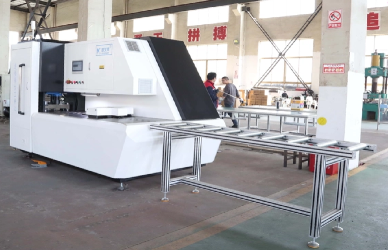
Modern copper fishplate processing machines bring automation to the forefront, significantly reducing the need for manual labor. Automated systems streamline tasks such as cutting, shaping, and drilling, allowing operators to oversee multiple machines simultaneously. High-speed processing capabilities enable manufacturers to handle large-scale production efficiently, meeting tight project deadlines while maintaining consistent output. By combining automation with rapid operation, these machines enhance productivity and free human resources for more strategic tasks.
One of the most critical benefits of copper fishplate processing machines is their ability to deliver precise and consistent results. Advanced sensors, CNC controls, and calibrated tooling ensure that every fishplate adheres to exact specifications. This uniformity minimizes defects, reduces material waste, and ensures that each piece meets industry standards. The high accuracy also supports quality assurance processes, giving manufacturers confidence in the durability and reliability of their copper components.
Copper fishplate processing machines offer remarkable flexibility, accommodating various metals, sizes, and intricate designs. Whether producing components for power transmission, railways, or heavy machinery, these machines can adapt to specific project requirements. Multi-material compatibility allows processing of not only copper but also alloys and other metals, expanding the range of applications. Customization features support tailored production, enabling manufacturers to meet unique client specifications efficiently while maintaining consistent quality.
When evaluating copper fishplate production, it’s important to compare modern copper fishplate processing machines with traditional methods. While traditional approaches like manual cutting, stamping, and machining have been used for years, modern machines offer significant improvements in speed, precision, material efficiency, and flexibility. Below is a clear comparison of key features:
Feature | Copper Fishplate Processing Machines | Traditional Methods |
Production Speed | High-speed automated processing allows large-scale production and faster turnaround times, meeting tight deadlines efficiently. | Manual cutting, stamping, and machining are labor-intensive and slow, limiting overall production capacity. |
Accuracy and Quality | CNC and automated systems provide consistent precision and uniform quality across all fishplates. | Higher risk of human error can result in inconsistent dimensions and occasional defects. |
Material Waste Reduction | Precise cutting and shaping minimize scrap material, improving efficiency and lowering costs. | Manual methods are less efficient and often produce more waste due to uneven cuts or mistakes. |
Labor and Cost Efficiency | Reduced labor requirements and minimal rework lower operational costs. | Requires more manual labor, increasing costs and the likelihood of corrections or rework. |
Flexibility and Customization | Machines can handle different metals, sizes, and complex designs, making them suitable for multiple industries. | Limited adaptability; changing designs or materials typically requires additional tooling and effort. |
This format c604 ombines a short explanatory paragraph with a structured table, making it easier to understand the advantages of copper fishplate processing machines over traditional methods.
Copper fishplate processing machines have become indispensable in various industrial sectors due to their high precision, efficiency, and adaptability. They streamline production, ensure consistent quality, and enable the creation of customized components for demanding applications. Below are some key areas where these machines are particularly valuable:
Copper fishplates are widely used in large-scale construction projects where reliable electrical and mechanical connections are critical. Processing machines allow for rapid, accurate production of fishplates that meet stringent dimensional and quality standards, reducing the risk of project delays and rework.
In power grids, copper fishplates play a crucial role in connecting conductors and components. Advanced processing machines ensure each fishplate is manufactured to exact specifications, providing stable, low-resistance connections that enhance the overall reliability and safety of electrical infrastructure. The precision of automated machines minimizes human error and reduces material waste, which is especially important in large-scale power projects.
Copper fishplates are essential for maintaining the structural integrity of railway tracks, ensuring safe and smooth operation of trains. Modern processing machines enable high-volume production of fishplates with consistent quality and durability. By automating complex cutting, shaping, and finishing processes, these machines improve turnaround times, reduce scrap material, and help railway companies maintain reliable track systems.
Copper fishplates are also used in heavy machinery, including construction equipment and industrial machines, where they act as critical joints and connectors. Processing machines allow for custom sizing, precise shaping, and multi-metal compatibility, ensuring that components fit perfectly and perform reliably under high stress. This versatility supports manufacturers in producing specialized components for diverse industrial applications.
By enhancing production speed, precision, and adaptability, copper fishplate processing machines significantly improve efficiency, reduce costs, and expand the range of applications across multiple industries. Manufacturers can rely on these machines to meet high-demand projects while maintaining stringent quality standards.
Copper fishplate processing machines have transformed the way manufacturers produce critical components for industries such as power transmission, railways, heavy machinery, and industrial construction. Compared with traditional methods like manual cutting, stamping, and machining, modern processing machines offer clear advantages in efficiency, precision, and cost-effectiveness. Automated systems streamline production, reduce labor requirements, and ensure consistent quality, while advanced CNC controls minimize material waste and support complex designs and customization.
By integrating these machines into their workflows, manufacturers can significantly shorten lead times, improve output quality, and reduce overall operational costs. The ability to process multiple materials, adapt to varying sizes, and maintain stringent tolerances makes copper fishplate processing machines indispensable for modern industrial demands.
For companies seeking reliable, high-performance solutions, consulting trusted providers such as Suzhou Kiande Electric Co., Ltd. can help ensure access to professional-grade machines, expert technical support, and tailored solutions that maximize production efficiency. Investing in advanced copper fishplate processing technology is not only a step toward greater competitiveness but also a way to secure long-term operational success in increasingly demanding markets.

