Product Overview: Busbar Joint Belleville Washer
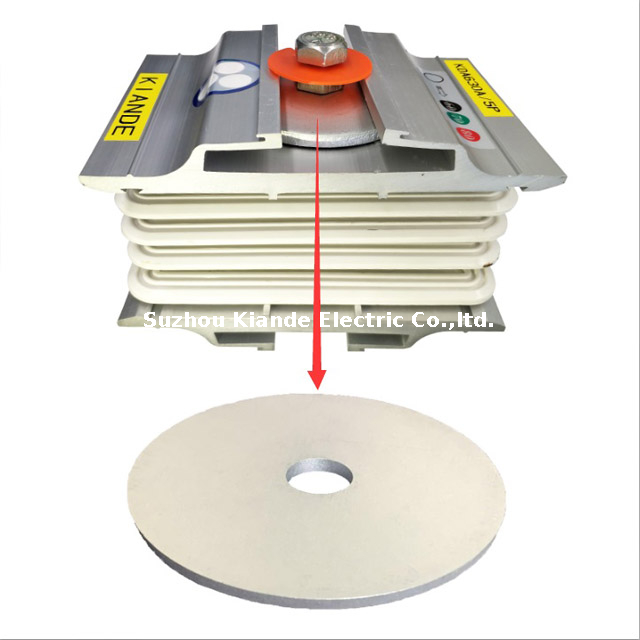
Model | Material | Hole Diameter | Surface Treatment |
φ37*3mm | 65Mn | φ8.5mm | Galvanized Treatment |
φ74*4mm | 65Mn | φ13mm | Dacromet Treatment |
φ75*5mm | 65Mn | φ13mm | Dacromet Treatment |
φ76*5mm | 65Mn | φ13mm | Dacromet Treatment |
φ90*6mm | 65Mn | φ13mm | Dacromet Treatment |
Engineered for the most demanding electrical infrastructure, this specialized Belleville washer is meticulously crafted for busbar trunking and busduct connections. Holding it in your hand, you can feel the substantial weight and precise conical geometry of the cold-forged spring steel. The surface features a flawlessly uniform zinc-plated or Dacromet finish, offering a smooth, industrial-grade metallic touch while serving as a formidable barrier against oxidation. Its primary function goes far beyond simple fastening; it acts as a dynamic mechanical energy reservoir. When compressed, the conical profile stores immense reactive spring force, delivering a sustained elastic load directly at the connection point. This ensures that the critical junction remains securely clamped under continuous thermal cycling, structural vibrations, and material creep over decades of continuous operation.
Key Technical Features
Material Specifications
-
Main material: 65Mn spring steel. This specific alloy is chosen for its exceptional yield strength and fatigue resistance, ensuring the washer does not permanently deform under extreme pressure.
-
Thickness range: 3–6 mm, providing the heavy-duty structural integrity required for industrial power distribution.
-
Outer diameter: φ37–90 mm, creating a wide footprint to distribute mechanical stress safely across the joint.
-
Inner diameter (hole): φ8.5–13 mm, precisely machined to accommodate standard electrical fastening hardware without excessive play.
Surface Treatment
-
Zinc galvanizing (Galvanized Treatment): Delivers a bright, protective outer layer that actively prevents rust formation in standard indoor electrical installations.
-
Optional Dacromet coating (Dacromet Treatment): Provides an advanced, matte-grey finish engineered specifically for extreme environmental tolerance.
-
Excellent corrosion resistance: Both finishes are rigorously verified, successfully passing a demanding 300-hour salt-spray test to guarantee long-lasting performance in highly corrosive and humid industrial settings.
Functional Characteristics
-
Elastic load: The carefully calculated conical design generates a powerful, reactive spring force under compression, acting as a mechanical buffer against dynamic forces.
-
Load distribution: Evenly spreads clamping pressure across the joint face, preventing local stress concentration. When paired with standard flat washers, this design effectively solves the common issue of ordinary washers bending or yielding in large-gap busbar holes, ensuring the clamping force is transmitted uniformly.
-
Thermal-expansion compensation: Perfectly accommodates busbar expansion and contraction caused by temperature changes. It flawlessly compensates for the deformation and material creep resulting from the differing coefficients of thermal expansion (CTE) between copper/aluminum busbars and steel bolts, maintaining a gas-tight electrical connection over the long term.
-
Anti-loosening & anti-vibration: Maintains constant preload, preventing connection loosening even when subjected to heavy mechanical vibrations from nearby transformers or industrial machinery.
Application Scenes
These specialized components are engineered specifically for securing thick, multi-layered metal stacks in complex power distribution networks. They are particularly crucial for preventing the mechanical relaxation of mixed-metal assemblies under severe alternating temperatures, ensuring that current continues to flow without dangerous resistance spikes.
-
Busbar joint connections: Ideal for joining heavy copper or aluminum conductive plates where sustained pressure is non-negotiable.
-
Electrical-equipment connection points: Secures the interfaces between major switchgear components and main distribution lines.
-
Conductive joints requiring thermal-expansion compensation: Specifically designed for steel, copper, and aluminum layered connections exposed to continuous heating and cooling cycles.
-
Electrical connections in high-vibration environments: Essential for power systems installed near heavy manufacturing equipment or transit infrastructure.
Installation Guidance
Achieving the optimal mechanical memory of the spring steel requires strict adherence to assembly protocols. During installation, operators will feel a distinct, firm resistance as the conical profile compresses to its active state, transforming applied torque into stored energy.
-
Normally used in pairs, one on each side of the bolt, to ensure symmetrical load distribution across the entire joint assembly.
-
Recommended torque: 70 N·m – 90 N·m. Applying this specific torque range delivers a precise, continuous elastic load that meets rigorous minimum flattening requirements, completely eliminating the risk of vibration-induced loosening.
-
Must be used with matching shear-off bolts to guarantee the correct tension is applied without over-stressing the washer material.
-
Ensure full surface contact during installation to prevent uneven wear and maximize the lifespan of the electrical connection.
Advantages
Integrating these specialized Belleville washers into your electrical infrastructure significantly elevates the overall integrity of the system. Their structural design strictly complies with severe engineering standards for electrical connections, effectively eliminating any safety concerns from inspection agencies regarding joint loosening and facilitating effortless on-site project acceptance.
-
High reliability: Delivers long-term stable connection performance, drastically reducing the frequency of scheduled retightening maintenance across large facilities.
-
Strong adaptability: Suitable for diverse environments; confidently passes the 300-hour salt-spray test, proving its worth in coastal or heavy-industry applications.
-
Easy maintenance: Simple to install and remove during system upgrades, requiring no specialized hydraulic tensioning tools.
-
Cost-effective: More economical than alternative complex connection methods, lowering the total material cost of large-scale busduct deployments without compromising safety.


