
Views: 0 Author: Site Editor Publish Time: 2025-10-27 Origin: Site


Riveting is essential in many industries, from aerospace to automotive. The process involves joining materials with rivets that are deformed into a secure bond.
In this article, we will explore the various riveting tools used to form the final rivet shape. From manual tools to advanced systems like the Sandwich busway riveting machine, you’ll learn how these tools shape rivets with precision.
A rivet is a mechanical fastener that consists of a cylindrical shaft and a head. Typically made from metals like aluminum, steel, or copper, rivets are inserted into pre-drilled holes of the materials to be joined. Once inserted, the rivet is deformed by applying force, which expands the shaft and forms the final rivet head.
There are various types of rivets, including solid rivets, blind rivets, and tubular rivets. Each serves a different purpose depending on the application. For instance, blind rivets are popular in applications where only one side of the joint is accessible, such as in the case of Sandwich busway riveting machines, which are used for electrical connections.
The shape of the rivet head is vital for the structural integrity of the joint. Common head types include dome-shaped, countersunk, and flat heads. The final rivet shape determines several factors:
● Strength and Reliability: Properly formed rivet heads ensure a secure and long-lasting bond.
● Aesthetic Considerations: In certain industries, such as aerospace, the smoothness and appearance of the rivet are essential.
● Functional Integrity: The rivet shape also determines how well it distributes forces and resists environmental factors like vibration, pressure, and corrosion.
For example, in Sandwich busway manufacturing, the correct rivet shape is crucial for ensuring that electrical connections are both mechanically secure and resistant to wear and tear.
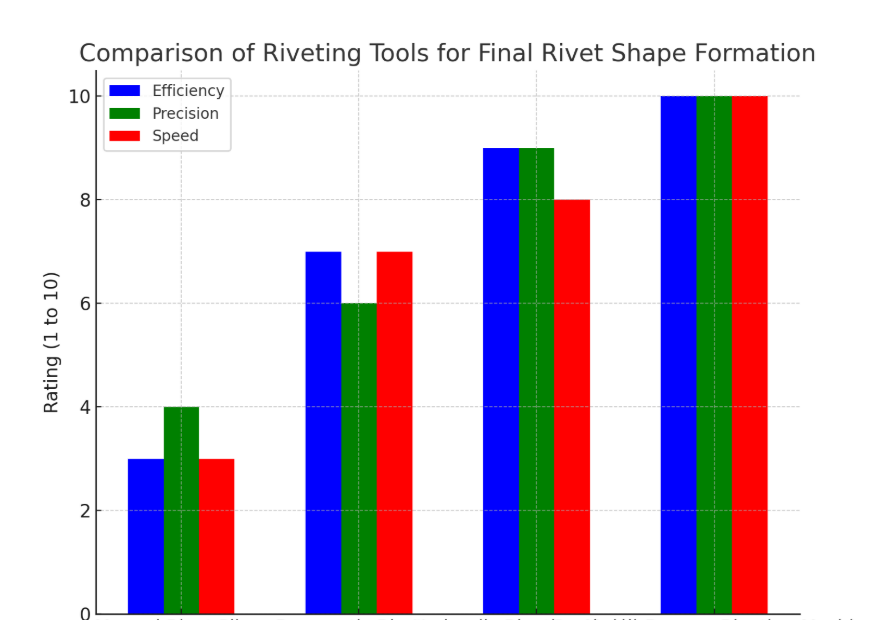
Manual tools, such as rivet pliers and hammers, are often used in smaller-scale or precision applications. These tools require a skilled operator to manually apply pressure to the rivet. While they are not as efficient as pneumatic or hydraulic tools, they offer high control over the final rivet shape, making them ideal for delicate or small-scale projects.
Advantages:
● Precise control over rivet deformation.
● Ideal for low-volume production or repair work.
Disadvantages:
● Labor-intensive.
● Slower than automated systems.
Pneumatic riveting tools use compressed air to apply force, making them faster and more efficient than manual tools. These tools are commonly used in high-volume production environments, where speed and consistency are crucial. The compressed air allows the tool to exert more force than manual tools, ensuring a secure rivet head is formed quickly.
Advantages:
● Faster than manual tools.
● Suitable for high-volume production.
Disadvantages:
● Requires an air compressor and maintenance.
● May not offer as much control over the final rivet shape as manual tools.
Hydraulic riveting tools are used in applications that require a significant amount of force. These tools are ideal for shaping large rivets or working with tougher materials. Hydraulic power provides smooth, controlled pressure that ensures the rivet is deformed evenly, resulting in a uniform and strong joint.
Advantages:
● High force capabilities.
● Ideal for larger rivets and tougher materials.
Disadvantages:
● More expensive than pneumatic tools.
● Typically requires more space and maintenance.
The rivet mandrel plays a critical role in forming the final rivet shape. After the rivet is inserted into the material, the tool grips the mandrel and pulls it through the rivet body. This action deforms the end of the rivet, creating the rivet head. The force applied to the mandrel determines the size and shape of the head.
For example, in Sandwich busway manufacturing, where precise rivet formation is critical for electrical connections, the mandrel’s interaction with the rivet body ensures the final shape is both secure and functional.
Once the rivet is in place, the riveting tool applies pressure to the mandrel. The mandrel is pulled, and the rivet body is deformed to form the head. In pneumatic or hydraulic systems, this process is fast and efficient, while manual tools require more effort and precision.
Step-by-Step Process:
1. The tool grips the mandrel.
2. The mandrel is pulled, stretching the rivet body.
3. The rivet head is shaped, expanding the material to fit the hole.
The amount of force, stroke length, and pressure applied during this process directly influence the final rivet shape. Adjusting these factors allows for the creation of different head shapes, such as domed or countersunk, depending on the application.
Several factors influence the final rivet shape:
● Material Type: Softer materials like aluminum deform more easily than harder metals like steel.
● Rivet Size: Larger rivets require more force to form the final shape.
● Tool Adjustment: The pressure applied by the tool must be carefully calibrated to ensure the rivet head is properly formed.
In Sandwich busway riveting, these factors must be carefully controlled to ensure the rivets are formed securely and precisely.
The type of rivet you are using plays a key role in determining which tool to choose. For example:
● Dome heads require tools that apply uniform pressure to create a smooth, rounded shape.
● Countersunk heads require tools with precise control to ensure the rivet sits flush with the surface.
The material of both the rivet and the workpiece also affects your tool choice. For instance, aluminum rivets are softer and can be shaped using pneumatic tools, while steel rivets may require hydraulic tools due to the higher force needed.
In some cases, like when working in tight spaces or on one-sided applications, tools like Sandwich busway riveting machines or other compact systems are necessary. These tools are designed for specific applications where space is limited.
For high-volume production, automated systems, including Sandwich busway riveting machines, are ideal because they increase speed and reduce human error. Manual tools, on the other hand, are more suited to smaller batches or repair work.
Sandwich busways are electrical systems used to transport high current, usually in industrial settings. They consist of multiple layers, often including conductors and insulation. Riveting is used in these systems to secure the components together.
In the manufacturing of sandwich busways, specialized riveting tools are used to ensure secure connections that can withstand electrical loads. Tools like Sandwich busway riveting machines are designed for high efficiency and precision, handling large numbers of rivets quickly while maintaining tight tolerances.
These tools use automated systems to feed and install rivets, ensuring that each joint is mechanically sound and capable of handling the stresses of electrical transport.
The use of the right riveting tool in sandwich busway manufacturing ensures high efficiency and precision. Automated riveting machines allow for consistent rivet shapes and quick assembly, reducing the time required for production and ensuring the durability of the final product.
The final shape of a rivet is crucial for the joint's strength and functionality. Choosing the right tool, such as manual tools for precision or automated systems like the Sandwich busway riveting machine, ensures quality results. As technology advances, tools like hydraulic and pneumatic machines are improving efficiency and product quality.
Looking ahead, riveting tools will continue to evolve with automation, enhancing precision and speed. For industries like sandwich busway manufacturing, products like the KIANDE Sandwich busway riveting machine offer consistent, high-quality results in high-volume production.
A: The final shape of a rivet is formed using various tools, such as manual rivet pliers, pneumatic riveters, or hydraulic riveting machines. For high-volume production, tools like the Sandwich busway riveting machine are ideal for consistent, precise rivet formation.
A: The final rivet shape is crucial for ensuring a strong and durable joint. It impacts the joint's strength, reliability, and overall functionality, especially in applications like Sandwich busway riveting machines, where precise electrical connections are required.
A: A Sandwich busway riveting machine uses automated systems to apply precise pressure to the rivet, forming its head. The machine ensures consistent and efficient riveting, especially in high-volume manufacturing environments.
A: Yes, manual tools like rivet pliers can form rivets with precision, especially for small projects or repairs. However, for large-scale production, machines like the Sandwich busway riveting machine are more efficient.
A: The Sandwich busway riveting machine offers speed, precision, and consistency. It’s perfect for high-volume production, ensuring uniform rivet heads and durable joints, especially in applications requiring electrical conductivity.
A: Pneumatic tools are faster and suitable for medium-sized rivets, while hydraulic tools provide greater force, making them ideal for large or tougher rivets. Both can be used with systems like the Sandwich busway riveting machine for high-precision applications.

