
Views: 0 Author: Site Editor Publish Time: 2026-06-19 Origin: Site


What if the biggest reason your electrical panel production is slower, more expensive, and less precise than your competitors has nothing to do with your workforce, but everything to do with the busbar machine you are using? In an industry where production speed, precision, and consistency directly affect profitability, choosing the wrong equipment can quietly increase your costs while reducing your output. Many manufacturers focus heavily on materials and labor optimization, but often overlook the fact that the right busbar machine can transform the entire manufacturing process.
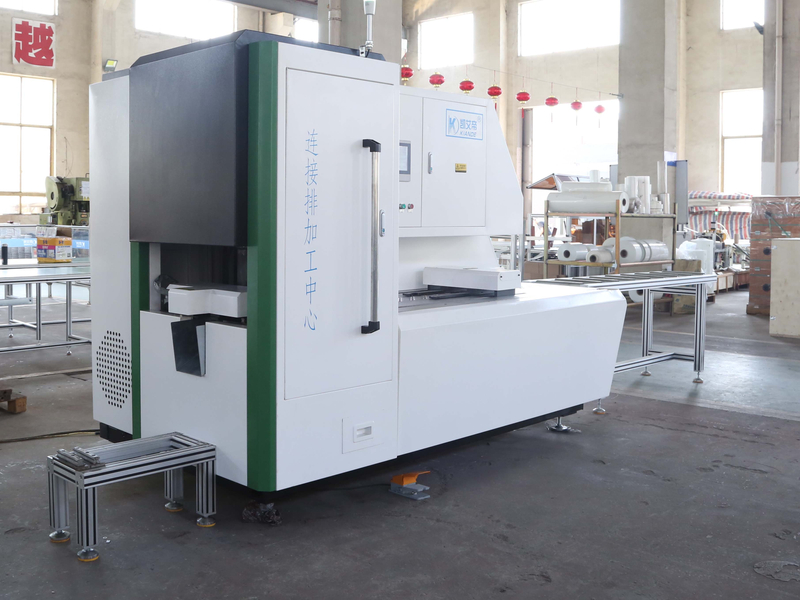
As global demand for electrical panels continues to grow due to renewable energy expansion, electric vehicle charging systems, data center construction, and industrial automation upgrades, the pressure on manufacturers to produce faster and better has never been greater. This makes busbar processing a critical part of modern panel manufacturing, because busbars are the backbone of electrical distribution systems and must meet increasingly strict quality standards.
The problem is that there are many different types of busbar machine solutions available in the market, and choosing the right one is not always simple. Factors such as production scale, precision requirements, automation level, and budget all play a major role in determining the best machine for your factory. In this article, we will explore how to choose the best busbar machine for electrical panel manufacturing, compare different machine types, analyze cost and efficiency, and discuss the latest technology trends shaping the industry.
A busbar machine is a specialized industrial machine designed to process copper and aluminum busbars into finished components used in electrical distribution systems. Unlike manual processing tools, which rely heavily on operator experience and physical labor, a professional busbar machine integrates multiple processes into one efficient workflow, ensuring accuracy, repeatability, and speed.
The three core functions of a busbar machine include cutting, punching, and bending. Cutting allows busbars to be sized precisely according to engineering drawings, punching creates holes for installation and mounting, while bending forms busbars into complex shapes required by electrical panel layouts. Some advanced busbar machine systems also offer embossing, marking, and twisting functions for specialized applications.
In electrical panel manufacturing, busbars serve as the main conductive pathways, transferring power efficiently between circuit breakers, switches, and transformers. Because busbars carry large currents, even small errors in dimensions or alignment can result in overheating, energy loss, or installation failures. This is why investing in a reliable busbar machine is essential for maintaining both performance and safety.
The electrical manufacturing industry has changed significantly over the past decade, with growing expectations for shorter lead times, higher customization, and stricter compliance standards. As a result, manual busbar processing methods are becoming less practical, especially for companies aiming to scale production.
A professional busbar machine improves production speed dramatically. For example, manual cutting and bending may take 15 to 20 minutes per busbar depending on complexity, while a hydraulic busbar machine can reduce this to around 7 to 9 minutes, and a CNC busbar machine can complete the same process in as little as 3 to 5 minutes. This time reduction directly translates into higher daily output.
Processing Method | Average Time Per Piece | Daily Output (8 Hours) |
Manual Processing | 18–20 mins | 24–26 pcs |
Hydraulic Busbar Machine | 7–9 mins | 55–68 pcs |
CNC Busbar Machine | 3–5 mins | 96–160 pcs |
Beyond speed, precision is one of the biggest advantages of a busbar machine. In electrical panels, hole alignment and bending angles must match engineering specifications exactly. A CNC machine can maintain tolerances within ±0.2 mm for cutting and ±0.3° for bending, which is nearly impossible to achieve consistently with manual tools.
Labor cost reduction is another major benefit. A single advanced busbar machine can often replace the workload of two to four workers, reducing payroll costs while increasing output. At the same time, safety is improved because operators no longer need to handle cutting and punching manually, reducing the risk of injuries.
Not every busbar machine is built for the same production environment. Understanding the differences between machine types is the first step toward making the right investment.
The hydraulic busbar machine is one of the most common solutions in the market because it offers strong performance at a relatively affordable price. These machines use hydraulic pressure to perform cutting, punching, and bending operations, making them ideal for small and medium-sized manufacturers.
Hydraulic systems are known for their power and durability. They can process thick copper busbars with high force and are generally easier to maintain compared to CNC systems. However, they require more manual positioning, which slows down production and increases dependency on operator skill.
This type of busbar machine is best suited for small workshops, repair departments, and businesses with low-volume production needs.
A CNC busbar machine represents the highest level of automation in busbar processing. These machines use computer numerical control to perform all operations automatically based on pre-programmed designs.
The main advantage of a CNC busbar machine is consistency. Once the program is loaded, the machine can produce identical parts repeatedly with minimal error. This makes it especially valuable for large factories producing high volumes of electrical panels.
Another important benefit is material optimization. Advanced software can calculate the most efficient cutting sequence, reducing waste and improving cost efficiency. Although the initial investment is higher, long-term savings often justify the price.
Portable busbar machine systems are designed for field operations rather than factory production. They are lightweight, compact, and easy to transport, making them ideal for installation teams working on-site.
While they offer convenience and flexibility, their capacity is limited, and they are not suitable for large-scale manufacturing. Their role is more complementary rather than primary.
A multi-function busbar machine combines cutting, punching, and bending in one integrated unit, making it a practical option for manufacturers looking to save space and streamline workflow.
These machines offer a balance between hydraulic simplicity and CNC functionality. They are often chosen by medium-sized panel manufacturers because they provide good efficiency without the full investment required for CNC automation.
This is one of the most common questions asked by electrical panel manufacturers, and the answer depends on production goals, budget, and future growth.
Feature | Hydraulic Busbar Machine | CNC Busbar Machine |
Initial Cost | Lower | Higher |
Speed | Medium | High |
Precision | Medium | Very High |
Automation | Low | High |
Labor Requirement | Higher | Lower |
Maintenance Complexity | Low | Medium |
Best For | Small Workshops | Large Factories |
If your business focuses on custom projects with lower volume, a hydraulic busbar machine may be enough. However, if your factory handles large orders and requires high precision, CNC is the superior choice.
Choosing a busbar machine is not simply about comparing prices. It requires evaluating how the machine will fit into your production workflow over the next several years.
Production volume is the first and most important factor. If you process fewer than 100 busbars per day, a hydraulic machine may be sufficient. For 100 to 500 pieces daily, a multi-function busbar machine is often the best balance. For over 500 pieces per day, CNC automation becomes the most efficient option.
Material type is another key consideration. Copper busbars require higher punching force than aluminum, so the machine’s pressure capacity must match your material requirements. Thickness and width limitations should always be checked before purchase.
Precision requirements also matter greatly. Industries such as switchgear and industrial control panels often demand very tight tolerances, making CNC systems the preferred choice.
Workshop space and future scalability should also be considered. Some busbar machine systems require additional feeding lines, material racks, and automation accessories. Planning for future expansion can prevent costly equipment upgrades later.
Many manufacturers make the mistake of choosing a busbar machine based solely on price, without considering long-term performance. While a cheaper machine may reduce initial investment, it often leads to higher maintenance costs, lower precision, and more downtime.
Another common mistake is ignoring future production growth. A machine that meets current demand may become insufficient within a year or two if business expands.
After-sales service is another factor often overlooked. A reliable supplier should offer technical support, spare parts availability, installation guidance, and operator training. Without these services, even the best machine can become a problem.
Software compatibility is especially important for CNC systems. If your machine cannot integrate with your CAD software, you may lose significant efficiency.
The right busbar machine can dramatically improve return on investment by reducing waste, increasing output, and lowering labor dependency.
For example, a CNC machine can reduce copper waste by up to 15% through optimized cutting paths. If your factory uses several tons of copper annually, this alone can save thousands of dollars.
Faster processing also means shorter lead times, allowing manufacturers to complete more orders in less time. This improves cash flow and customer satisfaction.
Labor reduction is another major ROI factor. With automation, companies can maintain production even during labor shortages, which have become a growing issue worldwide.
Finally, higher precision means fewer defective parts, reducing rework costs and improving product reputation.
There is no universal answer because every manufacturer has different production requirements, budget constraints, and growth plans. However, general recommendations can be made based on business size.
Small workshops with limited budgets and low production volumes will benefit most from hydraulic busbar machine systems because they provide solid performance at a lower cost.
Medium-sized panel manufacturers that need balanced performance and efficiency should consider multi-function busbar machine systems, as they combine flexibility with productivity.
Large factories and OEM manufacturers aiming for maximum automation, precision, and scalability should invest in CNC busbar machine systems, because they offer the best long-term efficiency and competitive advantage.
As the electrical manufacturing industry becomes more advanced and more demanding, the importance of choosing the right busbar machine continues to grow. The right machine is not simply a production tool; it is a strategic investment that affects efficiency, quality, profitability, and long-term business growth.
A hydraulic busbar machine is usually the best option for small workshops because it offers lower investment costs, simple operation, and reliable performance for low-volume production.
Yes, for medium and large manufacturers, CNC systems offer better precision, faster output, and lower labor costs, making them highly cost-effective in the long term.
Most busbar machines are designed to process both copper and aluminum busbars, although the machine capacity must match material thickness and hardness.
Prices typically range from $3,500 for basic hydraulic models to $60,000 or more for advanced CNC systems.
Basic maintenance should be performed weekly, while full inspections and servicing are recommended every three to six months depending on usage frequency.

