
Views: 0 Author: Site Editor Publish Time: 2026-06-21 Origin: Site


Did you know that manufacturers can lose up to 30% of production efficiency simply by using separate machines for cutting, punching, and bending busbars? In today’s highly competitive electrical manufacturing industry, even small inefficiencies can quickly turn into major costs, delayed delivery schedules, and lost customer opportunities. As electrical systems become more complex and demand continues to rise, production speed and precision are no longer optional—they are essential.
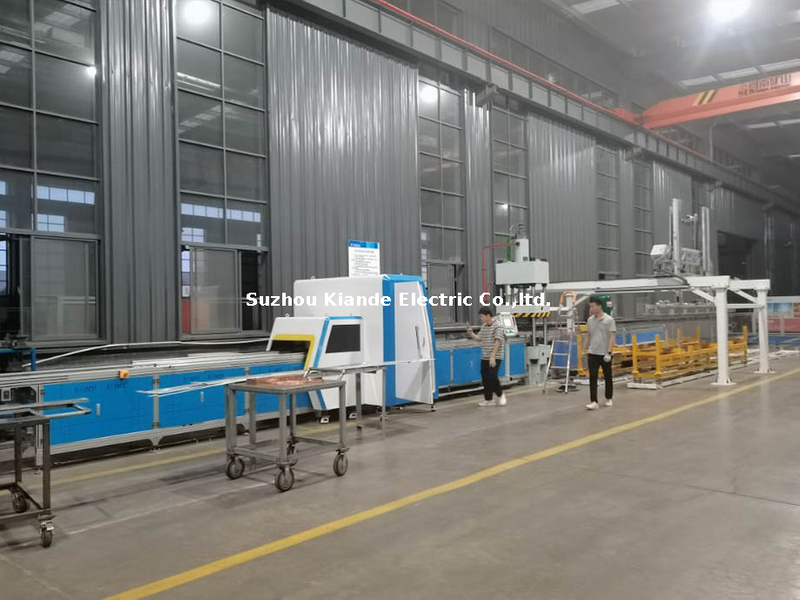
The biggest challenge for many manufacturers is that traditional busbar processing often relies on multiple standalone machines or even manual operations, which can slow down workflows, increase labor costs, and create higher risks of dimensional errors. This directly affects the quality of electrical panels, switchgear cabinets, and transformer systems, where busbar accuracy is critical.
In this post, we’ll discuss the major benefits of using a busbar bending cutting punching machine and explain why integrated busbar processing solutions are becoming the standard in modern factories. You’ll learn how a busbar bending machine improves efficiency, reduces costs, enhances safety, and helps manufacturers stay competitive in 2026 and beyond.
A busbar bending cutting punching machine is a multi-functional industrial machine designed to combine three critical busbar processing operations into one integrated system: cutting, punching, and bending. Instead of moving materials between separate machines, operators can complete multiple tasks within one workflow, significantly reducing production time and improving consistency.
The role of a busbar bending machine within this integrated system is especially important because bending determines the final shape and fit of the busbar inside electrical assemblies. Accurate bending ensures proper installation and reliable electrical performance, especially in high-current systems where space optimization is essential.
This type of equipment is widely used in industries such as:
● Electrical panel manufacturing
● Switchgear production
● Transformer manufacturing
● Power distribution cabinets
● Renewable energy systems
● EV charging infrastructure
● Industrial control systems
As global electrification continues to accelerate, the demand for efficient busbar processing equipment is growing rapidly, making the busbar bending machine a critical investment for manufacturers.
Traditional busbar processing often involves three separate machines or manual tools for cutting, punching, and bending. While this approach may still work for small workshops, it creates several operational inefficiencies that become more costly as production scales.
The first issue is workflow interruption. Every time a busbar needs to move from cutting to punching and then to bending, operators lose valuable time repositioning materials, checking dimensions, and aligning holes. These repeated steps slow down production significantly.
The second problem is increased labor dependency. Separate machines require more operators, which means higher labor costs and greater chances of human error. In 2026, with labor shortages affecting many manufacturing industries, this has become a serious challenge.
The third issue is accuracy loss. Every time the material is repositioned, there is a chance of dimensional deviation. This can result in installation issues, rework, and wasted materials.
For this reason, integrated busbar processing systems with a built-in busbar bending machine are becoming the preferred solution.
The most obvious benefit of an integrated busbar machine is speed. By combining cutting, punching, and bending into one machine, manufacturers can eliminate unnecessary material transfers and reduce idle time.
In traditional production, the process may look like this:
● Move material to cutting station
● Cut busbar
● Move to punching station
● Align and punch
● Move to bending station
● Re-align and bend
With an integrated machine, all of these steps happen in one continuous workflow.
Processing Method | Average Time Per Piece | Daily Capacity |
Manual + Separate Machines | 15–20 mins | 30–40 pcs |
Integrated Busbar Machine | 4–7 mins | 80–120 pcs |
This dramatic improvement means manufacturers can complete more orders in less time, improving profitability.
The busbar bending machine function is especially important in this workflow because bending often requires the most precise positioning and takes the most time when done separately.
Precision is one of the most important factors in busbar manufacturing because busbars must fit perfectly inside electrical systems.
A high-quality busbar bending machine ensures:
● Accurate bending angles
● Consistent dimensions
● Repeatable production quality
Integrated systems reduce the number of times a busbar must be repositioned, which directly improves accuracy.
Typical precision comparison:
Process | Manual Accuracy | Machine Accuracy |
Cutting | ±1.0 mm | ±0.2 mm |
Punching | ±0.8 mm | ±0.1 mm |
Bending | ±2° | ±0.3° |
For manufacturers producing switchgear or transformer systems, this level of precision reduces assembly problems and improves overall product quality.
Labor costs continue rising globally, and automation is becoming one of the most effective ways to remain competitive.
An integrated busbar machine reduces labor requirements by allowing fewer operators to manage the same workload. Instead of assigning one worker to cutting, one to punching, and one to bending, one trained operator can handle the entire process.
This offers multiple advantages:
● Lower payroll expenses
● Reduced training requirements
● Fewer communication errors
● Better workflow coordination
The busbar bending machine component also reduces physical labor because bending thick copper busbars manually requires significant force and can be dangerous.
Factory space is expensive, and efficient workshop layout directly affects productivity.
Using three separate machines takes up significantly more floor space than one integrated system. By combining cutting, punching, and bending into one machine, manufacturers can optimize their workshop layout and create smoother production flow.
This is especially beneficial for:
● Small workshops
● Medium-sized factories
● Growing production facilities
The integrated busbar bending machine design allows manufacturers to expand production capacity without requiring a larger factory.
Copper and aluminum prices remain high, and even small reductions in waste can generate significant savings over time.
A precision busbar bending cutting punching machine improves material utilization by reducing:
● Incorrect hole placement
● Misaligned cuts
● Wrong bending angles
● Rejected parts
Modern CNC-controlled busbar bending machine systems can optimize material layout and improve cutting efficiency.
For example, factories often report:
● 8–12% less copper waste
● 5–10% less rework
● 15–20% higher material utilization
Over a year, this can save thousands of dollars.
Safety is a growing priority in manufacturing, and manual busbar processing creates risks such as:
● Hand injuries
● Material slipping
● Sharp edge cuts
● Heavy lifting strain
An integrated machine improves safety by automating the most dangerous tasks.
The busbar bending machine function is especially valuable here because bending thick busbars manually often requires significant force, increasing the risk of injury.
Hydraulic and CNC systems offer stable, controlled operation, reducing accidents and improving workplace safety compliance.
While an integrated busbar machine may have a higher upfront cost compared to buying basic standalone equipment, the long-term return on investment is much stronger.
Here’s why:
Factor | Separate Machines | Integrated Machine |
Initial Cost | Medium | Medium-High |
Labor Cost | High | Low |
Material Waste | Higher | Lower |
Productivity | Lower | Higher |
ROI Time | 24–36 months | 12–18 months |
The busbar bending machine function plays a major role in ROI because it directly affects processing speed and product quality.
Many manufacturers still wonder whether it is better to buy separate machines or an integrated solution.
Separate machines offer flexibility but come with drawbacks:
● More space required
● More labor needed
● More alignment errors
● Slower workflow
Integrated systems with a built-in busbar bending machine offer:
● Faster workflow
● Better consistency
● Lower labor costs
● Easier training
● Better long-term ROI
For most growing manufacturers, integrated systems are the smarter investment.
Not every factory has the same needs, but several business types benefit significantly.
For small workshops, an entry-level integrated machine provides a cost-effective way to improve productivity without requiring multiple standalone machines.
For medium-volume production, an integrated machine offers the best balance of efficiency, cost, and scalability.
High-volume manufacturers benefit most because automation and consistency become increasingly important as order volume grows.
Custom busbar production often requires repeatability and precision, making a CNC-controlled busbar bending machine an ideal solution.
When selecting the right machine, manufacturers should evaluate:
● Production volume
● Busbar thickness
● Material type
● Precision requirements
● Available floor space
● Budget
● Future expansion plans
A reliable busbar bending machine supplier should also provide:
● Technical support
● Installation guidance
● Spare parts availability
● Operator training
● Software upgrades
Choosing the right supplier is just as important as choosing the right machine.
The benefits of a busbar bending cutting punching machine are clear. From higher production efficiency and improved precision to lower labor costs and better safety, integrated busbar processing has become the preferred solution for modern electrical manufacturers.
As electrical panel production becomes more demanding in 2026, relying on outdated manual methods or separate machines can limit growth and profitability. Investing in a high-quality busbar bending machine integrated system helps manufacturers stay competitive, reduce waste, improve quality, and deliver faster to customers.
For businesses looking to scale production, improve consistency, and maximize ROI, an integrated busbar machine is no longer just an option—it is a strategic necessity.
It is used to process copper and aluminum busbars by cutting, punching, and bending them in one integrated workflow.
Yes, because it improves efficiency, reduces labor costs, saves space, and increases precision.
Most machines can process copper and aluminum busbars with various thicknesses.
Prices typically range from $5,000 to $30,000 depending on machine size, automation level, and CNC features.
You should consider production volume, material type, thickness, precision needs, automation requirements, and supplier support.

