
Views: 0 Author: Site Editor Publish Time: 2026-06-30 Origin: Site


What if the real reason your copper busbar production is inefficient is not your operators, not your raw materials, and not even your workflow—but the busbar punching machine you chose years ago? In modern electrical manufacturing, even a small mismatch between machine capability and copper processing requirements can lead to significant productivity loss, increased scrap rates, and inconsistent assembly quality. As industries such as switchgear manufacturing, renewable energy systems, EV charging infrastructure, and industrial automation continue expanding rapidly, manufacturers are under pressure to achieve higher precision and faster production cycles with lower operational costs.
Copper busbars are especially demanding because of their high conductivity, high density, and relatively strong resistance compared to aluminum. This means that punching operations require not only high force but also excellent positioning accuracy and stable tooling performance. However, many manufacturers still select equipment based only on price or basic specifications, without fully analyzing long-term production needs or material behavior during punching.
In this article, we will explain how to choose the right busbar punching machine for copper busbars by analyzing key technical parameters, machine types, performance requirements, and industry trends. You will also learn how to match machine capabilities with your production scale so that you can maximize efficiency, reduce waste, and improve overall fabrication quality.
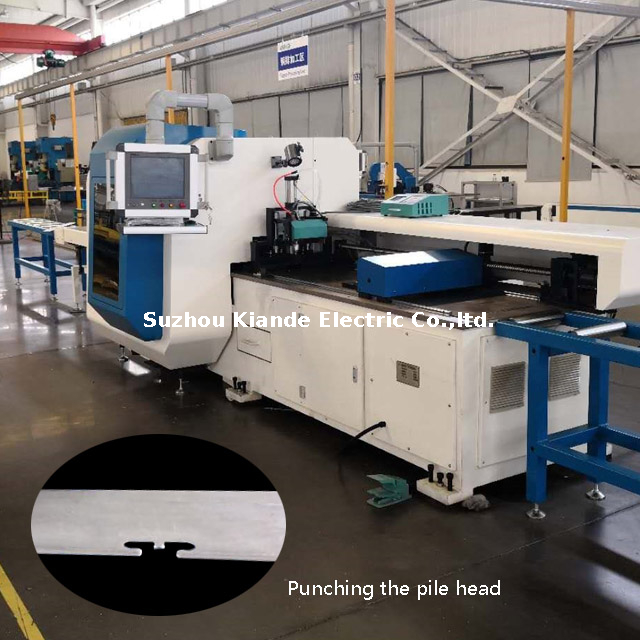
A busbar punching machine is an industrial machine designed to create precise holes in copper or aluminum busbars used in electrical systems. These holes are essential for mounting, bolting, and connecting busbars to other electrical components such as breakers, transformers, and distribution units.
A modern busbar punching machine uses hydraulic or CNC-controlled systems to apply controlled force through punching dies, ensuring clean and accurate hole formation. The machine is widely used in switchgear production, electrical panel manufacturing, transformer assembly, power distribution systems, renewable energy equipment, and EV charging infrastructure.
Because copper is harder and more durable than aluminum, a busbar punching machine designed for copper applications must deliver higher punching force, better tooling durability, and improved precision control.
Selecting the correct busbar punching machine is not just a purchasing decision; it directly affects production efficiency, product quality, and long-term operational cost. If the machine is underpowered, it may struggle with thick copper busbars, resulting in incomplete punching, tool damage, or dimensional inaccuracies. If it is over-specified, it may increase unnecessary investment costs without real production benefits.
Poor machine selection can lead to:
● Increased material waste due to inaccurate punching
● Slower production cycles and bottlenecks
● Higher maintenance and tooling costs
● Reduced product consistency
● Increased downtime during peak production
A properly selected busbar punching machine ensures stable performance, high precision, and consistent output, which is critical for modern electrical manufacturing competitiveness.
One of the most important factors when selecting a busbar punching machine is the maximum thickness it can handle. Copper busbars commonly range from 3 mm to 15 mm in industrial applications, but heavy-duty electrical systems may require even thicker materials.
The machine must generate sufficient hydraulic force to punch through dense copper without deformation or incomplete hole formation. Underestimating thickness requirements often results in machine overload and reduced tool life.
In addition to thickness, busbar width also affects machine selection. Wider busbars require larger working tables and more stable positioning systems to ensure accurate hole placement.
Typical copper busbar widths range from 20 mm to 200 mm, depending on application requirements. A flexible busbar punching machine should support multiple widths to accommodate different production orders.
Punching force is one of the most critical technical parameters. It determines whether the busbar punching machine can handle different copper thicknesses efficiently.
Hydraulic systems typically measure force in tons or pressure in MPa. For copper busbars, higher tonnage is required compared to aluminum due to increased material resistance.
The table below shows general punching force requirements:
Copper Thickness | Recommended Punching Force | Application Level |
3–5 mm | 20–30 tons | Light electrical panels |
6–10 mm | 30–60 tons | Standard switchgear |
10–15 mm | 60–100 tons | Industrial power systems |
15 mm+ | 100+ tons | Heavy-duty infrastructure |
Choosing the correct punching force ensures stable operation and longer machine lifespan.
A modern busbar punching machine should support multiple hole types because different electrical systems require different connection designs.
Common hole types include:
● Round holes for standard bolts
● Oval holes for adjustable connections
● Slot holes for flexible positioning
● Custom-shaped holes for specialized designs
Machines with interchangeable dies or CNC-controlled punching systems provide higher flexibility and reduce production limitations.
Precision is essential in copper busbar fabrication because even a small deviation in hole position can affect electrical connection quality and mechanical stability.
High-quality busbar punching machines typically offer positioning accuracy within ±0.2 mm or better. Repeatability ensures that every busbar produced in a batch matches the same specifications, which is critical for large-scale manufacturing.
A hydraulic busbar punching machine uses hydraulic pressure to generate punching force. It is widely used due to its strong power output and stable performance.
Advantages include high force capacity, suitability for thick copper busbars, and relatively simple maintenance. However, it may have lower automation compared to CNC systems.
A CNC busbar punching machine uses computer-controlled positioning to achieve higher precision and automation.
Advantages include programmable hole positions, high repeatability, and suitability for mass production. It is ideal for manufacturers requiring high precision and batch consistency.
Portable machines are designed for on-site or small-scale applications. They offer flexibility but limited capacity and are not suitable for large-scale copper busbar production.
Many manufacturers compare single-function punching machines with multi-function systems such as 3 in 1 busbar machines.
Feature | Busbar Punching Machine | 3 in 1 Busbar Machine |
Function | Punching only | Cutting + Punching + Bending |
Flexibility | High for punching tasks | High for full workflow |
Efficiency | Medium | Very high |
Space Requirement | Medium | Low |
Cost | Lower | Higher initial investment |
A dedicated busbar punching machine is ideal for factories focusing heavily on punching operations, while integrated machines are better for complete busbar fabrication workflows.
To select the right busbar punching machine, manufacturers must match machine capacity with production requirements.
Production Factor | Low Volume | Medium Volume | High Volume |
Thickness Range | 3–6 mm | 6–10 mm | 10–15+ mm |
Automation Level | Manual | Semi-automatic | CNC |
Daily Output | <100 pcs | 100–500 pcs | 500+ pcs |
Recommended Machine Type | Basic hydraulic | Standard hydraulic | CNC hydraulic |
This helps ensure balanced investment and production efficiency.
When evaluating a busbar punching machine, consider the following technical parameters:
● Hydraulic pressure range
● Punching speed per minute
● Tool change time
● Positioning accuracy
● Machine stability under load
● Energy consumption efficiency
● Control system type
Ignoring these specifications can lead to poor long-term performance and higher operating costs.
Many buyers make similar mistakes when purchasing a busbar punching machine:
● Choosing based only on price instead of performance
● Ignoring future production expansion needs
● Underestimating copper thickness requirements
● Overlooking tooling availability and cost
● Not considering after-sales service and spare parts support
Avoiding these mistakes can significantly improve long-term ROI.
Choosing the right supplier is just as important as choosing the machine itself. Key factors include manufacturing experience, customization capability, product certification, technical support, spare parts availability, and export experience.
A reliable supplier ensures long-term machine stability and reduces downtime risks.
Choosing the right busbar punching machine for copper busbars requires careful evaluation of thickness capacity, punching force, accuracy, automation level, and production requirements. Copper busbars demand higher performance due to their material properties, making machine selection a critical factor in ensuring production efficiency and product quality.
By understanding technical specifications, comparing machine types, and evaluating long-term production needs, manufacturers can make more informed decisions that improve productivity, reduce waste, and increase profitability. In modern electrical manufacturing, investing in the right busbar punching machine is not just a cost decision—it is a strategic production upgrade.
The best machine depends on production volume, but CNC hydraulic busbar punching machines are ideal for high precision and large-scale manufacturing.
It typically ranges from 20 tons for thin copper to over 100 tons for thick industrial busbars.
Yes, most machines support interchangeable dies or CNC programming for multiple hole sizes.
CNC offers higher precision and automation, while hydraulic machines provide stronger force and lower cost.
You should consider copper thickness, daily output, automation level, and future production expansion needs.

