
Views: 0 Author: Site Editor Publish Time: 2025-11-10 Origin: Site


Riveting machines are essential in modern manufacturing, ensuring strong, durable connections between materials. From aerospace to automotive, their importance is undeniable.
In this article, we will explore the various types of riveting machines, focusing on their applications and how to choose the right one for your needs. You will learn about their unique functions and benefits, including the use of the Busway riveting machine.
A riveting machine is a tool used to fasten two or more materials by inserting a rivet into pre-drilled holes. The rivet is deformed to create a permanent connection between the materials. Riveting is used in situations where high mechanical strength is required, and it’s ideal for applications where welding or other joining methods aren’t feasible or efficient.
Riveting machines are essential in many industrial settings because they offer reliable and consistent fastening. These machines automate what could be a labor-intensive process, speeding up production and reducing the risk of human error. Whether for light-duty or heavy-duty tasks, these machines allow manufacturers to create durable products that meet stringent quality standards.
There are several categories of riveting machines, each designed for different tasks. Broadly speaking, they can be categorized based on their power source, automation level, and application types. Understanding these distinctions will help businesses choose the right machine for their needs.
Pneumatic riveting machines use compressed air to power the riveting process. These machines are favored for their speed and efficiency, especially in high-volume production. Pneumatic machines are commonly used in industries like automotive manufacturing, where rapid and consistent riveting is required.
● Key Features:
Fast and efficient
Suitable for high-volume production
Lower operational costs due to the use of compressed air
● Applications:
Automotive body assembly
Construction of metal frameworks
Large-scale manufacturing of metal parts
Electric riveting machines operate using electric motors, providing a precise and controlled riveting process. These machines are often chosen for tasks that require high accuracy and consistency.
● Key Features:
Consistent and controlled riveting
Ideal for precision tasks
Simple to use, requiring less maintenance
● Applications:
Small-scale production
Precision tasks such as electronics assembly
Light metalwork
Hydraulic riveting machines are used for heavy-duty tasks requiring high riveting force. These machines are powered by hydraulic pressure, making them suitable for jobs that demand more power than pneumatic or electric machines can provide.
● Key Features:
High power for large rivets
Ideal for thick materials or larger joints
Precision and strength combined
● Applications:
Aerospace manufacturing
Large structural assemblies
Heavy machinery production
Manual riveting machines are hand-operated tools that don’t rely on electricity or compressed air. These machines are often used for smaller, more portable projects where power-driven machinery isn’t necessary.
● Key Features:
Portable and easy to use
Lower cost and minimal maintenance
Ideal for low-volume production or repairs
● Applications:
Maintenance and repair jobs
Small-scale production or DIY projects
Upholstery and textile work
Automatic riveting machines are designed for high-volume production. These machines automate the riveting process, reducing the need for manual labor and ensuring a consistent, reliable product.
● Key Features:
Automation reduces labor costs
Ideal for mass production
High efficiency and precision
● Applications:
Electronics assembly
Automotive manufacturing
Large-scale industrial production
CNC (Computer Numerical Control) riveting machines offer high precision and automation, making them ideal for complex and custom riveting tasks. These machines are controlled by computers, allowing for very specific operations and detailed customization.
● Key Features:
Computer-controlled precision
Ideal for custom or complex tasks
Reduces error and increases efficiency
● Applications:
Aerospace component assembly
Automotive parts requiring precise joint placements
High-end manufacturing processes
Orbital riveting machines use a rotating motion to apply pressure to the rivet. This method ensures a smooth and precise joint without applying too much force, making it ideal for delicate materials.
● Key Features:
Delicate, non-impact riveting
Ideal for lightweight and thin materials
High precision and minimal material stress
● Applications:
Electronics and electrical equipment assembly
Delicate sheet metal work
Assembly of thin, lightweight components
Self-piercing riveting machines can join materials without needing pre-drilled holes. These machines drive the rivet through the material, piercing it to create a secure bond. They are highly efficient for joining thin sheets of metal or other materials.
● Key Features:
No need for pre-drilled holes
Works on a variety of materials
Fast and efficient
● Applications:
Automotive manufacturing
Electrical components
Roofing and cladding
Riveting machines are used in various industries, each machine type designed to meet specific production demands.
Aerospace Industry: Riveting machines play a crucial role in assembling aircraft parts, ensuring strong and durable joints.
Automotive Industry: Used to join metal panels and components in car manufacturing, riveting machines are essential for mass production.
Construction: Riveting is used to fasten large metal sections in construction projects like bridges, skyscrapers, and more.
Textile and Other Industries: Riveting machines are also widely used in industries that require joining materials like fabric, leather, and plastics.
When selecting a riveting machine, several factors need to be considered to ensure you get the best machine for your needs:
Rivet Type: Different types of rivets require different machines. Consider the material and size of the rivet.
Production Volume: Choose an automatic machine for high-volume production and a manual machine for smaller, more customized jobs.
Material Compatibility: Make sure the machine is suitable for the material you intend to work with, whether it's metal, plastic, or textiles.
Pneumatic vs Electric Riveting Machines: Pneumatic machines are faster and cheaper, but electric machines offer more precision.
Hydraulic Riveting Machines: Best for heavy-duty tasks but are more expensive and require maintenance.
Automatic Riveting Machines: Excellent for mass production but come with higher upfront costs.
Manual Riveting Machines: Great for portability and low-volume work but are less efficient in large-scale operations.
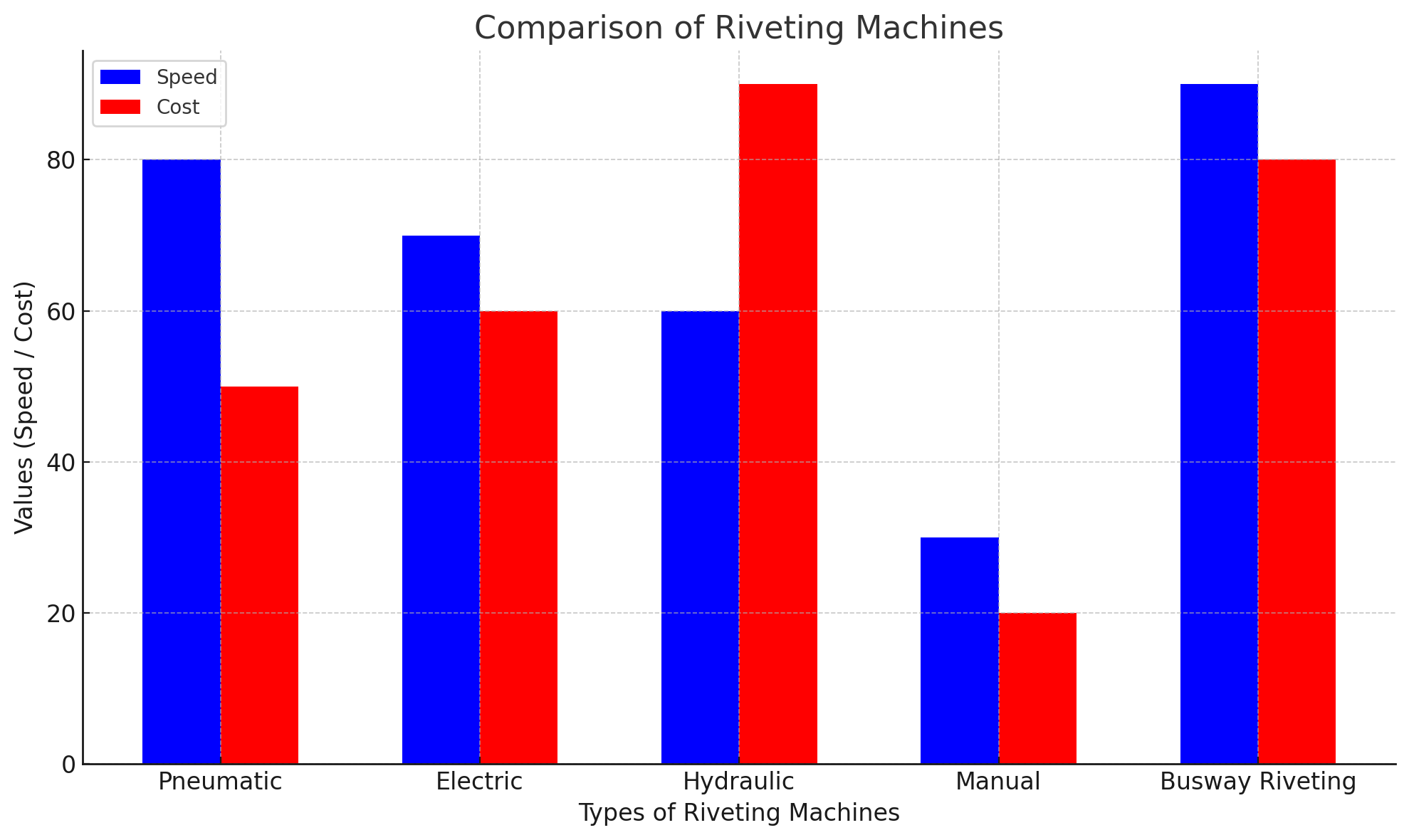
Choosing the right riveting machine depends on factors like rivet type, material, and production volume. Different machines have distinct strengths, so selecting the proper one is crucial. Whether in aerospace, automotive, or construction, understanding these machines will boost efficiency. Businesses should evaluate production needs and costs to select the best machine, ensuring optimal value and long-term performance. For high-quality riveting solutions, KIANDE provides reliable machines tailored to various industries.
A: There are various types of riveting machines, including pneumatic, electric, hydraulic, manual, and specialized machines like the Busway riveting machine. Each serves a specific purpose depending on the material, rivet type, and production needs.
A: A Busway riveting machine is designed specifically for fastening busbars in electrical systems. It offers precision and high efficiency, making it ideal for heavy-duty applications in industries like electrical and construction.
A: Busway riveting machines are commonly used in the electrical industry for power distribution systems. They are also used in construction and manufacturing processes where reliable, high-strength joints are needed.
A: The Busway riveting machine provides superior efficiency and precision, especially for tasks that involve large-scale production and heavy-duty electrical components, ensuring long-lasting and secure connections.
A: While the initial investment may be higher, the Busway riveting machine reduces labor costs and increases production speed, offering long-term savings and higher efficiency in large-scale manufacturing environments.

