
Views: 0 Author: Site Editor Publish Time: 2026-06-25 Origin: Site


Why do so many electrical manufacturers still rely on hydraulic technology when CNC automation is becoming increasingly popular? The answer is simple: in busbar fabrication, power, reliability, and cost-efficiency are often more important than full automation. In fact, many medium and large-scale electrical manufacturers still consider the hydraulic busbar bending machine one of the most practical and efficient tools for bending copper and aluminum busbars because it combines strong force output, stable performance, and lower operating costs in one system.
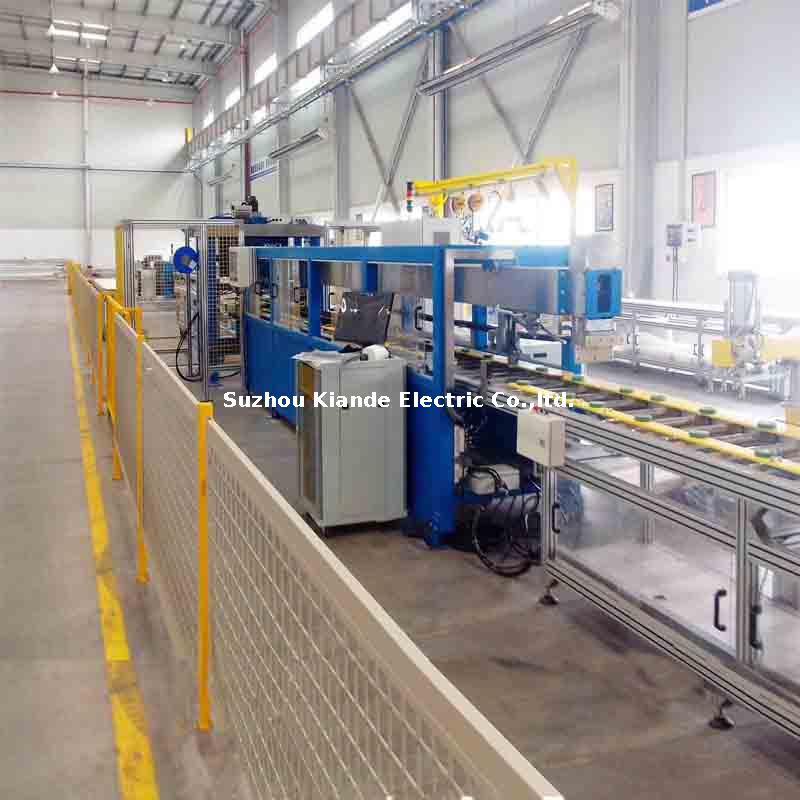
As the global electrical equipment market continues expanding due to renewable energy systems, EV charging infrastructure, industrial automation, and modern power distribution upgrades, the demand for precise busbar fabrication is growing faster than ever. Busbars are the backbone of electrical conductivity inside switchgear, transformer systems, electrical panels, and distribution cabinets, and their bending quality directly affects installation accuracy, conductivity performance, and long-term operational safety.
However, many buyers and even production managers understand the output of a hydraulic busbar bending machine without fully understanding how it actually works, which often makes it difficult to choose the right equipment or maximize machine efficiency. In this article, we will explain in detail how a hydraulic busbar bending machine works, what its core components are, why hydraulic force is so effective in busbar fabrication, and how it compares with CNC busbar machines in modern manufacturing.
A hydraulic busbar bending machine is a specialized industrial machine designed to bend conductive metal busbars into precise angles and shapes using hydraulic pressure. Unlike manual bending tools, which depend heavily on operator strength and experience, a hydraulic busbar bending machine uses controlled oil pressure to generate powerful and stable force, making the bending process more accurate, safer, and more efficient.
The main purpose of a hydraulic busbar bending machine is to shape copper and aluminum busbars for electrical systems where space optimization and precise alignment are critical. These machines are widely used in industries such as switchgear manufacturing, transformer assembly, electrical panel production, renewable energy systems, and EV charging infrastructure.
Because busbars often need to carry large electrical currents, precise bending is essential to ensure proper fit, stable conductivity, and safe operation. This makes the hydraulic busbar bending machine one of the most important tools in busbar fabrication.
Busbars serve as the main conductive channels in many electrical systems. They connect breakers, switches, transformers, and distribution points, allowing electricity to flow efficiently while reducing wiring complexity.
However, busbars must often fit into compact electrical cabinets where space is limited. This means bending is not simply about changing shape—it is about creating precise angles that match engineering designs exactly.
Poor bending can create several problems:
● Incorrect installation alignment
● Increased electrical resistance
● Uneven pressure at connection points
● Excessive heat generation
● Reduced operational safety
A hydraulic busbar bending machine solves these problems by ensuring that each bend is precise, repeatable, and structurally stable.
To understand how a hydraulic busbar bending machine works, it is important to first understand its main components.
The hydraulic pump is the power source of the machine. It generates oil pressure by pushing hydraulic fluid through the system. This pressure creates the force needed for bending.
The quality of the hydraulic pump directly affects:
● Pressure stability
● Bending speed
● Energy efficiency
● Machine lifespan
In modern hydraulic busbar bending machine systems, high-efficiency pumps can generate pressures ranging from 20 MPa to 70 MPa depending on machine capacity.
The hydraulic cylinder converts oil pressure into linear mechanical force. Once hydraulic fluid enters the cylinder, it pushes the piston forward, which transfers force directly to the bending die.
The larger the cylinder diameter and the higher the oil pressure, the stronger the bending force.
This is why hydraulic busbar bending machines are ideal for thick copper busbars.
The die and punch determine the final bending angle and shape. Different busbar thicknesses and widths require different tooling sizes.
The bending die supports the material while the punch pushes it into shape.
Tooling quality affects:
● Surface finish
● Bending precision
● Structural integrity
Worn or incorrect tooling can damage the busbar surface.
The control system manages machine operation.
There are usually three types:
Control Type | Precision Level | Best For |
Manual | Medium | Small workshops |
Semi-Automatic | High | Medium factories |
CNC-assisted Hydraulic | Very High | Large production lines |
Modern hydraulic busbar bending machine systems increasingly use digital controls for better repeatability.
The positioning system ensures accurate alignment before bending begins.
It controls:
● Material placement
● Bend starting point
● Angle consistency
Without proper positioning, even a powerful hydraulic busbar bending machine cannot deliver precise results.
The working process of a hydraulic busbar bending machine can be broken into six main steps.
The operator first selects the busbar material, usually copper or aluminum, based on project requirements.
Material properties checked include:
● Thickness
● Width
● Hardness
● Length
Different materials require different pressure settings.
The busbar is placed into the machine’s working area and aligned with the bending die.
Accurate positioning is critical because it determines the final bending location.
Some advanced hydraulic busbar bending machine models include laser alignment systems for improved accuracy.
The operator sets the required bending angle.
Common angles include:
● 30°
● 45°
● 90°
● 135°
Digital angle displays improve setup accuracy and reduce adjustment time.
Once the machine starts, the hydraulic pump generates oil pressure.
This oil pressure flows into the hydraulic cylinder.
The pressure formula is based on hydraulic principles:
Force = Pressure × Cylinder Area
This is why hydraulic systems can generate extremely high force using relatively compact machine designs.
The hydraulic cylinder pushes the punch downward, forcing the busbar into the bending die.
The material gradually bends into the required angle under controlled pressure.
The entire bending process is smooth and stable because hydraulic pressure can be adjusted precisely.
After reaching the target angle, the hydraulic pressure is released and the cylinder retracts.
The finished busbar is removed and inspected for:
● Angle accuracy
● Surface quality
● Dimensional consistency
This process can then be repeated for the next part.
The required bending force depends on material thickness.
The table below shows typical pressure requirements:
Busbar Thickness | Material Type | Recommended Pressure |
3 mm | Aluminum | 18–25 MPa |
5 mm | Copper | 25–35 MPa |
8 mm | Copper | 35–50 MPa |
12 mm | Copper | 50–70 MPa |
This explains why hydraulic busbar bending machines are preferred for heavy-duty applications.
One major reason the hydraulic busbar bending machine remains popular is its practical advantages.
Hydraulic systems deliver powerful force, making them ideal for thick busbars.
Stable pressure creates more consistent bending angles.
Compared to fully automated CNC systems, hydraulic machines offer lower upfront investment.
Their mechanical structure is simpler and easier to service.
Hydraulic systems have proven durability in industrial environments.
Many manufacturers compare hydraulic and CNC systems before investing.
Feature | Hydraulic Busbar Bending Machine | CNC Busbar Machine |
Cost | Lower | Higher |
Force Capacity | Very High | High |
Automation | Medium | High |
Precision | High | Very High |
Maintenance | Easy | More Complex |
Best For | Medium-volume production | Large-scale automation |
For many factories, hydraulic busbar bending machines offer the best balance of power and affordability.
Even the best hydraulic busbar bending machine can experience issues.
Possible causes:
● Wrong pressure settings
● Tool wear
● Improper positioning
Solution: recalibrate and inspect tooling.
Possible causes:
● Dirty dies
● Worn punch
● Excessive pressure
Solution: clean or replace tooling.
Possible causes:
● Damaged seals
● Loose fittings
Solution: replace seals and inspect hydraulic lines.
Before buying, manufacturers should consider:
● Maximum busbar thickness
● Maximum bending width
● Material type
● Production volume
● Required precision
● Budget
General recommendations:
● Small workshops: manual hydraulic models
● Medium factories: semi-automatic hydraulic models
● Large factories: CNC-assisted hydraulic systems
Choosing the right hydraulic busbar bending machine ensures better productivity and long-term ROI.
A hydraulic busbar bending machine works by converting hydraulic oil pressure into powerful mechanical force, allowing manufacturers to bend copper and aluminum busbars accurately and efficiently. Its combination of strong force output, stable performance, lower cost, and easy maintenance makes it one of the most important machines in electrical manufacturing.
Even in the age of CNC automation, hydraulic busbar bending machines remain highly valuable because they provide a practical balance between performance and affordability. For manufacturers focused on switchgear, electrical panels, transformers, and renewable energy systems, understanding how a hydraulic busbar bending machine works is essential for improving production efficiency and choosing the right equipment.
It uses hydraulic oil pressure to drive a cylinder, which converts pressure into bending force.
Most machines can bend copper and aluminum busbars.
It depends on production needs; hydraulic machines are often better for medium-volume and cost-sensitive production.
Most industrial models can handle up to 12 mm or more depending on design.
Basic inspections should be done weekly, while full hydraulic system maintenance is usually recommended every 3 to 6 months.

